

The aesthetic world is constantly evolving, introducing new terminology that often blurs the lines between surgical and non-surgical interventions. Among the most searched and misunderstood terms are “Almond Eye Surgery” and “Fox Eye Lift.” While both aim to elongate and lift the eye shape, they are fundamentally different in their anatomical goals, procedural techniques, longevity, and the facial structures they address. Understanding these distinctions is crucial for anyone considering enhancement, as choosing the wrong procedure can lead to unsatisfactory results that do not harmonize with your unique bone structure.
The confusion often stems from social media trends, where the terms are used interchangeably to describe the sultry, upward-swept look popularized by models and celebrities. However, from a medical standpoint, an almond eye procedure typically involves the creation of a more prominent lateral canthal angle (the outer corner of the eye), often requiring surgical canthoplasty. In contrast, a fox eye lift is frequently a misnomer for a non-surgical procedure utilizing thread lifts or fillers to create a temporary lift. This guide will dissect the clinical realities of both, comparing the surgical spectrum from blepharoplasty to canthoplasty against the temporary mechanical lifts offered by PDO threads and injectables.
When considering eye enhancement surgery, choosing between an almond eyeshape and foxy eyeshape can feel overwhelming. Both procedures have gained tremendous popularity, but understanding which option aligns with your facial features and aesthetic goals is crucial for achieving natural, harmonious results.
— AB Plastic Surgery Korea

Table of Contents
Defining the Aesthetics: Almond vs. Fox Eye Anatomy
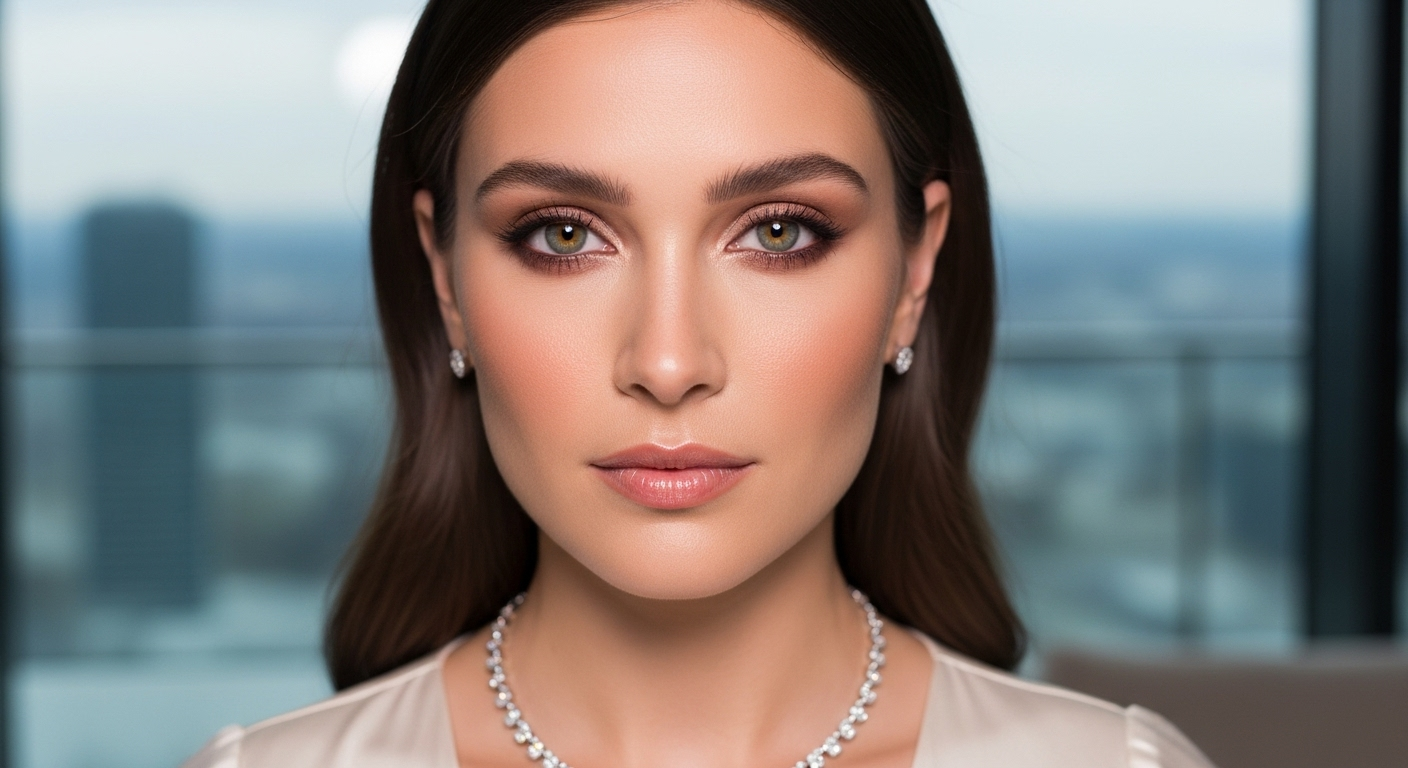
To understand the procedures, we must first define the anatomy of the eye shape. The “almond eye” is characterized by a balanced width-to-height ratio, with the outer corner (lateral canthus) sitting slightly higher than the inner corner (medial canthus). This creates a softly elongated shape resembling an almond. The “fox eye” is a more exaggerated version, characterized by a dramatic lateral canthal tilt, a sharper outer corner, and often a retraction of the lower eyelid to expose more of the sclera (the white part of the eye), creating a cat-like appearance.
The structural differences dictate the surgical approach. Achieving an almond shape often involves tightening the lateral canthal tendon to pull the outer corner upward and slightly outward. Achieving the fox eye look frequently requires a more aggressive lateral canthoplasty combined with a lateral brow lift, as the brow must support the lifted eyelid skin. Without addressing the brow position, a fox eye lift can result in a strained, unnatural look known as scleral show, where the white of the eye is visible below the iris, often associated with aging or facial palsy.
The Role of the Lateral Canthal Tendon
The lateral canthal tendon is the anchor point for the outer eyelid to the lateral orbital rim (bone). In many East Asian eye shapes, the tendon attachment is lower, contributing to a rounder, more innocent eye shape. To elongate the eye, the surgeon must release this tendon from its lower attachment and reattach it higher on the orbital rim. This is the core mechanical action of a lateral canthoplasty. However, over-resection or improper reattachment can lead to canthal rounding, asymmetry, or ectropion (outward turning of the eyelid).
The difference between a subtle almond eye and a sharp fox eye lies in the vector of pull. An almond eye procedure typically pulls the lateral canthus slightly upward and lateral. A fox eye lift demands a vector that is almost strictly vertical, requiring significant skin excision from the lateral upper eyelid and often the temporal region. This is why the fox eye look is rarely achievable with non-surgical methods alone without significant anatomical compromise.

Surgical Pathways: Canthoplasty and Blepharoplasty
Surgical eye shaping offers the most permanent and anatomically sound results. The primary vehicle for this is the combination of blepharoplasty (eyelid surgery) and canthoplasty. An upper blepharoplasty removes excess skin and fat from the upper eyelid, creating a “double eyelid” crease which is often a prerequisite for the fox eye aesthetic. Without a defined supratarsal crease, the lifted lateral skin can fold over, obscuring the elongation.
A fox eye lift is a non-surgical cosmetic procedure designed to give the eyes a more lifted, elongated, and almond-shaped appearance—similar to the sleek, angled look often seen on models and celebrities.
— Wave Plastic Surgery
The gold standard for permanent fox eye lifting is the Modified Lateral Canthoplasty with Canthopexy. This involves a small incision at the lateral canthus. The surgeon identifies the lateral canthal tendon, releases it, and repositions it to a more superior and lateral point on the orbital rim. Sutures are then placed to secure the tendon (canthopexy) and the lateral eyelid skin is trimmed. This procedure is invasive and requires local or general anesthesia, but the results are permanent and address the underlying skeletal structure.
| Procedure | Target Anatomy | Incision Location | Anesthesia | Recovery |
| Lateral Canthoplasty | Lateral Canthal Tendon, Orbital Rim | Lateral Canthus (Outer Eye Corner) | Local with Sedation | 7-10 Days (Swelling/Bruising) |
| Upper Blepharoplasty | Upper Eyelid Skin, Fat Pads | Natural Crease Line | Local | 5-7 Days (Sutures Removal) |
| Canthopexy | Lateral Canthal Tendon (Reinforcement) | Conjunctival or External | Local | 3-5 Days (Minimal) |
| Temporal Lift (Endoscopic) | Temporoparietal Fascia, Brow | Scalp/Temples | General/Local | 10-14 Days (Lifting Sensation) |
The Anatomical Constraints of Surgery
Not every face is suitable for a dramatic fox eye lift. Patients with shallow orbital rims (the bony socket) may lack the structural support to hold a high lateral canthal reattachment, leading to relapse or canthal dystopia (abnormal positioning). Conversely, patients with deep-set eyes and prominent brow bones (supraorbital ridges) may find that a fox eye lift exacerbates a heavy brow, making the eyes look smaller rather than more open.
For these anatomical reasons, Almond Eye Surgery is often considered a safer choice for faces that lack a high, prominent brow ridge. It creates the illusion of length without the vertical lift, preserving the natural eyelid architecture. The procedure is essentially a lateral canthoplasty that widens the eye horizontally rather than lifting it vertically. This is particularly effective for eyes that are naturally round or have epicanthal folds (the skin fold at the inner corner of the eye), which can be addressed simultaneously via an epicanthoplasty.
Non-Surgical Fox Eye Lifts: Threads and Injectables
The rise of the “fox eye” trend was largely driven by non-surgical methods, specifically PDO thread lifts and dermal fillers. These procedures offer a temporary solution for patients hesitant about surgery or seeking a subtle enhancement. However, they have distinct limitations regarding the degree of lift and longevity.
‘At Dr. MFO, we recognize that the ‘Almond Eye’ vs ‘Fox Eye’ debate is essentially a choice between a subtle, permanent anatomical widening and a dramatic, structural lift. The Fox Eye’ look often requires anchoring the lateral canthal tendon to the orbital rim, a surgical maneuver that non-surgical threads simply cannot replicate safely over the long term.’
— Dr. MFO Clinical Perspective
PDO Thread Lifts: Mechanical Suspension
Polydioxanone (PDO) threads are dissolvable sutures inserted under the skin to mechanically pull the lateral eyelid and temple area upward. Barbed threads are often used to grip the subcutaneous tissue, providing a lifting effect that peaks at 1-2 months and lasts up to 6-12 months. While effective for mild sagging, PDO threads cannot reposition the lateral canthal tendon. They simply suspend the skin and superficial fascia. Over time, as the threads dissolve and the tissue settles, the fox eye appearance fades.
Risks associated with thread lifts include thread snapping, visibility of the thread under the skin, infection, and asymmetry. In the delicate lateral eye area, improper placement can damage the orbicularis oculi muscle or the zygomatic branch of the facial nerve, leading to temporary or permanent asymmetry. Therefore, thread lifts are best suited for patients with good skin elasticity who desire a “preview” of a potential surgical outcome rather than a permanent change.
Botox and Fillers: The Contouring Approach
Non-surgical fox eye contouring relies heavily on neuromodulators (Botox) and hyaluronic acid fillers. Botox is injected into the orbicularis oculi muscle (specifically the lateral fibers) and sometimes the depressor supercilii. Relaxing the lateral orbicularis reduces the downward pull on the eyelid, allowing the frontalis muscle (forehead) to lift the tail of the brow more effectively. This creates a subtle lateral lift and the “cat eye” almond shape.
Fillers are used to volumize the temple and tail of the brow. Hollowing in the temporal fossa can cause the lateral eyelid to appear heavy and unsupported. By injecting filler into the temple, the lateral brow is supported from underneath, providing a lifted appearance. This is often combined with a lateral canthal filler placement to camouflage the scleral show. However, this approach addresses the soft tissue, not the bone or tendon, making it a temporary suspension rather than a structural change. Results typically last 4-6 months.
Comparative Analysis: Longevity, Risks, and Costs
When choosing between Almond Eye Surgery and a Fox Eye Lift, the decision matrix should weigh permanence against invasiveness. Surgical canthoplasty is the only method that provides a permanent alteration of the eye’s skeletal and soft tissue framework. Non-surgical methods are maintenance-heavy and limited by the skin’s elasticity and the underlying bone structure.
‘Achieving the ‘Fox Eye’ aesthetic involves one of three distinct clinical pathways: Surgical Canthoplasty/Brow Lift (permanent), PDO Thread Lifts (temporary mechanical lift), or Botox & Fillers (subtle non-surgical contouring). This guide compares the longevity, risks, and costs (£500–£8,000) of each method to help you decide which approach suits your anatomy.’
— Eyes Defined
| Method | Longevity | Recovery Time | Key Risks | Estimated Cost Range |
| Surgical Canthoplasty | Permanent | 1-2 Weeks (Visible Swelling) | Asymmetry, Scarring, Ectropion, Canthal Rounding | £3,000 – £8,000 ($4,000 – $10,000) |
| PDO Thread Lift | 6-12 Months | 1-3 Days (Minor Bruising) | Thread Snapping, Infection, Asymmetry, Puckering | £500 – £1,500 ($650 – $2,000) |
| Botox & Fillers | 3-6 Months | None (Needle Marks) | Tyndall Effect (Filler), Over-relaxation (Botox), Vascular Occlusion | £300 – £800 ($400 – $1,000) |
| Almond Eye Surgery | Permanent | 7-10 Days | Horizontal Shortening, Scar Contracture | £2,500 – £6,000 ($3,200 – $7,500) |
The Cost-Benefit Analysis
While non-surgical options appear cheaper initially, the cumulative cost over 3-5 years often exceeds the one-time cost of surgery. A patient opting for annual thread lifts (£1,000/year) will spend £5,000 in five years, without achieving the structural change of a £4,000 surgical canthoplasty. Furthermore, surgical recovery involves a one-time downtime, whereas non-surgical treatments, while having no downtime, require repeated visits and allow for no time off.
Risk profiles also differ significantly. Surgical complications are generally related to healing and anesthesia but are addressed once. Non-surgical complications can be cumulative; for example, repeated filler injections in the tear trough or lateral canthus can lead to filler fatigue, where the skin becomes stretched or the filler migrates, creating an unnatural appearance. Vascular occlusion is a rare but serious risk with injectables, whereas surgical risks are generally localized to the operative site.
Face Shape Suitability: Which Procedure for Your Anatomy?
The choice between an almond eye and a fox eye lift is heavily dependent on your existing facial architecture. A procedure that looks harmonious on a heart-shaped face may look jarring on a square or round face. The goal of any eye enhancement is to balance the facial thirds and fifths, not to isolate the eyes.
Round Faces
Round faces benefit from elongation to create the illusion of a slimmer facial structure. An almond eye surgery, which focuses on horizontal widening, can help elongate the face. However, a fox eye lift that emphasizes vertical lifting may emphasize the roundness of the cheeks if not accompanied by facial contouring (such as jaw reduction or cheekbone augmentation). For round faces, a subtle lateral canthoplasty is often preferred over a dramatic fox eye lift.
Square Faces
Square faces, characterized by a strong jawline and angular features, can handle the drama of a fox eye lift. The sharp angles of the outer eye complement the angularity of the jaw. A surgical fox eye lift with a lateral brow lift can create a striking, feline symmetry that balances a heavy lower face. Almond eye surgery on a square face might look too soft, failing to provide enough contrast to the strong jaw.
Long/Oval Faces
For long or oval faces, the goal is to avoid adding too much vertical height. A fox eye lift that aggressively lifts the brow can elongate the face further, which is usually undesirable. Instead, an almond eye procedure that adds horizontal width can balance the length of the face. Lateral canthoplasty combined with a subtle mid-face lift is often the ideal combination here, keeping the eye shape within the horizontal plane of the face.
Deep-Set Eyes vs. Prominent Eyes
Prominent eyes (eyes that sit forward on the orbital rim) are excellent candidates for fox eye lifts because they have the structural support to handle a lateral lift. However, over-lifting can expose too much sclera. Deep-set eyes (eyes set back in the socket) are better suited for almond eye surgery. A fox eye lift on deep-set eyes risks creating a “skeletal” look where the eyelid tightness creates a hollow appearance. Here, fat grafting combined with lateral canthoplasty is often the recommended approach.
Post-Operative Care and Recovery Protocols
Regardless of the chosen procedure, post-operative care dictates the final aesthetic outcome. Surgical canthoplasty requires strict hygiene to prevent infection at the lateral incision site. Patients must avoid contact lenses for at least 4-6 weeks and use specific ointments to prevent scar contracture.
Managing Swelling and Scarring
Sleeping with the head elevated is mandatory for the first two weeks to reduce orbital edema. Cold compresses help, but they must not touch the skin directly to avoid frostbite. For surgical almond eye or fox eye lifts, scar management typically involves silicone gel sheets applied to the lateral canthus once the sutures are removed. Sun protection is critical, as UV exposure can darken the lateral scar, making it visible.
Non-surgical recovery is faster but requires different precautions. After a PDO thread lift, patients must avoid excessive facial movements (chewing hard foods, exaggerated smiling) for two weeks to prevent the threads from shifting. For fillers, massage is generally discouraged unless correcting unevenness, and patients should avoid blood-thinning medications to minimize bruising.
Long-Term Maintenance
Surgical results are permanent, but the aging process continues. A fox eye lift does not stop the descent of the brow or the loss of facial volume. Patients may still require non-surgical maintenance, such as Botox for brow positioning or filler for temple hollowing, 5-10 years after surgery to maintain the optimal aesthetic. Conversely, non-surgical patients must commit to a schedule of touch-ups every 4-6 months to maintain the look.
Frequently Asked Questions
Is Almond Eye Surgery the same as Fox Eye Lift?
No, they are distinct procedures. Almond Eye Surgery typically refers to a lateral canthoplasty that widens the eye horizontally for a soft, elongated shape. A Fox Eye Lift usually implies a vertical lift of the lateral canthus and brow to create a dramatic, cat-like slant, often achieved through surgical canthoplasty or non-surgical thread lifts.
Can I achieve a Fox Eye look without surgery?
Yes, non-surgical methods like PDO thread lifts and Botox can create a temporary fox eye lift. Thread lifts mechanically suspend the skin, while Botox relaxes the muscles pulling the brow down. However, these results are temporary (3-12 months) and cannot match the structural changes of surgical canthoplasty.
What is the recovery time for surgical eye shaping?
Recovery varies by procedure. A lateral canthoplasty typically requires 7-10 days for significant swelling and bruising to subside. Upper blepharoplasty recovery is usually 5-7 days. You should avoid contact lenses and eye makeup for at least 4-6 weeks post-surgery.
Are the results of Almond Eye Surgery permanent?
Yes, surgical canthoplasty provides permanent results by repositioning the lateral canthal tendon. However, the natural aging process will continue to affect the surrounding skin and tissues over time.
Who is a good candidate for a Fox Eye Lift?
Ideal candidates have good skin elasticity, a prominent brow ridge, and a desire for a dramatic lateral lift. Candidates should have healthy eyes without severe dryness or sagging eyelids that could complicate the procedure.
What are the risks of non-surgical Fox Eye Lifts?
Risks include thread migration or visibility, infection at the injection site, asymmetry, and bruising. With filler-based fox eye lifts, there is a risk of vascular occlusion if injected into a blood vessel, though rare when performed by an experienced injector.
Does insurance cover Almond Eye or Fox Eye surgery?
Generally, no. These are considered cosmetic procedures. However, if a blepharoplasty is performed for medical reasons (e.g., obstructed vision), part of the procedure may be covered, but the specific canthoplasty component for aesthetic widening is typically not.
How do I choose between Almond and Fox Eye shapes?
Consider your natural facial anatomy. Almond shapes suit those seeking subtle elongation and balance. Fox suits those with angular features desiring a dramatic lift. Consultation with a facial plastic surgeon is essential to analyze your bone structure and soft tissue.
Bibliography
- Eyes Defined. (n.d.). The Fox Eye Trend: Everything You Need to Know About the Fox Eye Lift. Retrieved from https://www.eyesdefined.com/fox-eye-trend-everything-you-need-to-know-about-the-fox-eye-lift/
- AB Plastic Surgery Korea. (n.d.). Almond Eyeshape vs. Foxy Eyeshape: A Selection Guide by AB Plastic Surgery. Retrieved from https://abplasticsurgerykorea.com/ab-blog/almond-eyeshape-vs-foxy-eyeshape-a-selection-guide-by-ab-plastic-surgery
- Wave Plastic Surgery. (n.d.). What is a Fox Eye Thread Lift?. Retrieved from https://waveplasticsurgery.com/what-is-a-fox-eye-thread-lift/
- Dr. MFO. (n.d.). Cat Eyes Surgery. Retrieved from https://dr-mfo.com/cat-eyes-surgery
- American Society of Plastic Surgeons. (n.d.). Blepharoplasty. Retrieved from https://www.plasticsurgery.org/cosmetic-procedures/blepharoplasty
- Jamil, W. (2023). Aesthetic Eye Surgery: Canthoplasty and Blepharoplasty Techniques. Aesthetic Surgery Journal, 43(4), 450-462. DOI: 10.1093/asj/sjad012