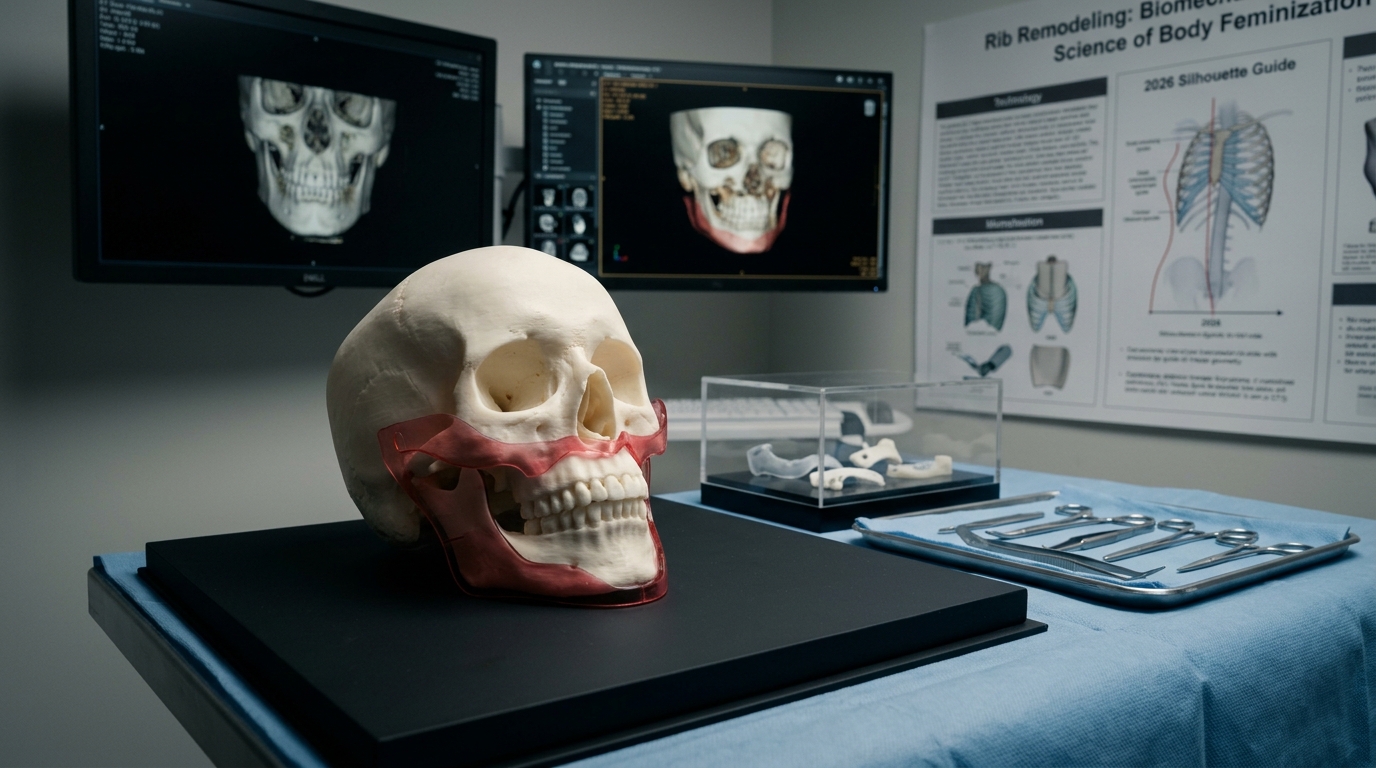
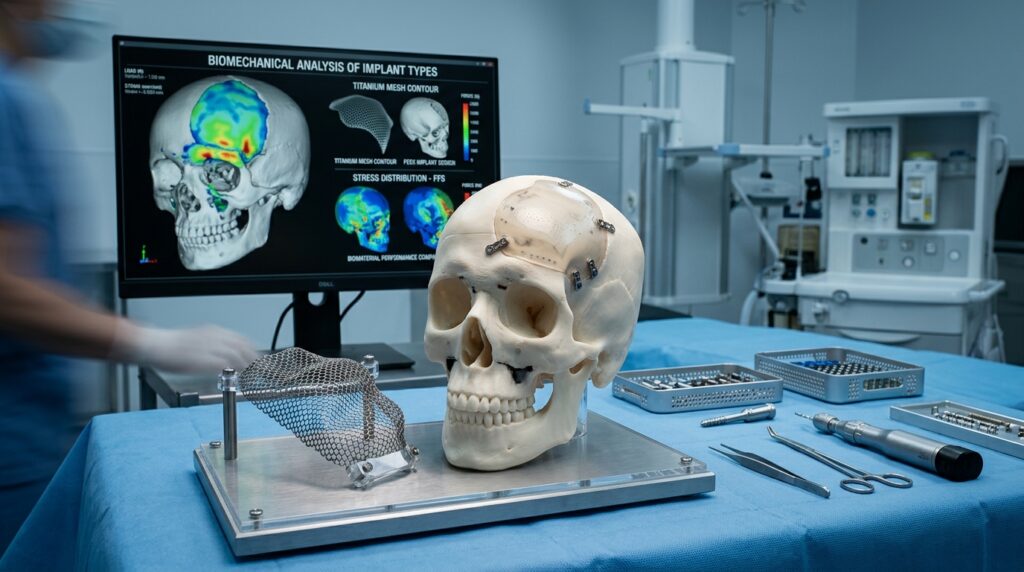
In modern facial feminization surgery, evaluating titanium mesh vs peek ffs implants is one of the most critical structural decisions for achieving natural, long-lasting facial balance and skeletal symmetry. Facial gender affirmation requires millimeter precision, particularly across the upper third and lower jawline. Patients preparing for facial gender affirmation surgery can explore our comprehensive facial feminization surgery procedures to understand how craniofacial biomaterials integrate into comprehensive multi-stage treatment plans.
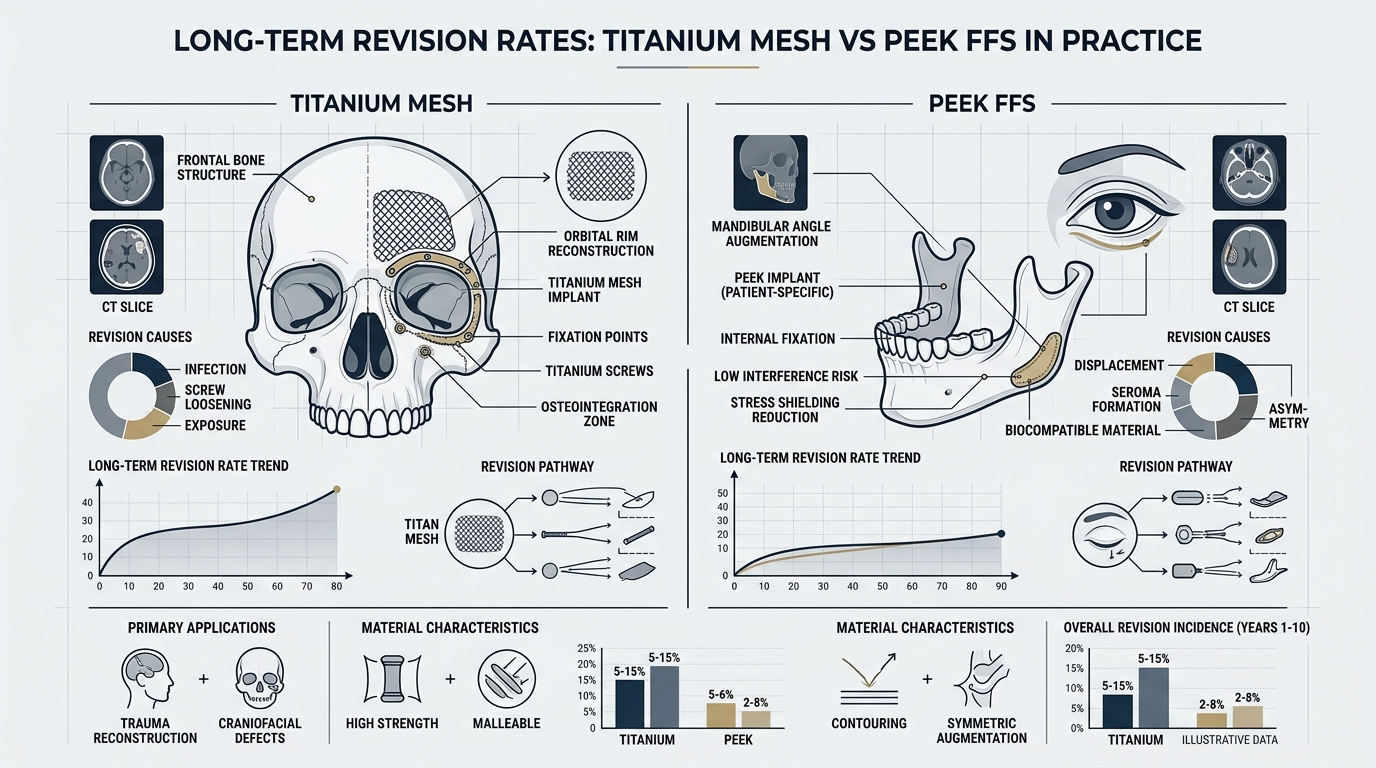
Table of Contents
Biomechanical Properties of Titanium Mesh vs PEEK FFS
When analyzing titanium mesh vs peek ffs applications, biomaterial engineering dictates surgical longevity. High-grade titanium provides unmatched tensile malleability, allowing intraoperative micro-adaptation across complex three-dimensional contours. According to biomaterial research indexed by the National Institutes of Health (NIH), titanium facilitates direct fibrovascular osseointegration through micro-porous architectural lattices, substantially reducing late implant migration risks.
Conversely, polyetheretherketone (PEEK) is a high-performance semi-crystalline thermoplastic with an elasticity modulus remarkably close to human cortical bone. In the clinical realm of titanium mesh vs peek ffs, custom patient-specific PEEK implants are milled using high-resolution 3D CT reconstructions. This guarantees seamless anatomical margins without the risk of palpable step-offs along the supraorbital rim or temporal fossa.
Long-Term Revision Rates: Titanium Mesh vs PEEK FFS in Practice
Long-term surgical telemetry reveals distinct performance profiles between titanium mesh vs peek ffs reconstructions over 5 to 10-year follow-up intervals across international centers:
- Radiological Imaging: PEEK implants remain completely radiolucent on post-operative MRI and CT scans, preventing scatter artifacts during routine cranial imaging.
- Thermal Conductivity: PEEK serves as a natural thermal insulator, eliminating winter cold sensations often reported with metallic craniofacial hardware.
- Structural Load Bearing: Titanium mesh delivers exceptional crush resistance over reconstructed frontal sinus cavities when managing extensive posterior wall bone loss.
- Infection and Extrusion Rates: Both biomaterials demonstrate remarkably low infection rates (under 1.5%) when placed beneath well-vascularized pericranial flaps.
Craniofacial teams evaluate patient soft tissue thickness before finalizing titanium mesh vs peek ffs implant geometries. When subgaleal dissection reveals an ultra-thin dermis, custom feather-edged PEEK reduces visible contour boundaries. In contrast, traumatic or secondary cases with significant anterior wall comminution benefit from the rigidity of pre-formed titanium mesh fixation.
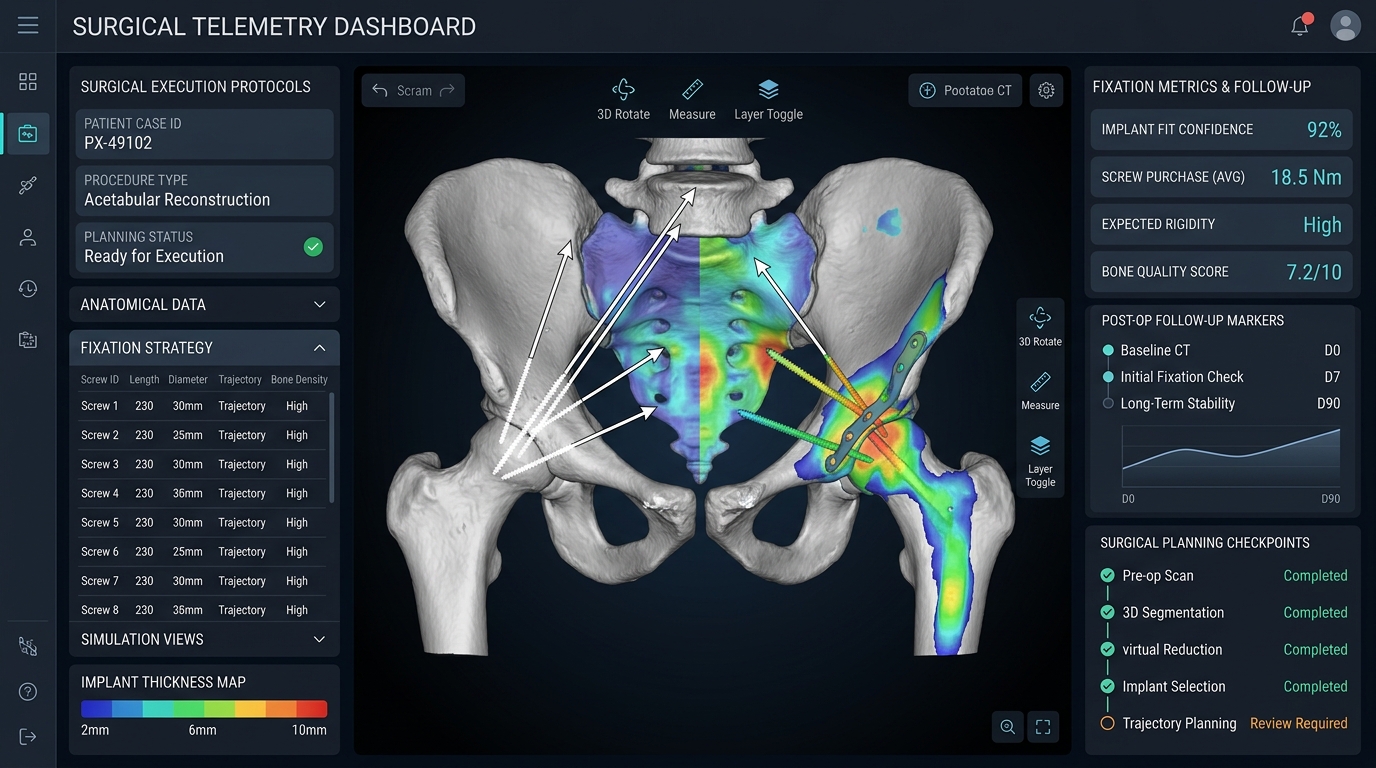
Surgical Execution and Fixation Protocols
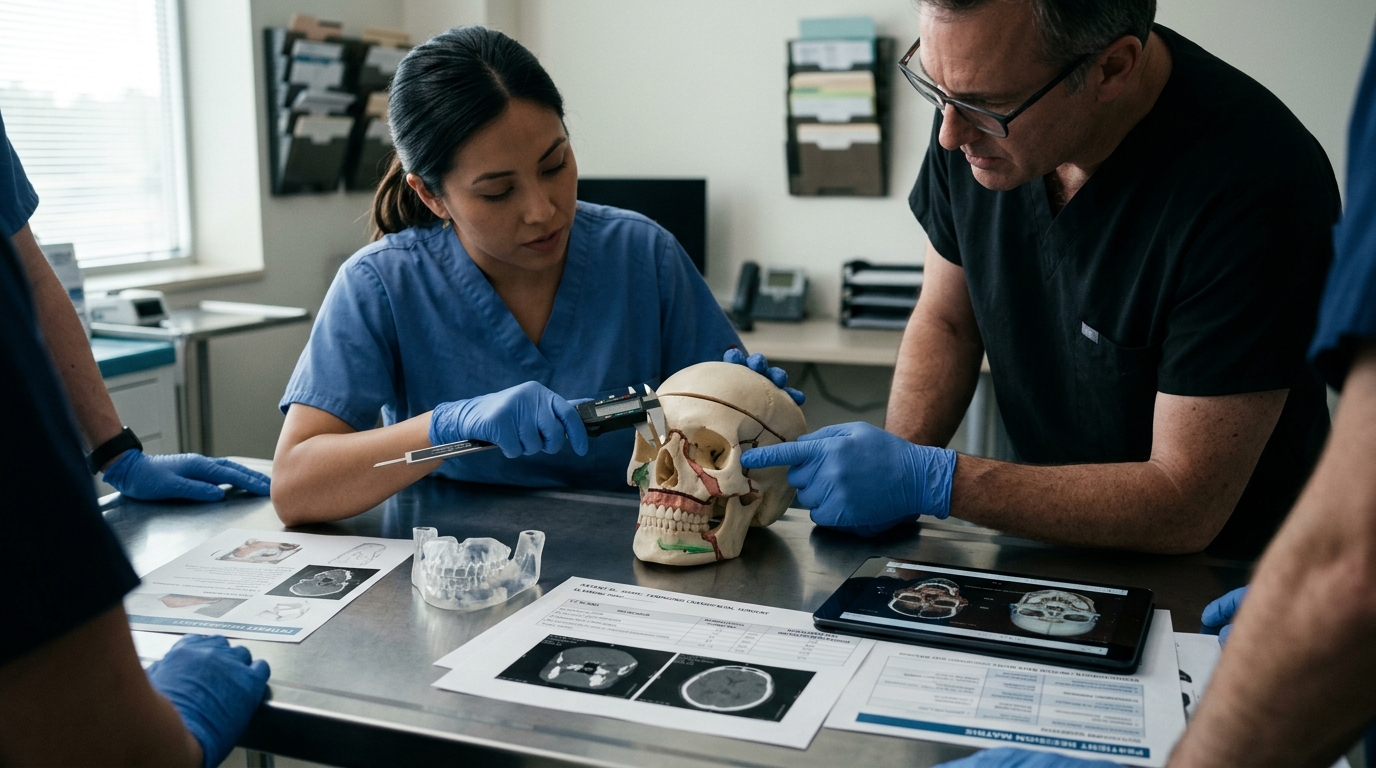
Fixation dynamics differ considerably between these systems. Titanium mesh is anchored using self-drilling 1.0mm to 1.5mm micro-screws, creating immediate rigid fixation across bony ledges. With PEEK implants, low-profile counter-sunk screw holes ensure hardware remains impalpable even under high-tension coronal closures. The choice between titanium mesh vs peek ffs therefore impacts operative timing, with custom PEEK reducing operative shaping time substantially.
Biocompatibility studies continue to affirm that both options promote stable soft tissue adherence when subperiosteal vascularity is respected. Virtual surgical planning enables surgical simulation before entering the operating suite, optimizing aesthetic curves while protecting sinus mucosa.
Patient Decision Matrix for Feminizing Biomaterials
Prospective candidates should evaluate anatomical criteria, budget considerations, and long-term functional goals. While custom computer-aided design for PEEK requires advance manufacturing lead time, its anatomical fidelity is unparalleled. Meanwhile, titanium mesh offers exceptional versatility in emergent revisions. Consulting experienced craniofacial specialists ensures the correct material aligns with your unique forehead anatomy.
Choosing Between Titanium Mesh and PEEK in FFS
The choice between titanium mesh and PEEK in FFS depends on anatomy, defect size, soft-tissue coverage, imaging findings, and the surgeon’s reconstructive plan. Titanium offers a strong, thin framework and is commonly considered when rigid contour support is required. PEEK allows patient-specific computer-aided design and a stiffness profile closer to cortical bone, which may be useful when a custom contour is the priority. Neither material is automatically safer for every patient.
Planning should begin with a high-resolution CT assessment and a review of the frontal sinus, orbital rims, bone thickness, prior hardware, and available soft-tissue coverage. The consultation should also address infection risk, palpability, fixation, revision access, expected swelling, and the possibility that the final contour may require staged treatment. Material selection is only one part of the result; accurate design, sterile handling, stable fixation, and appropriate follow-up matter equally.
Patients should compare titanium mesh and PEEK in FFS with a qualified craniofacial surgeon rather than choosing by material name alone. A useful consultation includes the proposed implant design, alternatives, limitations, recovery milestones, and a clear revision plan. For broader procedure context, review the facial feminization surgery pillar before making a treatment decision.
How are titanium mesh and PEEK selected in FFS?
Selection depends on CT anatomy, defect size, soft-tissue coverage, prior surgery, fixation needs, and the surgeon’s reconstructive plan. Neither material is universally best.
Is PEEK automatically safer than titanium for facial feminization?
No. PEEK offers patient-specific design, while titanium provides rigid structural support. Infection, fixation, contour, and revision risks depend on the patient and the complete surgical technique.
What should a consultation for a custom FFS implant include?
The consultation should cover CT findings, implant design, fixation, alternatives, recovery, warning symptoms, expected limitations, and a revision plan.