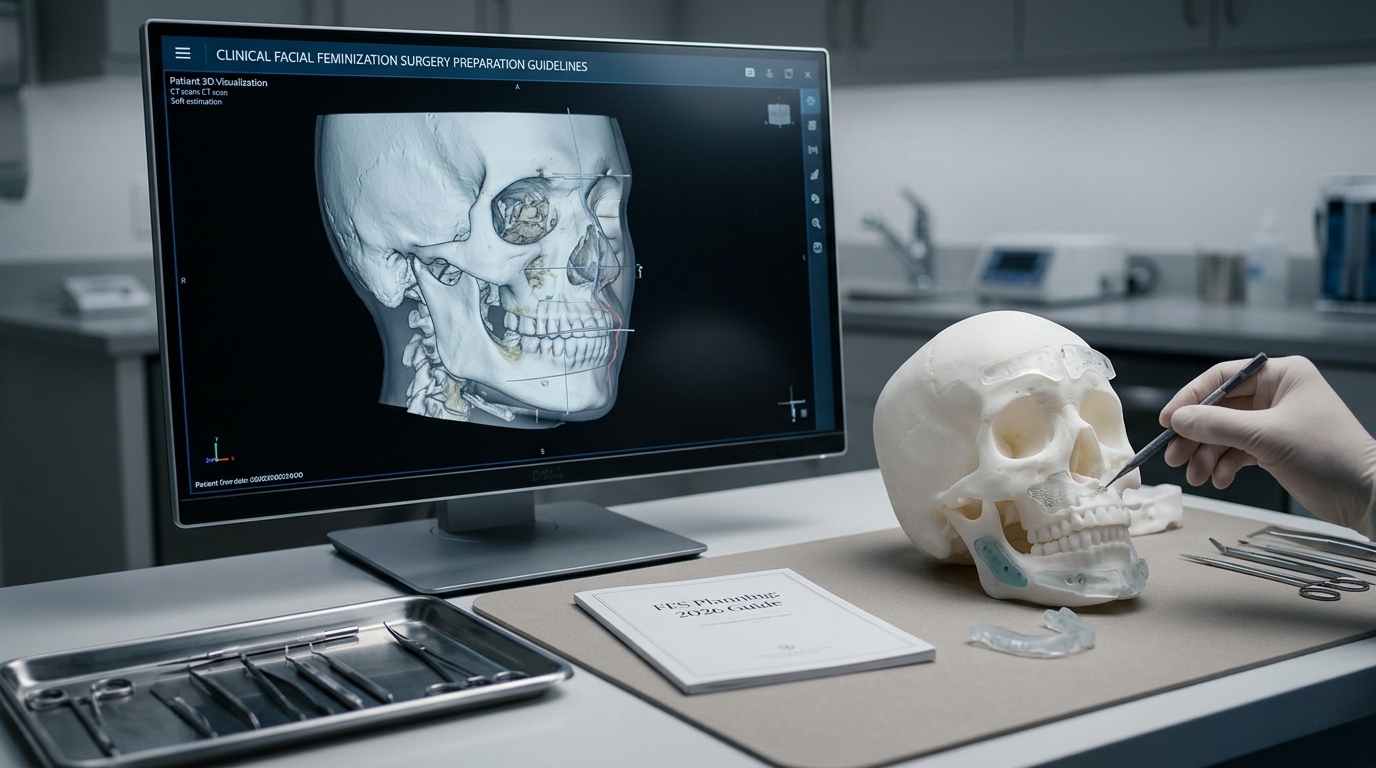
By 2026, global advanced plastic surgery has turned into a high-stakes competition between South Korea and Turkey. Seoul has long held the crown for aesthetic innovation, but Istanbul has rapidly closed the gap, pairing high-tech medical infrastructure with far lower costs.
Still, there is a crucial question most patients overlook: if you are planning complex, high-impact procedures like facial feminization, bone contouring, or gender-affirming surgery, which country actually gives you the safest, most patient-focused experience?
It takes much more than comparing price tags or hospital reputations. You have to look closely at clinical infrastructure, surgical expertise, and post-operative support when precision is non-negotiable. Below, we break down Seoul’s tech-driven Gangnam district, Istanbul’s medical tourism setup, and the hidden risks clinics rarely talk about upfront. If you are early in your planning stages, take a moment to review our comprehensive medical tourism checklist as well.

Table of Contents
The Technological Edge: Seoul’s Precision vs. Istanbul’s Innovation
South Korea’s main advantage lies in its deep technological integration. Walk into any top clinic in Seoul’s Gangnam district, and you will find AI-driven 3D surgical planning, robotic assistants, and real-time intraoperative imaging. Research published in PRS Global Open shows that about 89% of facial bone contouring procedures in Seoul now leverage AI planning, cutting human error by roughly 40% compared to traditional methods. For procedures like facial feminization (FFS)—where a single millimeter alters both aesthetics and basic function—that degree of accuracy is a game-changer.
Istanbul, though, is catching up fast. Top centers are combining AI tools with endoscopic techniques to keep incisions small and speed up recovery times. Where Turkey really stands out is in regenerative medicine. Techniques like nanofat grafting and stem cell-enriched lipofilling are now routine in premier facilities, helping tissue heal faster while looking entirely natural. That makes a tangible difference in procedures like body feminization, where tissue health matters just as much as the structural work beneath it.
Clinical Infrastructure: Safety, Standards, and Surgeon Expertise
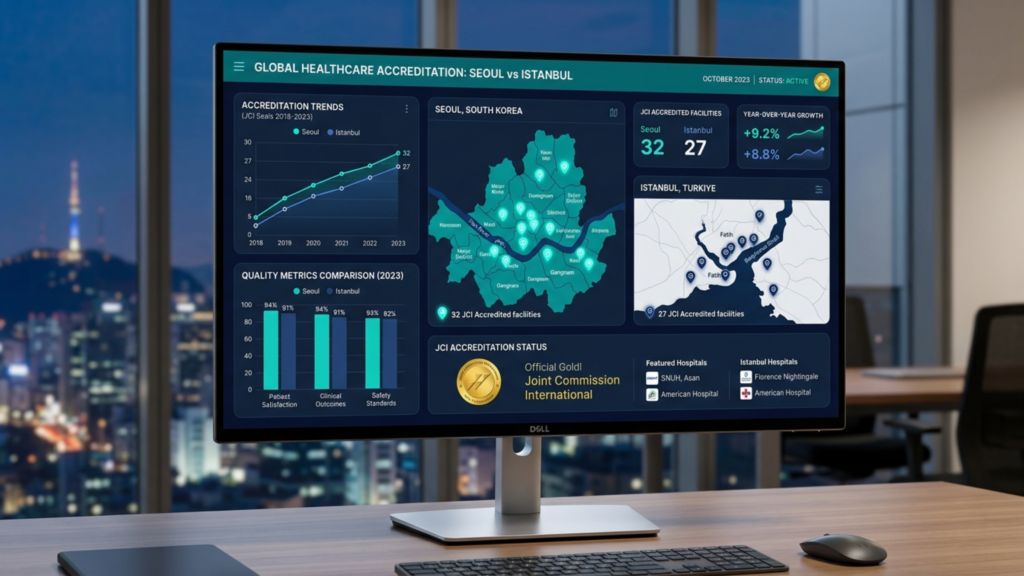
When it comes to safety, South Korea relies on strict centralized oversight. The Korean Ministry of Health and Welfare mandates official accreditation for plastic surgery clinics, backed by annual audits that scrutinize infection control, emergency equipment, and doctor credentials.
Turkey operates on a private hospital model where accreditation from the Joint Commission International (JCI) is voluntary, though standard among top-tier institutions. Data from the International Society of Aesthetic Plastic Surgery (ISAPS) highlights that JCI-accredited Turkish clinics report a 22% lower complication rate in complex procedures like genioplasty and rhinoplasty compared to non-accredited centers. Overall complication rates remain low across both regions, hovering around 1.8% in Seoul and 1.5% in Turkey’s JCI-accredited facilities.
Surgical background also shapes the patient experience. South Korean surgeons excel in East Asian facial aesthetics. Turkish specialists, on the other hand, frequently train across European and Middle Eastern surgical traditions. That broader perspective is a major asset for international patients seeking facial masculinization (FMS) or body feminization, where ethnic variations and structural nuances require a flexible approach. Check out our deep dive on customizing gender-affirming facial surgery to learn more.
The Medical Tourism Experience: Cost, Convenience, and Cultural Sensitivity
Turkey’s medical tourism infrastructure runs like clockwork. Destinations like Istanbul and Antalya offer end-to-end packages covering everything from the procedure itself to hotel accommodations, airport transfers, and personal care coordinators. A standard breast augmentation in Turkey usually costs 60% to 70% less than in Seoul without sacrificing clinical quality. Many specialized clinics offer complete transformation packages built specifically around gender-affirming care, bundling pre-op assessments, surgical fees, aftercare, and luxury recovery stays for a fraction of Western or South Korean prices.
South Korea prioritizes speed and technical efficiency. Gangnam clinics routinely handle consultations and operations on tight schedules, which works well if you want a fast turnaround. However, navigating language barriers and cultural differences can feel overwhelming for non-Asian patients. Turkish facilities, equipped with dedicated multilingual teams, often provide a warmer, more emotionally supportive environment for patients undergoing intense transformations like FFS or top surgery.
Volume Trends: Which Country Handles More Complex Cases?
South Korea leads the world in overall procedure volume, performing well over 1 million cosmetic operations annually. But Turkey experienced a 40% surge in advanced surgical procedures between 2023 and 2026, shifting global demand toward different specialized areas. While Seoul remains the go-to for double eyelid surgery, rhinoplasty, and jaw reduction, Istanbul has become a prime destination for gender-affirming care, body contouring, and complex facial reconstruction.
A report from the American Society of Plastic Surgeons (ASPS) indicates that Turkey now handles roughly 35% of global FFS procedures, surpassing traditional hubs like Thailand and Brazil. A major driver behind this trend is Turkey’s holistic approach to care: clinics integrate mental health guidance, hormone therapy support, and long-term aftercare directly into their surgical programs. In contrast, Seoul’s clinical culture remains heavily centered on aesthetic refinement.
Patient Safety: The Unspoken Risks and How to Avoid Them
While both nations offer world-class care, they come with distinct operational risks. In South Korea, high patient volume sometimes translates into overworked surgical teams. An investigative report by Korea JoongAng Daily connected 12% of complications in Gangnam clinics to surgeon fatigue caused by back-to-back operations. In Turkey, the main concern isn’t surgeon workload, but rather unaccredited budget clinics that cut corners on safety equipment to market impossibly low prices.
To protect yourself, keep these practical steps in mind:
- Confirm official accreditation through JCI in Turkey or the Ministry of Health in South Korea.
- Verify your doctor’s specific board certifications and experience with your exact procedure, especially for delicate surgeries like FFS.
- Ask clinics directly for their documented complication rates for your planned procedure.
- Avoid rigid, cookie-cutter packages that don’t tailor the surgical plan to your personal anatomy.
- Ensure your clinic provides 24/7 post-operative nursing care and clear remote support once you fly home. You can read our post-surgery travel recovery guide for additional aftercare tips.
The Verdict: Which Country Should You Choose?
Your decision ultimately comes down to your personal aesthetic goals, budget, and desired support structure.
Consider South Korea if:
- You want cutting-edge AI surgical planning and maximum technical precision.
- Your procedure focuses on East Asian facial features, such as V-line jaw contouring or double eyelid creation.
- You prefer a swift, efficient clinical process with brief hospital stays.
Consider Turkey if:
- You are seeking gender-affirming surgery, extensive facial feminization, or full-body contouring.
- You value an all-inclusive, culturally sensitive environment with multilingual staff.
- You want to incorporate regenerative options like stem-cell lipofilling to support recovery.
- You prefer a luxury recovery environment at a significantly lower overall cost.
Your Next Steps: A 2026 Action Plan
If you are ready to start planning your journey, here is a structured approach:
- Define your primary goal: Clarify whether you want subtle aesthetic adjustments or a full gender-affirming transformation.
- Shortlist accredited facilities: Focus exclusively on verified medical centers with documented safety credentials.
- Schedule virtual consultations: Speak directly with attending surgeons, review before-and-after cases similar to your starting anatomy, and ask about their specific complication rates.
- Organize your travel and recovery: Give yourself plenty of downtime. Coastal cities like Antalya or historical hubs like Istanbul offer peaceful recovery settings, while Gangnam puts you right in the heart of Seoul’s bustling medical district.
- Set up long-term aftercare: Make sure your surgical team offers virtual follow-up check-ins once you return home, including coordination for any ongoing hormone therapy or routine medical monitoring.
Frequently Asked Questions
What makes Turkey a strong option for gender-affirming surgeries compared to South Korea?
Turkish clinics often take a broader, more holistic approach to gender-affirming care. Facilities combine surgery with hormone guidance, psychological support, and tailored aftercare. Turkish surgeons also bring extensive experience working with diverse global anatomical features, which helps when planning highly individualized FFS or body feminization procedures.
How do plastic surgery costs compare between Turkey and South Korea?
Procedures in Turkey are generally 60% to 70% less expensive than in South Korea without lowering clinical standards. A full facial feminization procedure (FFS) that costs $10,000–$15,000 in Turkey can easily exceed $30,000 in Seoul. Turkey’s all-inclusive packages also wrap accommodations, transfers, and post-op care into one price.
What are the main risks associated with high-volume clinics in South Korea?
The biggest issue in high-volume Gangnam clinics is surgeon burnout. High patient turnaround can lead to surgical fatigue. You can minimize this risk by asking how many procedures your surgeon performs daily and verifying their accreditation with the Korean Ministry of Health.
Why does JCI accreditation matter for clinics in Turkey?
JCI accreditation demonstrates that a private clinic meets strict global benchmarks for safety, sterilization, and emergency management. Facilities holding JCI accreditation report significantly lower complication rates in complex procedures compared to unaccredited competitors.
How does cultural sensitivity affect the patient experience?
Turkish clinics cater heavily to international medical tourists, offering multilingual teams and personalized coordinator support. In South Korea, language barriers and cultural differences can sometimes make the process feel more transactional for international patients, especially during sensitive procedures.
What regenerative medicine options are available in Turkey?
Top Turkish clinics regularly integrate nanofat grafting, stem cell-enriched lipofilling, and PRP (platelet-rich plasma) into surgical plans. These treatments promote faster tissue healing, reduce noticeable scarring, and yield smoother, more natural contours during facial and body procedures.
How can I verify a surgeon’s credentials in either country?
In Turkey, check for European and Turkish Board certifications. In South Korea, confirm that the doctor is board-certified through the Korean Ministry of Health and Welfare. Always review before-and-after cases that match your specific anatomical starting point.
What kind of post-operative care should I expect?
In Turkey, premium clinics provide dedicated recovery stays, around-the-clock nursing support, and ongoing virtual follow-ups. South Korean clinics deliver efficient immediate post-op care, though long-term remote check-ins should be verified and arranged prior to your trip.