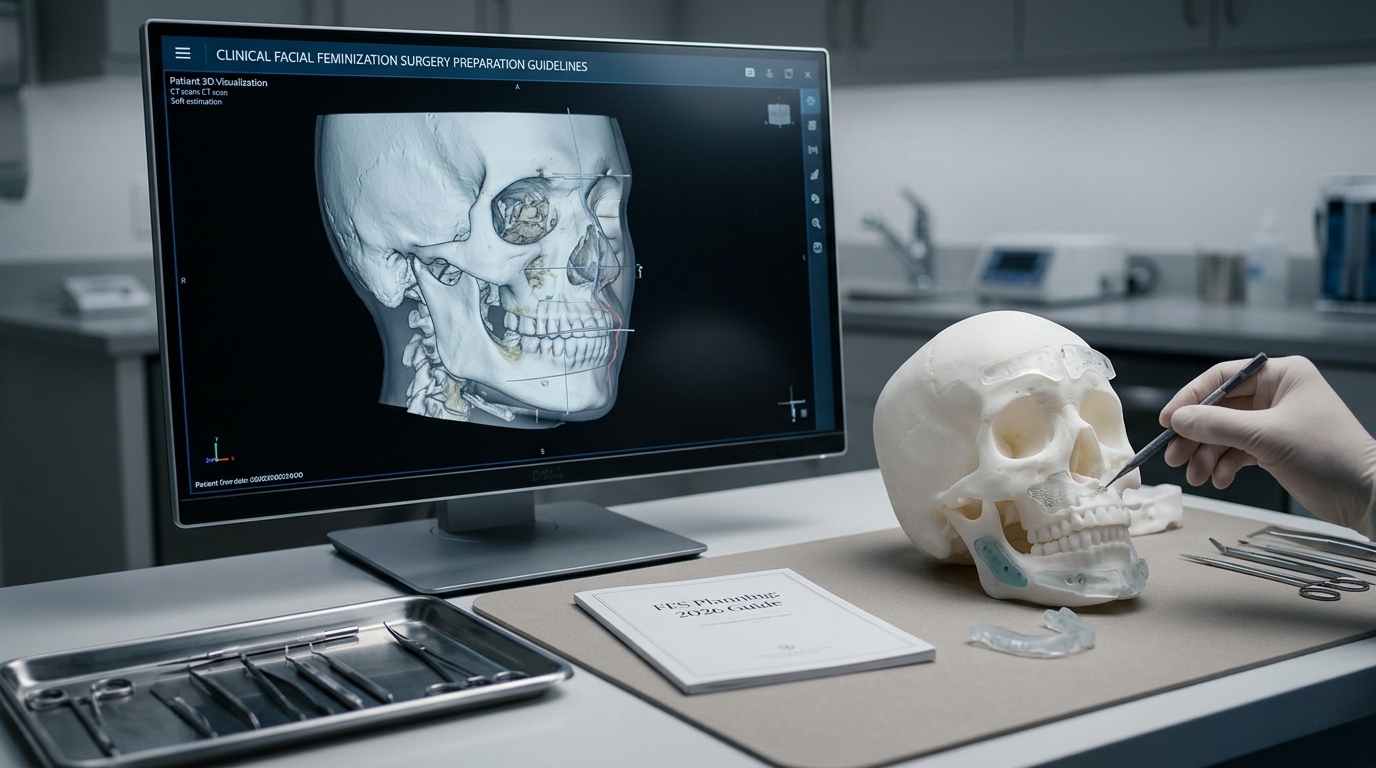

The Mentalis Muscle Bounce-Back Effect is a critical yet often overlooked complication following sliding genioplasty, particularly in patients seeking facial feminization surgery (FFS) or those requiring precise chin contouring for aesthetic or functional symmetry. As we advance into 2026, understanding and addressing this phenomenon is paramount for surgeons aiming to deliver durable, natural-looking results that preserve both static and dynamic chin harmony.
Table of Contents
Understanding the Mentalis Muscle and Its Role in Chin Dynamics
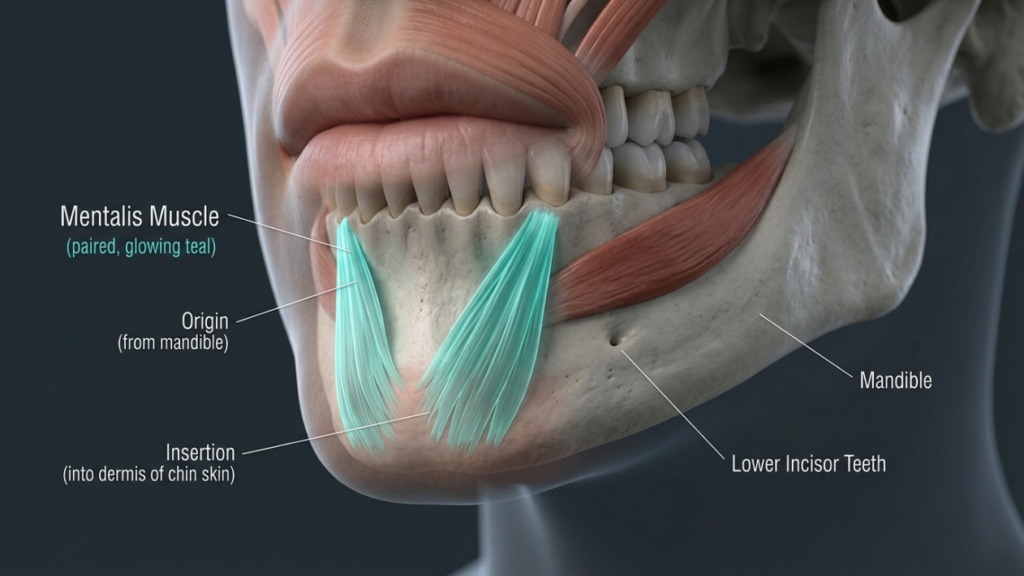
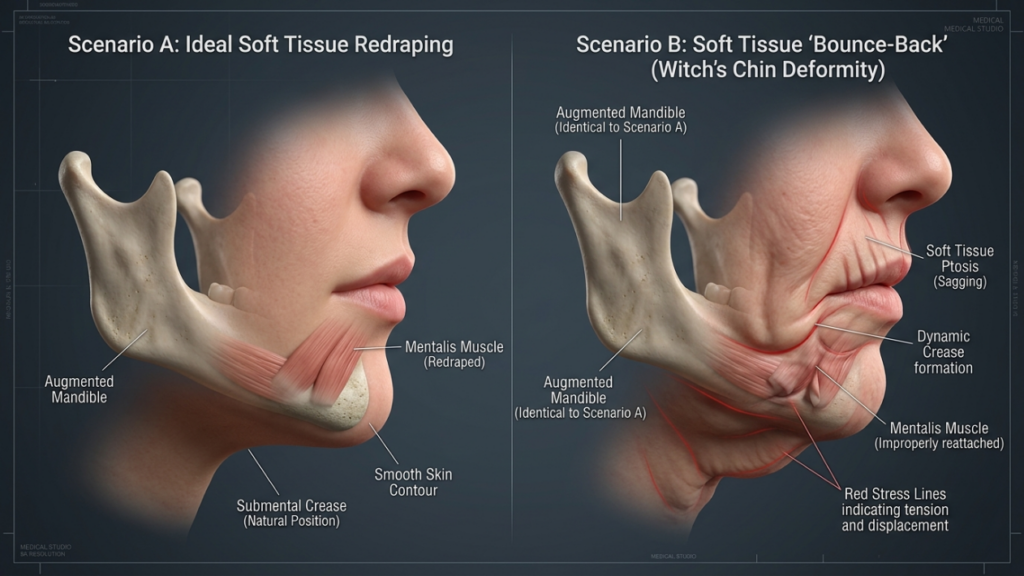
The mentalis muscle is a paired, cone-shaped muscle originating from the incisive fossa of the mandible and inserting into the dermis of the chin. It is responsible for elevating and protruding the lower lip, contributing to facial expressions such as pouting, speaking, and smiling. During genioplasty, especially sliding genioplasty, the mentalis muscle is often detached or manipulated to access the chin bone. If not precisely reattached or if scar tissue forms, the muscle can lose its natural tension and position, leading to the “bounce-back” effect—where the chin soft tissue sags, puckers, or fails to redrape smoothly over the new bony contour.
The Bounce-Back Effect: Why It Happens
The bounce-back effect is multifactorial:
- Muscle Detachment: During genioplasty, the mentalis muscle is often partially or completely detached to access the chin bone. If not meticulously reattached, the muscle can retract or heal in a suboptimal position, leading to soft tissue ptosis or irregular contour.
- Scar Tissue Formation: Post-surgical scar tissue can tether the mentalis muscle, restricting its natural movement and causing unnatural dimpling or puckering, especially during dynamic facial expressions.
- Inadequate Soft Tissue Support: The chin pad (soft tissue envelope) relies on the mentalis muscle for structural support. If the muscle is weakened or improperly repositioned, the soft tissue can sag, creating a “witch’s chin” deformity or a blunted, unnatural contour.
- Bone-Muscle Mismatch: After bony advancement or reduction, the soft tissue envelope may not conform to the new skeletal framework, especially if the muscle is not adequately resuspended or if there is excessive tension or laxity.
In FFS and perioral feminization, where achieving a smooth, feminine chin contour is essential, the bounce-back effect can compromise both aesthetic and functional outcomes, leading to patient dissatisfaction and the need for revision surgery.
Precision Myoplasty: The 2026 Gold Standard for Prevention and Correction
To address the mentalis bounce-back effect, precision myoplasty has emerged as the gold standard in 2026. This technique focuses on the meticulous reattachment, suspension, and functional restoration of the mentalis muscle, ensuring dynamic chin symmetry and long-term stability. Here’s how it works:
1. Vestibular Incision and Subperiosteal Dissection
A vestibular incision (inside the lower lip) is the preferred approach for genioplasty in 2026. This incision provides excellent access to the chin bone while minimizing visible scarring. The mentalis muscle is carefully dissected in a subperiosteal plane, preserving its neurovascular supply and allowing for precise mobilization. This approach reduces the risk of nerve injury and ensures that the muscle remains viable for reattachment.
2. Muscle Marking and Isolation
Before osteotomy, the mentalis muscle is isolated and marked with surgical ink or sutures. This step is crucial for identifying the muscle’s original position and ensuring accurate reattachment. The muscle is then gently reflected to expose the chin bone, taking care to avoid excessive traction or damage to its fibers.
3. Osteotomy and Bony Repositioning
The chin bone is osteotomized and repositioned according to the preoperative plan. In 2026, 3D virtual surgical planning (VSP) and patient-specific guides are routinely used to ensure millimeter-precise movements, whether for advancement, reduction, or asymmetry correction. The bony segment is stabilized with titanium plates and screws, providing a rigid framework for soft tissue redraping.
4. Myoplastic Reattachment and Suspension
This is the most critical step in preventing the bounce-back effect. The mentalis muscle is reattached to its original insertion point using non-absorbable sutures. In cases of significant bony advancement or reduction, the muscle may be suspended to the periosteum or bony framework to maintain tension and prevent ptosis. The goal is to restore the muscle’s natural vector of pull, ensuring that it functions harmoniously with the new chin contour.
In 2026, dynamic muscle mapping—a technique that uses intraoperative neuromonitoring to assess muscle function—is increasingly employed to confirm that the mentalis muscle retains its innervation and contractility post-reattachment.
5. Vestibular Closure and Soft Tissue Redraping
The vestibular incision is closed in layers, with particular attention to multilayered wound closure to minimize dead space and reduce the risk of hematoma or seroma formation. The mentalis muscle is gently redraped over the new chin contour, and the mucosal layer is sutured to ensure a smooth, tension-free closure. This step is essential for preventing scar contracture and ensuring natural soft tissue dynamics.
Advanced Techniques for Complex Cases
In patients with pre-existing chin asymmetry, revision surgery, or those requiring significant bony movements, additional techniques are employed to optimize outcomes:
- Pedicled Mentalis Muscle Flap: In cases where the mentalis muscle has been significantly damaged or scarred, a pedicled muscle flap can be used to restore volume and function. This technique involves preserving a vascularized segment of the muscle and repositioning it to provide structural support and dynamic function.
- Fat Grafting or Alloplastic Augmentation: For patients with inadequate soft tissue volume, autologous fat grafting or alloplastic implants can be used to augment the chin pad and improve contour. However, these techniques must be combined with precise myoplasty to avoid complications such as implant migration or extrusion.
- Piezoelectric Surgery: This advanced bone-cutting technology uses ultrasonic vibrations to precisely osteotomize the chin bone while sparing soft tissues, including the mentalis muscle. Piezoelectric surgery reduces the risk of thermal or mechanical injury, promoting faster healing and minimizing scar tissue formation.
- Intraoperative Nerve Monitoring (IONM): IONM is used to monitor the function of the mental nerve and inferior alveolar nerve during genioplasty. This real-time feedback allows surgeons to adjust their technique to avoid nerve injury, which can contribute to muscle dysfunction and poor soft tissue outcomes.
Postoperative Care and Recovery: Ensuring Long-Term Symmetry
Postoperative care is critical for preventing the bounce-back effect and ensuring long-term dynamic chin symmetry. Key strategies include:
- Compression Garments: Patients are advised to wear a chin compression garment for the first 2-4 weeks post-surgery to minimize swelling and support soft tissue redraping.
- Soft Diet and Oral Hygiene: A soft diet is recommended for the first 2 weeks to reduce strain on the mentalis muscle and vestibular incision. Patients are instructed to perform gentle oral hygiene to prevent infection and promote healing.
- Scar Management: Silicone gel sheets or scar creams are used to minimize scar tissue formation and improve the elasticity of the vestibular incision.
- Physical Therapy: Gentle facial exercises and manual lymphatic drainage are introduced 3-4 weeks post-surgery to restore muscle function and reduce stiffness.
- Follow-Up and Revision Planning: Regular follow-up appointments are scheduled to monitor healing and address any early signs of muscle dysfunction or asymmetry. In cases where the bounce-back effect is observed, early intervention with scar release or revision myoplasty can prevent long-term complications.
Complications and How to Avoid Them
Despite meticulous surgical technique, complications can occur. The most common issues related to the mentalis bounce-back effect include:
| Complication | Cause | Prevention Strategy |
|---|---|---|
| Soft Tissue Ptosis | Inadequate muscle reattachment or suspension | Precision myoplasty with non-absorbable sutures; dynamic muscle mapping |
| Chin Puckering/Dimpling | Scar tissue tethering or muscle dysfunction | Multilayered wound closure; scar management; physical therapy |
| Asymmetry | Uneven muscle reattachment or bony repositioning | 3D virtual surgical planning; intraoperative neuromonitoring; patient-specific guides |
| Nerve Injury | Excessive traction or osteotomy proximity to mental nerve | Subperiosteal dissection; piezoelectric surgery; IONM |
| Infection/Hematoma | Poor wound closure or dead space formation | Multilayered closure; compression garments; antibiotic prophylaxis |
In 2026, the integration of AI-driven predictive modeling and augmented reality (AR) navigation has further reduced the risk of complications, allowing surgeons to simulate soft tissue dynamics and plan myoplasty with unprecedented precision.

Patient Selection and Counseling: Setting Realistic Expectations
Not all patients are ideal candidates for genioplasty with precision myoplasty. Key considerations include:
- Anatomical Suitability: Patients with severe chin asymmetry, previous chin surgery, or significant soft tissue laxity may require additional procedures, such as fat grafting or implant placement, to achieve optimal results.
- Psychological Readiness: Patients must have realistic expectations about the outcomes of genioplasty and myoplasty. Preoperative counseling should emphasize that while the procedure can significantly improve chin symmetry and dynamics, perfect symmetry is not always achievable.
- Medical History: Patients with a history of keloid scarring, poor wound healing, or neuromuscular disorders may be at higher risk for complications and should be evaluated on a case-by-case basis.
In 2026, patient-reported outcome measures (PROMs) and 3D aesthetic simulations are routinely used to align patient expectations with surgical possibilities, reducing the risk of postoperative dissatisfaction.
The Future of Dynamic Chin Symmetry: Innovations on the Horizon
As we look beyond 2026, several innovations are poised to further revolutionize the field of genioplasty and myoplasty:
- Bioabsorbable Fixation: The development of bioabsorbable plates and screws for genioplasty will eliminate the need for hardware removal and reduce the risk of long-term complications such as implant migration or palpability.
- Stem Cell-Enhanced Myoplasty: Research into stem cell therapy for muscle regeneration may soon allow surgeons to enhance the healing and function of the mentalis muscle, reducing the risk of bounce-back and improving dynamic outcomes.
- AI-Driven Surgical Planning: AI algorithms are being trained to predict soft tissue dynamics based on bony movements, allowing for even more precise preoperative planning and intraoperative decision-making.
- Minimally Invasive Techniques: Advances in endoscopic-assisted genioplasty and robotic surgery are expected to further reduce tissue trauma, improve precision, and accelerate recovery.

Conclusion: Achieving Dynamic Chin Symmetry in 2026 and Beyond
The Mentalis Muscle Bounce-Back Effect is a complex and multifactorial challenge in genioplasty, but with the advent of precision myoplasty and advanced surgical techniques, surgeons in 2026 are better equipped than ever to address it. By combining meticulous muscle reattachment, dynamic muscle mapping, and innovative technologies, it is possible to achieve durable, natural-looking chin symmetry that enhances both aesthetic and functional outcomes.
For patients seeking facial feminization, perioral rejuvenation, or corrective chin surgery, the key to success lies in choosing a surgeon with expertise in both bony and soft tissue manipulation. As the field continues to evolve, the integration of AI, robotics, and regenerative medicine will further refine our ability to deliver dynamic chin symmetry, ensuring that patients can smile, speak, and express themselves with confidence.
For more information on genioplasty, facial feminization, and advanced chin contouring techniques, visit Dr. MFO’s Genioplasty Surgery page.
Frequently Asked Questions
What is the Mentalis Muscle Bounce-Back Effect?
The Mentalis Muscle Bounce-Back Effect refers to the sagging, puckering, or irregular contouring of the chin soft tissue following genioplasty, caused by improper reattachment or healing of the mentalis muscle. This can result in a loss of dynamic chin symmetry and an unnatural appearance during facial expressions.
How does precision myoplasty prevent the bounce-back effect?
Precision myoplasty involves meticulously reattaching and suspending the mentalis muscle to its original insertion point, ensuring proper tension and alignment. This technique, combined with multilayered wound closure and scar management, helps maintain the muscle’s natural function and prevents soft tissue ptosis or irregular contouring.
What are the signs that I might need revision surgery for chin asymmetry?
Signs that may indicate the need for revision surgery include persistent chin puckering or dimpling, noticeable asymmetry during smiling or speaking, soft tissue sagging (witch’s chin deformity), or dissatisfaction with the aesthetic outcome. Early intervention with scar release or revision myoplasty can often address these issues.
Is genioplasty with myoplasty suitable for facial feminization surgery (FFS)?
Yes, genioplasty with precision myoplasty is a cornerstone of facial feminization surgery. It allows for the creation of a smooth, feminine chin contour while preserving dynamic symmetry. The vestibular incision approach is particularly favored in FFS for its scarless outcome and precise soft tissue management.
What is the recovery timeline after genioplasty with myoplasty?
Initial swelling and bruising typically subside within 2-4 weeks, but full soft tissue redraping and muscle function recovery may take 3-6 months. Patients are advised to wear a chin compression garment, follow a soft diet, and perform gentle facial exercises to support healing and restore dynamic function.
Can the bounce-back effect be corrected without surgery?
In mild cases, non-surgical interventions such as scar massage, physical therapy, or injectable treatments (e.g., hyaluronic acid or botulinum toxin) may improve chin contour and muscle dynamics. However, significant bounce-back or asymmetry usually requires revision surgery with precision myoplasty for optimal results.