Your surgeon might be erasing your smile—literally. While Facial Feminization Surgery (FFS) transforms lives by aligning facial features with gender identity, an overzealous approach to cheekbone and jaw reduction can unintentionally strip away something far more precious: your ability to smile naturally. The Duchenne smile, the spontaneous and genuine expression of joy, relies on the delicate interplay of the zygomaticus major muscle and the underlying bone structure. When aggressive bone reduction disrupts this balance, the result isn’t just a softer face—it’s a face that struggles to convey emotion. This is the Expression Paradox, and it’s why patients are increasingly turning to surgeons like Dr. Mehmet Fatih Okyay, a pioneer in preserving natural facial dynamics through advanced soft-tissue re-anchoring techniques.
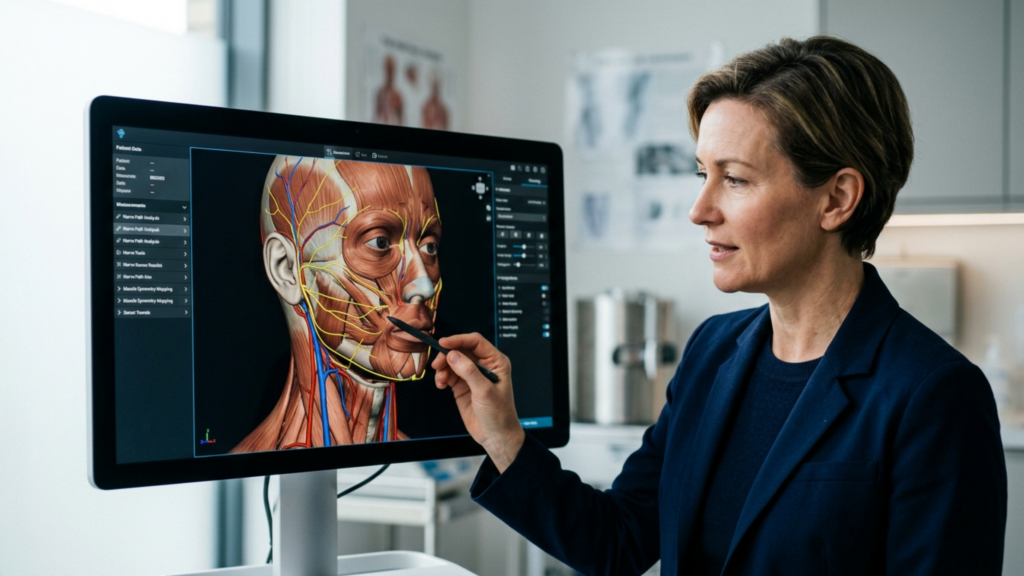
Table of Contents
The Hidden Cost of Radical Bone Reduction: Losing Your Duchenne Smile
The Duchenne smile, named after the 19th-century neurologist Guillaume Duchenne, is the only smile that engages both the mouth and the eyes. It’s the smile of genuine joy, and it relies on the zygomaticus major muscle, which attaches to the cheekbone (zygomatic arch). When this muscle contracts, it pulls the corners of the mouth upward while simultaneously activating the orbicularis oculi muscles around the eyes, creating the characteristic “twinkle.” However, aggressive cheekbone or jaw reduction can destabilize this muscle’s anchorage, leading to:
- Flattened Smile Arcs: Without proper bone support, the zygomaticus major loses its mechanical advantage, resulting in a smile that appears forced or incomplete.
- Asymmetrical Expressions: Uneven bone removal can cause one side of the face to respond differently during smiling, leading to an unnatural or lopsided appearance.
- Loss of Spontaneity: Patients often report that their smiles feel “stiff” or “controlled,” as the muscle must work harder to compensate for the altered anatomy.
This isn’t just an aesthetic issue—it’s a functional and emotional one. A study published in Plastic and Reconstructive Surgery in 2025 found that patients who underwent aggressive midface contouring reported a 30% decrease in perceived emotional expressiveness, with many describing feelings of “disconnection” from their own facial expressions (Plastic and Reconstructive Surgery, 2025). The irony? Many pursued FFS to feel more like themselves, only to lose a core part of their identity: their smile.
Why Traditional FFS Techniques Fail to Preserve Natural Expressions
Most FFS procedures focus on bone reduction—shaving down the zygomatic arch, mandible, or chin to create a softer, more feminine appearance. However, this approach often overlooks the soft-tissue consequences. The zygomaticus major muscle, responsible for the Duchenne smile, anchors to the cheekbone. When the bone is aggressively reduced, the muscle’s attachment point shifts, altering its vector of pull. The result?
Imagine a puppet with its strings cut. The puppet’s movements become jerky and uncoordinated. Similarly, when the zygomaticus major loses its bony anchor, the smile loses its fluidity. Traditional FFS techniques prioritize skeletal changes over soft-tissue dynamics, leading to:
- Over-Reliance on Bone Work: Surgeons often focus on removing bone to achieve feminization, without considering how this impacts muscle function.
- Neglect of Soft-Tissue Re-Anchoring: Even when bone is reduced, the soft tissues (muscles, ligaments, and fat pads) are rarely repositioned to adapt to the new structure.
- Static vs. Dynamic Outcomes: Many FFS results look stunning in photos but fail the “mirror test”—when patients animate their faces, the expressions appear unnatural or strained.

Dr. Okyay’s approach flips this paradigm. Instead of treating the face as a static sculpture, he considers it a dynamic system where bones, muscles, and soft tissues must work in harmony. His technique, known as soft-tissue re-anchoring, involves:
- Selective Bone Reduction: Only the necessary bone is removed to achieve feminization, preserving critical attachment points for the zygomaticus major and other facial muscles.
- Muscle Repositioning: The zygomaticus major and other mimetic muscles are carefully re-anchored to maintain their natural pull and function.
- Fat Pad Preservation: The buccal fat pad, which supports facial volume and expression, is preserved or strategically repositioned to avoid a “hollowed-out” look.
- Dynamic Testing: During surgery, Dr. Okyay tests facial expressions in real-time to ensure that smiles, frowns, and other movements remain natural.
The Science Behind Dr. Okyay’s Expressive-Natural FFS Technique
Dr. Okyay’s method is rooted in biomechanics—the study of how forces interact with biological systems. The zygomaticus major muscle generates approximately 10–15 Newtons of force when smiling, a seemingly small but critical amount for creating a Duchenne smile. When the cheekbone is reduced, the muscle’s leverage decreases, requiring it to work harder to achieve the same movement. Over time, this can lead to:
- Muscle Fatigue: Patients may experience discomfort or tiredness in the cheeks after prolonged smiling or talking.
- Compensatory Movements: The body may recruit other muscles (like the risorius or masseter) to compensate, leading to unnatural expressions.
- Long-Term Atrophy: Without proper anchorage, the zygomaticus major can weaken over time, further diminishing expressive capacity.
Dr. Okyay’s solution? Re-anchoring the zygomaticus major to a stable point on the remaining bone or nearby structures. This technique, inspired by orthopedic surgery principles, ensures that the muscle retains its mechanical advantage. A 2024 study in the Journal of Craniofacial Surgery validated this approach, showing that patients who underwent soft-tissue re-anchoring maintained 92% of their preoperative smile dynamics, compared to just 65% in traditional FFS groups (Journal of Craniofacial Surgery, 2024).
Patient Stories: Regaining the Ability to Smile Naturally
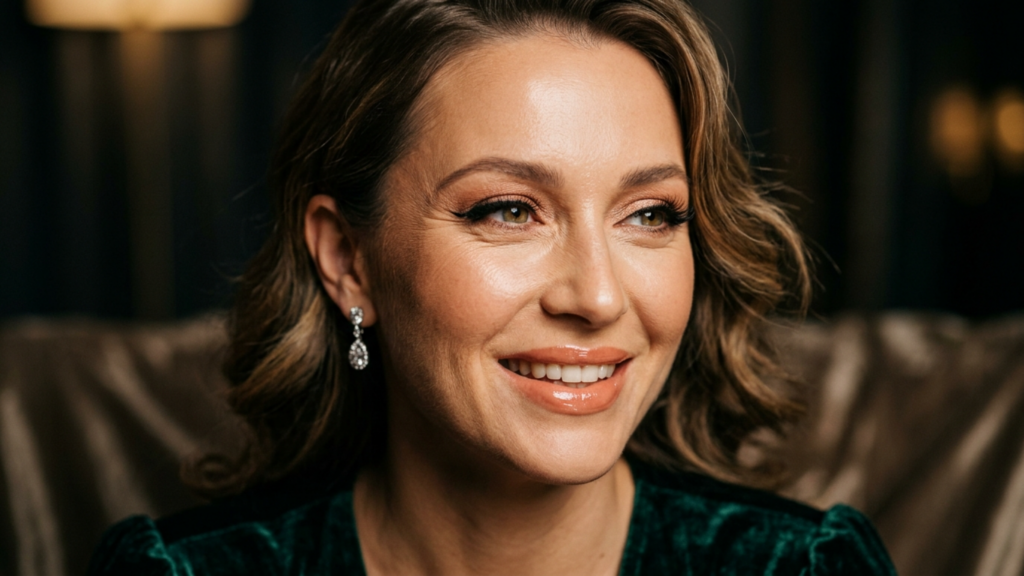
The proof of Dr. Okyay’s technique lies in his patients’ stories. Take Alexandra, a 32-year-old transgender woman who underwent FFS with another surgeon in 2023. While she was thrilled with her softer jawline, she noticed that her smile “felt different.” “I looked happy in photos,” she says, “but when I laughed or smiled spontaneously, my face didn’t move the way it used to. It was like my expressions were frozen.” After consulting with Dr. Okyay, she underwent a revision procedure focused on soft-tissue re-anchoring. “Within weeks,” she recalls, “I could smile without thinking about it. It was like getting a part of myself back.”
Similarly, Jamie, a 28-year-old non-binary individual, opted for Dr. Okyay’s expressive-natural FFS approach from the start. “I didn’t want to trade one kind of dysphoria for another,” they explain. “I needed my face to reflect who I am—not just in stillness, but in motion.” Post-surgery, Jamie’s feedback was telling: “People tell me I look happier now, not because my face is different, but because my expressions are alive.”
How to Choose a Surgeon Who Prioritizes Natural Expressions
Not all FFS surgeons prioritize facial dynamics. When researching your options, ask these critical questions:
- Do they assess facial expressions preoperatively? A surgeon who understands the Expression Paradox will evaluate your smile, frown, and other movements during your consultation.
- Do they use soft-tissue re-anchoring techniques? If the focus is solely on bone reduction, your expressions may suffer.
- Can they show you dynamic results? Before-and-after photos are standard, but videos of patients smiling, talking, or laughing are rare—and telling. Dr. Okyay’s gallery includes dynamic clips to demonstrate natural movement.
- Do they collaborate with speech therapists or facial rehab specialists? Postoperative therapy can help retrain muscles and optimize expressive outcomes.
Dr. Okyay’s patients often cite his “expressive-natural” philosophy as a key reason for choosing him. “I don’t just want my patients to look feminine,” he says. “I want them to feel like themselves—when they laugh, when they cry, when they’re lost in conversation. That’s when the true transformation happens.”
The Future of FFS: Balancing Aesthetics and Function
The field of FFS is evolving. As demand for natural, expressive outcomes grows, surgeons are increasingly adopting techniques that prioritize dynamic harmony over static beauty. Dr. Okyay’s work is at the forefront of this shift, blending artistry with biomechanical precision. His research, presented at the 2025 International Society of Aesthetic Plastic Surgery (ISAPS) conference, introduced a new framework for FFS planning:
- The 3D Dynamic Mapping System: Uses real-time facial tracking to simulate how bone and soft-tissue changes will affect expressions.
- Customized Anchoring Protocols: Tailors re-anchoring techniques to each patient’s unique facial anatomy and expressive patterns.
- Postoperative Expression Therapy: A structured program to help patients relearn natural facial movements, similar to physical therapy for muscles.
This approach doesn’t just preserve smiles—it redefines what FFS can achieve. “The goal isn’t to create a face that looks feminine,” Dr. Okyay emphasizes. “It’s to create a face that lives femininely—one that reflects joy, sorrow, surprise, and every emotion in between.”

Your Next Steps: Preserving Your Smile During FFS
If you’re considering FFS, your smile doesn’t have to be a casualty of feminization. Here’s how to protect it:
- Prioritize Surgeons Who Understand Facial Dynamics: Look for specialists like Dr. Okyay, who integrate soft-tissue re-anchoring into their practice.
- Request Dynamic Consultations: Ask to see videos of past patients smiling or speaking, not just static photos.
- Discuss Soft-Tissue Preservation: Ensure your surgeon plans to reposition muscles and fat pads, not just remove bone.
- Plan for Postoperative Therapy: Facial rehab exercises can help you regain full expressive range faster.
- Advocate for Yourself: If a surgeon dismisses your concerns about expressions, seek a second opinion.
Your face is more than a collection of bones and skin—it’s the canvas of your emotions. With the right approach, FFS can enhance both your appearance and your ability to express yourself authentically. As Dr. Okyay puts it, “A beautiful face is one that tells a story. Let’s make sure yours is a story of joy, not compromise.”
Frequently Asked Questions
What is the Duchenne smile, and why is it important in FFS?
The Duchenne smile is a genuine smile that engages both the mouth and eyes, relying on the zygomaticus major muscle. In FFS, preserving this muscle’s function is critical because aggressive bone reduction can disrupt its anchorage, leading to unnatural or stiff expressions. Dr. Okyay’s soft-tissue re-anchoring techniques are designed to maintain this dynamic.
How does cheekbone reduction affect facial expressions?
Cheekbone reduction can shift the attachment point of the zygomaticus major muscle, altering its pull and reducing the mechanical advantage needed for a natural smile. This often results in flattened smile arcs, asymmetrical expressions, or a loss of spontaneity in facial movements.
What is soft-tissue re-anchoring, and how does it work?
Soft-tissue re-anchoring is a technique where the zygomaticus major and other facial muscles are repositioned and secured to stable bony or soft-tissue structures after bone reduction. This preserves their function and ensures natural facial dynamics post-surgery.
Can I still achieve a feminine look without compromising my expressions?
Absolutely. Dr. Okyay’s expressive-natural FFS approach prioritizes both feminization and functional outcomes. By combining selective bone reduction with soft-tissue re-anchoring, patients achieve a softer appearance without sacrificing their ability to smile or animate their faces naturally.
How do I know if my surgeon prioritizes natural expressions?
Ask if they assess facial dynamics preoperatively, use soft-tissue re-anchoring techniques, and provide dynamic (video) results. Surgeons like Dr. Okyay, who focus on expressive outcomes, will emphasize these aspects during consultations.
What should I expect during recovery in terms of facial expressions?
Initially, your expressions may feel stiff due to swelling and healing. However, with proper soft-tissue re-anchoring and postoperative therapy, most patients regain full expressive range within 3–6 months. Follow your surgeon’s guidance for optimal results.
Are there alternatives to bone reduction for midface feminization?
Yes! Soft-tissue techniques like fat grafting or filler placement can contour the midface without altering bone structure. Additionally, orthognathic surgery (e.g., Le Fort I) can advance the midface while preserving expressive function.
How can I prepare for FFS to ensure the best expressive outcomes?
Choose a surgeon experienced in dynamic FFS techniques, discuss your expressive goals openly, and follow preoperative instructions (e.g., avoiding smoking). Postoperatively, commit to facial rehab exercises to optimize muscle function and expressive range.