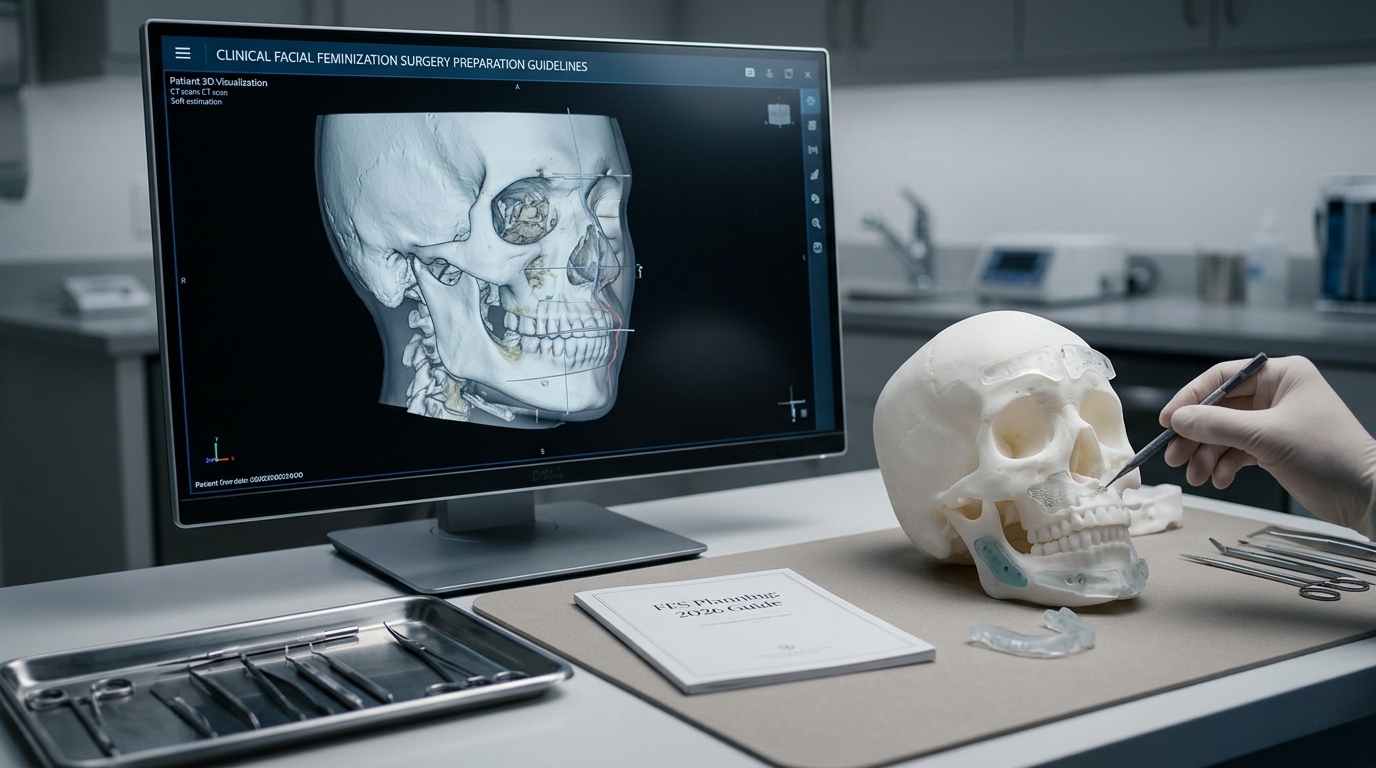

Facial Feminization Surgery (FFS) is a life-changing set of procedures designed to align facial features with a patient’s gender identity, offering both aesthetic and psychological benefits. However, as with any surgical intervention involving bone modification, there are concerns about long-term stability, particularly the risk of bone resorption. This article explores the latest evidence-based strategies to prevent bone resorption and ensure lasting stability after FFS, with a focus on the critical role of choosing a Board Certified specialist.
Review documented clinical transformations and patient case studies in our before after FFS gallery.

Table of Contents
Understanding Bone Resorption After FFS
Bone resorption is a natural process where bone tissue is broken down and its minerals are released into the bloodstream. While this process is essential for maintaining bone health and calcium balance, it can become problematic after surgical procedures, especially those involving bone contouring or implants. In the context of FFS, bone resorption can lead to:
- Loss of structural integrity: Weakening of the reshaped facial skeleton, potentially altering the surgical outcome.
- Asymmetry or irregularities: Uneven bone loss can result in facial asymmetry or depressions, particularly in areas like the forehead, jaw, or chin.
- Functional complications: In rare cases, excessive bone resorption can affect facial function, such as jaw movement or nasal airway patency.
- Need for revision surgery: Severe bone resorption may necessitate additional procedures to restore the desired facial contour.
Recent studies, including a 2025 review in the Journal of Craniofacial Surgery, highlight that while bone resorption can occur after FFS, its extent and impact are highly dependent on surgical technique, patient-specific factors, and postoperative care. The good news is that with the right approach, bone resorption can be minimized or even prevented, ensuring long-term stability and satisfaction with FFS results (Journal of Craniofacial Surgery, 2025).
The Role of a Board Certified Surgeon in Preventing Bone Resorption
Choosing a Board Certified surgeon is the most critical step in ensuring long-term stability after FFS. Board certification—such as from the American Board of Facial Plastic and Reconstructive Surgery (ABFPRS) or the American Board of Plastic Surgery (ABPS)—signifies that the surgeon has undergone rigorous training, demonstrated expertise in facial anatomy and surgical techniques, and adheres to the highest standards of patient safety and ethical practice. Here’s why this matters for preventing bone resorption:
1. Precision in Surgical Technique
Board Certified surgeons are trained in advanced techniques that minimize trauma to bone and surrounding tissues. For example:
- Controlled bone contouring: Instead of aggressive bone removal, Board Certified surgeons use precise burring or osteotomy techniques to achieve the desired contour while preserving bone integrity. This reduces the risk of postoperative bone resorption and ensures smoother, more natural results.
- Virtual surgical planning (VSP): Many Board Certified surgeons use 3D imaging and virtual surgical planning to simulate the surgical outcome before the procedure. VSP allows for precise osteotomy planning, ensuring that bone modifications are both aesthetically optimal and structurally sound. A 2025 study in Plastic and Reconstructive Surgery found that VSP significantly reduces the risk of bone irregularities and resorption by allowing surgeons to anticipate and avoid high-risk areas (Springer, 2025).
- Minimally invasive approaches: Techniques such as endoscopic brow lifts or intraoral jaw contouring reduce soft tissue trauma and preserve critical support structures, further minimizing the risk of bone resorption.
2. Patient-Specific Risk Assessment
Bone resorption risk is not the same for every patient. Factors such as age, bone density, hormonal status, and pre-existing conditions (e.g., osteoporosis) can influence the likelihood of resorption. Board Certified surgeons conduct comprehensive preoperative assessments, including:
- Bone density evaluation: Patients with low bone density may be at higher risk for resorption. A Board Certified surgeon can recommend preoperative measures, such as vitamin D and calcium supplementation or bisphosphonate therapy, to strengthen bone before surgery.
- Hormonal optimization: Hormone replacement therapy (HRT) plays a crucial role in maintaining bone health. Board Certified surgeons collaborate with endocrinologists to ensure that patients are on an optimal HRT regimen before and after FFS, as estrogen helps prevent bone loss.
- Customized surgical plans: Every patient’s facial anatomy is unique. Board Certified surgeons tailor the surgical approach to the individual, avoiding one-size-fits-all techniques that may increase the risk of complications.
3. Postoperative Care and Monitoring
Long-term stability after FFS depends not only on the surgery itself but also on meticulous postoperative care. Board Certified surgeons provide:
- Structured recovery protocols: Patients receive detailed guidelines on activity restrictions, dietary recommendations, and wound care to promote optimal healing and minimize stress on the facial skeleton.
- Regular follow-up imaging: Board Certified surgeons use 3D CT scans or other imaging modalities to monitor bone healing and detect early signs of resorption. This allows for timely intervention if issues arise.
- Long-term support: Unlike non-certified providers, Board Certified surgeons offer long-term follow-up care, ensuring that any concerns about bone resorption or other complications are addressed promptly.

Evidence-Based Strategies to Prevent Bone Resorption
In addition to choosing a Board Certified surgeon, several evidence-based strategies can help prevent bone resorption and ensure long-term stability after FFS:
1. Preservation of Periosteum and Soft Tissue Support
The periosteum—a dense layer of vascular tissue covering the bone—plays a vital role in bone healing and remodeling. Aggressive stripping of the periosteum during surgery can compromise blood supply to the bone, increasing the risk of resorption. Board Certified surgeons prioritize periosteal preservation and use techniques such as:
- Subperiosteal dissection: This technique involves carefully lifting the periosteum to access the bone while keeping it intact, preserving blood flow and promoting faster healing.
- Soft tissue resuspension: After bone contouring, the soft tissues are meticulously reattached to the bone to maintain structural support and prevent sagging or depressions.
2. Use of Bone Grafts and Stabilization Techniques
In cases where bone removal is extensive (e.g., forehead contouring or jaw reduction), Board Certified surgeons may use bone grafts or stabilization techniques to reinforce the facial skeleton and prevent resorption. Options include:
- Autologous bone grafts: Bone harvested from the patient’s own body (e.g., from the skull or hip) is used to fill defects or augment areas at risk of resorption. Autologous grafts integrate seamlessly with the existing bone and have a low risk of rejection.
- Rigid fixation: The use of screws, plates, or other fixation devices ensures that bone segments remain stable during the healing process. This is particularly important in procedures like genioplasty or mandibular contouring, where bone segments are repositioned.
- Custom implants: For patients requiring significant augmentation (e.g., cheek or chin implants), Board Certified surgeons use custom-made implants designed to fit the patient’s anatomy precisely. These implants are typically made from biocompatible materials like porous polyethylene or titanium, which promote bone integration and reduce the risk of resorption.
3. Postoperative Bone Health Optimization
Maintaining bone health after FFS is essential for preventing resorption. Board Certified surgeons recommend the following strategies:
- Nutritional support: A diet rich in calcium, vitamin D, and protein supports bone healing and remodeling. Patients may also be advised to take supplements if dietary intake is insufficient.
- Hormone replacement therapy (HRT): Estrogen plays a critical role in maintaining bone density. Patients on HRT should work with their endocrinologist to ensure their regimen is optimized for bone health.
- Weight-bearing exercise: Activities such as walking, resistance training, or yoga help stimulate bone remodeling and maintain bone density. However, patients should avoid high-impact exercises during the initial recovery period.
- Avoiding smoking and excessive alcohol: Smoking and heavy alcohol consumption are known to impair bone healing and increase the risk of resorption. Patients are strongly advised to avoid these substances, especially during the recovery period.
4. Long-Term Monitoring and Early Intervention
Even with the best surgical techniques and postoperative care, some degree of bone remodeling is inevitable. However, early detection of bone resorption allows for timely intervention. Board Certified surgeons use the following approaches to monitor and address resorption:
- 3D CT scans: These imaging studies provide detailed views of the facial skeleton, allowing surgeons to assess bone density, contour, and integration of grafts or implants. Follow-up scans are typically recommended at 6 months, 1 year, and 5 years postoperatively.
- Clinical assessments: Regular follow-up appointments allow the surgeon to evaluate facial symmetry, contour, and function. Patients are encouraged to report any concerns, such as changes in facial shape or discomfort.
- Revision surgery: If significant bone resorption or irregularities are detected, revision surgery may be recommended. Board Certified surgeons are skilled in performing secondary procedures to restore facial harmony and stability.
Long-Term Stability: What the Latest Research Shows
Recent studies provide valuable insights into the long-term stability of FFS results and the factors that influence bone resorption:
- Bone remodeling after FFS: A 2025 longitudinal study using 3D CT imaging found that the facial skeleton undergoes measurable remodeling after FFS, with most changes occurring within the first 12 months. However, the study also showed that these changes stabilize over time, and the risk of significant bone resorption is low when performed by a Board Certified surgeon (Aesthetic Surgery Journal, 2025).
- Impact of surgical technique: A 2026 study in Plastic and Reconstructive Surgery compared outcomes between patients who underwent FFS with and without virtual surgical planning (VSP). The study found that VSP significantly reduced the incidence of bone irregularities and resorption, highlighting the importance of precision in surgical planning (Springer, 2026).
- Patient satisfaction and revision rates: A 2025 systematic review in the Journal of Craniofacial Surgery reported that the overall revision rate for FFS is approximately 26.1%, with bone resorption being one of the leading causes. However, the review also noted that patients treated by Board Certified surgeons had significantly lower revision rates and higher satisfaction scores, underscoring the importance of choosing a qualified specialist (Journal of Craniofacial Surgery, 2025).
- Long-term follow-up: A 2026 study published in Aesthetic Plastic Surgery followed FFS patients for up to 10 years postoperatively. The study found that while minor bone remodeling occurred in most patients, the overall facial contour remained stable, and the risk of clinically significant bone resorption was low. The authors attributed these positive outcomes to advances in surgical techniques and postoperative care (Springer, 2026).

Why Board Certification Matters: A Case Study
To illustrate the impact of Board Certification on long-term FFS outcomes, consider the following case study:
Patient Profile: A 32-year-old transgender woman with a history of gender dysphoria and no significant medical comorbidities. She sought FFS to address masculine features, including a prominent brow ridge, square jawline, and strong chin.
Surgical Plan: The patient underwent a comprehensive FFS procedure, including:
- Forehead contouring with Type 3 setback (bone flap technique)
- Orbital rim reduction
- Mandibular angle reduction
- Genioplasty (chin reduction)
- Rhinoplasty
Surgeon Selection: The patient chose a Board Certified facial plastic surgeon with over 15 years of experience in FFS. The surgeon used virtual surgical planning (VSP) to simulate the outcome and ensure precise bone modifications.
Postoperative Care: The patient followed a structured recovery protocol, including:
- Vitamin D and calcium supplementation
- Regular follow-up appointments with 3D CT scans at 6 months, 1 year, and 5 years
- Continuation of hormone replacement therapy (HRT) under the guidance of an endocrinologist
Outcome: At the 5-year follow-up, the patient’s facial contour remained stable, with no evidence of significant bone resorption or irregularities. The 3D CT scans showed well-healed bone with preserved density and symmetry. The patient reported high satisfaction with her results and no need for revision surgery.
This case study highlights how the combination of Board Certification, advanced surgical techniques, and comprehensive postoperative care can ensure long-term stability and satisfaction after FFS.

Conclusion: Investing in Long-Term Stability
Facial Feminization Surgery is a transformative journey that requires careful planning, precision, and long-term commitment to maintaining results. Bone resorption is a potential risk, but with the right strategies—most importantly, choosing a Board Certified surgeon—it can be effectively prevented or managed. The latest research and clinical evidence underscore the importance of:
- Precision in surgical technique: Using advanced methods like virtual surgical planning and minimally invasive approaches to minimize trauma and preserve bone integrity.
- Patient-specific care: Tailoring the surgical plan and postoperative recommendations to the individual’s anatomy, bone density, and hormonal status.
- Long-term monitoring: Regular follow-up appointments and imaging studies to detect and address any signs of bone resorption early.
- Comprehensive postoperative care: Optimizing bone health through nutrition, hormone therapy, and lifestyle modifications to support long-term stability.
By prioritizing these strategies, patients can achieve lasting, natural-looking results that align with their gender identity and enhance their quality of life. The key to success lies in choosing a Board Certified specialist who is committed to excellence, safety, and long-term patient satisfaction.
Frequently Asked Questions
What is bone resorption, and why is it a concern after FFS?
Bone resorption is the natural process by which bone tissue is broken down and its minerals are released into the bloodstream. After FFS, bone resorption can become a concern because surgical modifications to the facial skeleton may weaken the bone or alter its structural integrity. This can lead to asymmetry, irregularities, or even functional issues if not properly managed. However, with the right surgical techniques and postoperative care, the risk of clinically significant bone resorption can be minimized.
How does choosing a Board Certified surgeon reduce the risk of bone resorption?
Board Certified surgeons have undergone rigorous training and demonstrated expertise in facial anatomy, surgical techniques, and patient safety. They use advanced methods such as virtual surgical planning, minimally invasive approaches, and precise bone contouring to minimize trauma and preserve bone integrity. Additionally, they provide comprehensive preoperative assessments and long-term postoperative care, including regular monitoring with imaging studies, to detect and address any signs of bone resorption early.
What are the most effective strategies to prevent bone resorption after FFS?
The most effective strategies to prevent bone resorption after FFS include: nn1. **Precision in surgical technique:** Using advanced methods like virtual surgical planning and minimally invasive approaches to minimize trauma to the bone and surrounding tissues.n2. **Periosteal preservation:** Maintaining the periosteum (the dense layer of vascular tissue covering the bone) to ensure adequate blood supply and promote healing.n3. **Bone grafts and stabilization:** Using autologous bone grafts or custom implants to reinforce areas at risk of resorption, particularly in procedures like genioplasty or mandibular contouring.n4. **Postoperative bone health optimization:** Ensuring a diet rich in calcium and vitamin D, maintaining hormone replacement therapy (HRT), engaging in weight-bearing exercise, and avoiding smoking and excessive alcohol.n5. **Long-term monitoring:** Regular follow-up appointments and imaging studies (e.g., 3D CT scans) to detect early signs of bone resorption and intervene promptly if necessary.
How long does it take for the facial skeleton to stabilize after FFS?
Most bone remodeling after FFS occurs within the first 12 months postoperatively. However, the facial skeleton continues to stabilize over time, with the majority of changes completed by 18–24 months. Long-term studies show that while minor bone remodeling may continue, the overall facial contour remains stable, and the risk of significant bone resorption is low when performed by a Board Certified surgeon.
What role does hormone replacement therapy (HRT) play in preventing bone resorption after FFS?
Hormone replacement therapy (HRT), particularly estrogen, plays a critical role in maintaining bone density and preventing bone resorption. Estrogen helps regulate bone remodeling by inhibiting osteoclast activity (the cells responsible for bone breakdown). Patients on HRT should work closely with their endocrinologist to ensure their regimen is optimized for bone health, especially before and after FFS.
Are there any signs of bone resorption that patients should watch for after FFS?
Patients should be aware of the following signs that may indicate bone resorption or other complications after FFS: nn- Changes in facial symmetry or contour, such as new depressions or irregularities.n- Discomfort or pain in the areas of bone modification, particularly if it persists or worsens over time.n- Difficulty with facial function, such as jaw movement or nasal breathing.n- Visible changes in the shape or position of implants or grafts.nnIf any of these signs are noticed, patients should contact their surgeon promptly for evaluation.
What should patients expect during long-term follow-up after FFS?
Long-term follow-up after FFS typically includes: nn- **Regular appointments:** Patients should expect to see their surgeon at 6 months, 1 year, and 5 years postoperatively, or as recommended.n- **Imaging studies:** 3D CT scans or other imaging modalities may be used to monitor bone healing, density, and contour.n- **Clinical assessments:** The surgeon will evaluate facial symmetry, contour, and function, and address any patient concerns.n- **Bone health optimization:** Patients may receive ongoing recommendations for nutrition, supplements, and lifestyle modifications to support long-term stability.nnThese follow-up visits are essential for detecting and addressing any issues early, ensuring the best possible long-term outcome.