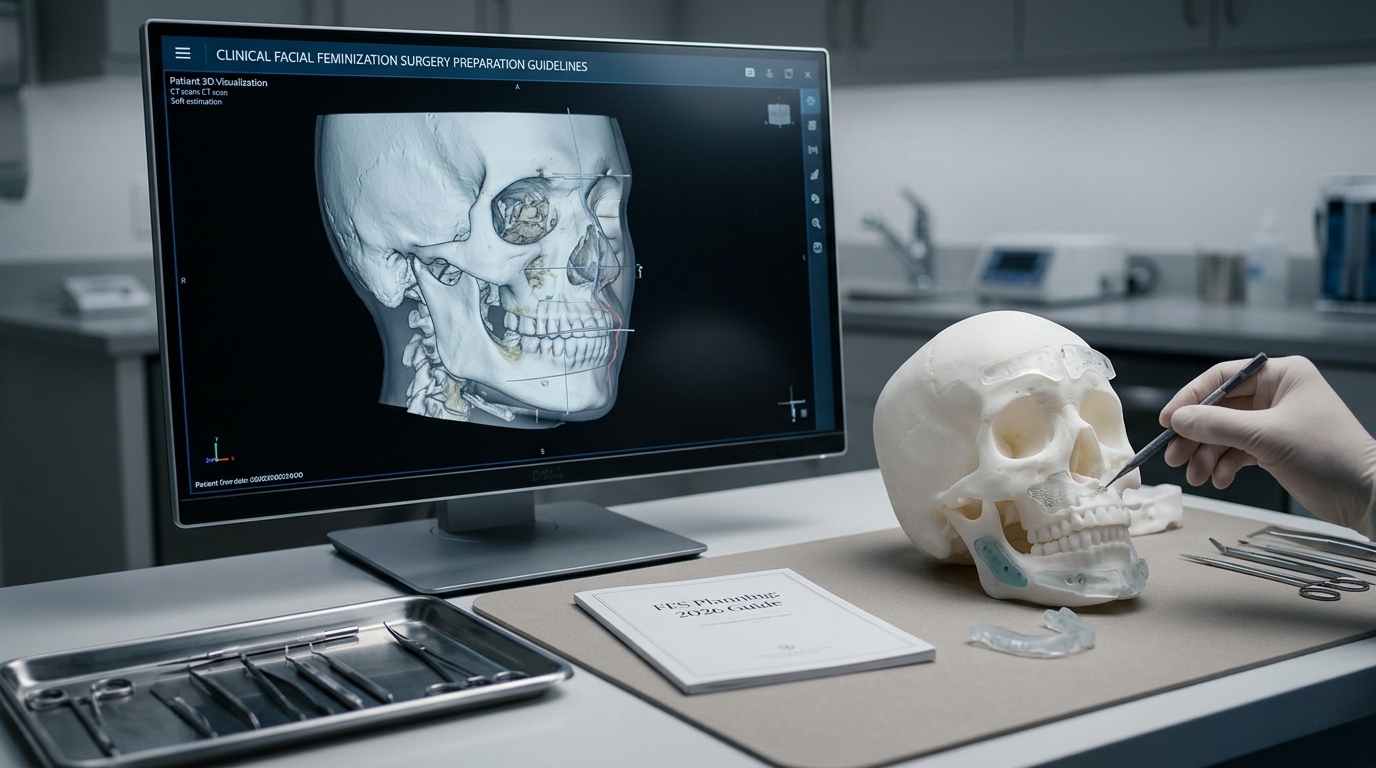

A widow’s peak often stands as the most stubborn remnant of masculine facial geometry. While some view it as a simple genetic trait, for those seeking a softer, more feminine appearance, this V-shaped point acts as a visual anchor that emphasizes the height and width of the forehead. In the landscape of 2026 facial aesthetics, we no longer settle for “masking” these features with hairstyles. We eliminate them through surgical precision and artistic restoration.
Achieving a truly feminine forehead requires more than just moving a line of hair. It demands an understanding of aesthetic proportions and the interplay between bone structure and soft tissue. Whether you choose the immediate impact of surgical hairline lowering or the gradual, natural density of hair transplantation, the goal remains the same: a rounded, lower, and softer frame for your face. This guide breaks down the definitive protocols used to transition from a masculine M-shape to a graceful feminine oval.

Table of Contents
The Anatomy of Gender: Why the Widow’s Peak Matters
The primary difference between masculine and feminine hairlines lies in shape and position. Masculine hairlines typically sit higher on the skull and follow an “M” or “U” pattern, often punctuated by a prominent widow’s peak. Feminine hairlines, conversely, are lower, flatter, or more rounded. They lack the deep temporal recessions that characterize male-pattern aging or genetics.
When we look at a face, our brains process the distance between the eyebrows and the hairline as a key gender marker. A high, peaked hairline suggests a larger forehead, which is a traditionally masculine trait. By addressing the widow’s peak, we effectively shorten the vertical height of the forehead, shifting the entire facial balance toward a more feminine profile. This is a cornerstone of FFS (Facial Feminization Surgery), where every millimeter of adjustment contributes to a profound shift in perception.
Surgical Hairline Lowering: The Scalp Advancement Protocol
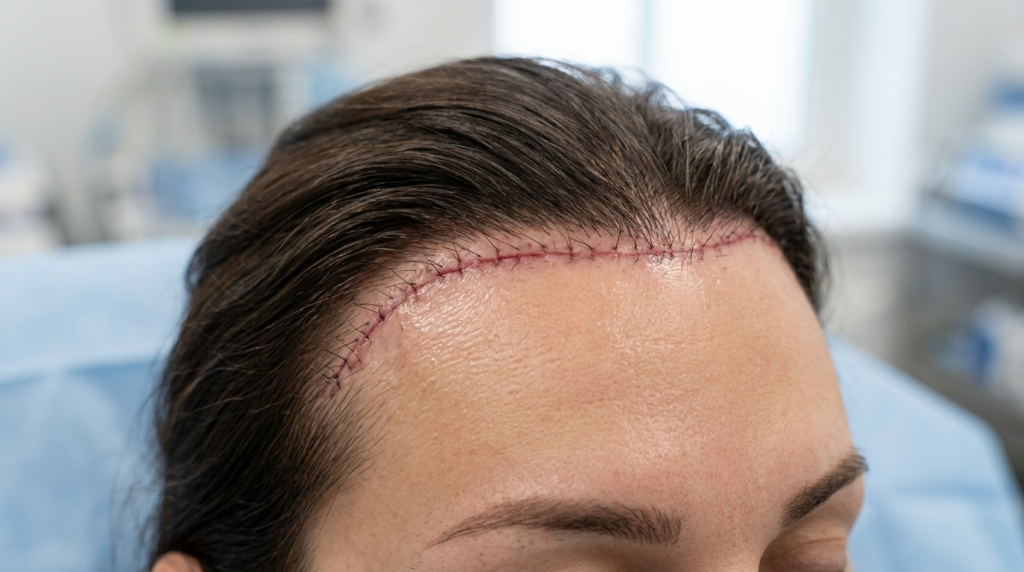
For patients with sufficient scalp laxity, hairline lowering (also known as scalp advancement) offers an immediate transformation. This procedure involves making an incision along the front of the hairline and physically moving the hair-bearing scalp forward. It is the most direct way to erase a widow’s peak and reduce forehead height in a single session.
The Trichophytic Incision: Hiding the Evidence
The success of forehead reduction and hairline advancement hinges on the incision technique. We utilize a trichophytic incision, where the cut is made at an angle. This allows hair follicles to grow through the resulting scar tissue. As the hair matures, the scar becomes virtually invisible, hidden by the very hair it moved forward. This technique ensures that you can wear your hair pulled back without fear of visible surgical markers.
During the procedure, the surgeon removes the non-hair-bearing skin of the upper forehead. The widow’s peak is excised, and the new, rounded hairline is secured in its place. This often results in a 1.5 to 2.5 cm reduction in forehead height, instantly softening the upper third of the face.
Hair Transplantation: Artistry in Follicular Placement
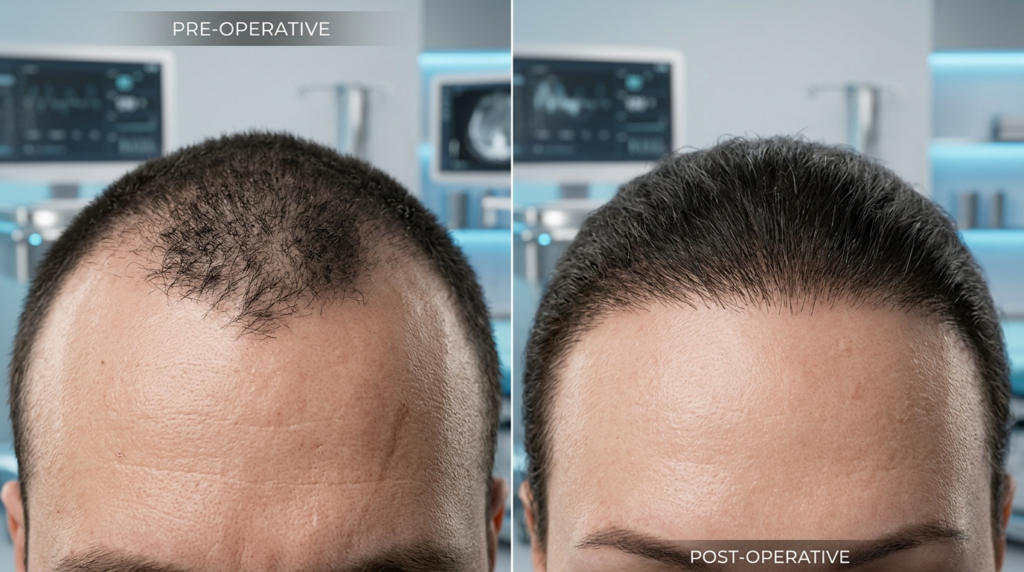
Not every patient is a candidate for scalp advancement. If your scalp is tight or if your primary concern is the deep recession at the temples rather than the height of the forehead, hair transplantation is the superior choice. This method allows for the creation of a new hairline from scratch, graft by graft.
In 2026, we use advanced Follicular Unit Extraction (FUE) to harvest individual follicles from the back of the head. These are then implanted into the widow’s peak area and the temporal voids. The advantage here is total control over the shape. We don’t just lower the line; we round it out, creating the soft “bell” shape characteristic of feminine aesthetics. For many, a hair transplant in Turkey provides the density and natural flow required to completely camouflage a masculine bone structure.
The “No-Peak” Design
When designing a feminine hairline via transplantation, we avoid straight lines. A straight line looks surgical and “pluggy.” Instead, we create a micro-irregularity pattern that mimics nature. We place single-hair grafts at the very front to create a soft transition, followed by multi-hair grafts for density. This eliminates the widow’s peak by filling the space around it, effectively “swallowing” the peak into a new, lower, rounded boundary.
Forehead Contouring: Why Bone Reshaping Changes Everything
Sometimes, the widow’s peak isn’t the only problem. If the underlying bone—the supraorbital ridge—is prominent, simply moving the hair forward won’t achieve full feminization. This is where forehead contouring becomes vital. By shaving or reconstructing the brow bone, we create a flat, smooth canvas. When the hairline is then lowered over this new, feminine foundation, the results are exponentially more convincing.
| Feature | Hairline Lowering (Surgical) | Hair Transplantation |
| Primary Goal | Reduce forehead height immediately | Fill temples and reshape hairline |
| Recovery Time | 7-10 days for initial healing | 3-5 days (redness persists longer) |
| Result Visibility | Instant | 6-12 months for full growth |
| Ideal Candidate | High forehead, good scalp laxity | Receded temples, tight scalp |
| Widow’s Peak Fix | Excised (removed) | Camouflaged (filled around) |
Recovery and Patient Expectations
Post-operative care determines the longevity and quality of your results. For surgical advancement, you will wear a light dressing for the first 24-48 hours. Swelling around the eyes is common but subsides within a week. For transplants, the “scabbing” phase lasts about ten days. You must protect the new grafts from any friction or pressure during this window.
Patience is the most required virtue in gender affirming surgery. While a surgical lowering shows you the new shape on day one, the hair around the incision may thin temporarily (shock loss) before growing back stronger. With transplants, the hair will fall out before the follicles enter a new growth cycle. By the six-month mark, the widow’s peak is usually a distant memory, replaced by a frame that matches your identity.
Case Study: The Transition of the M-Shape
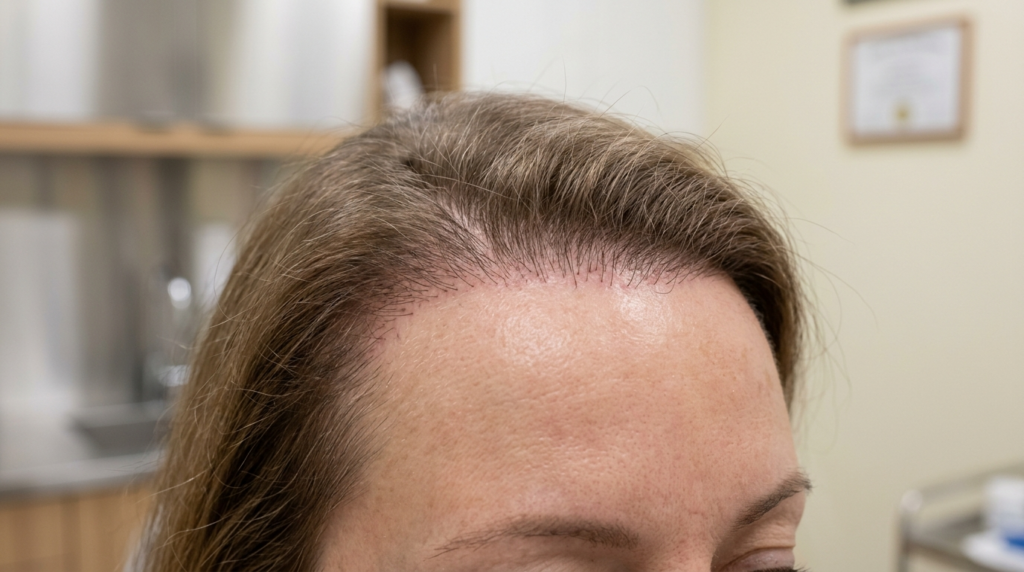
Consider the case of a 28-year-old patient who presented with a deep widow’s peak and significant temporal recession. Her forehead height was 8cm, well above the feminine average of 5-6cm. We performed a combined approach: a 2cm scalp advancement to lower the central height, followed by 1,500 FUE grafts six months later to round out the temples. The result was a total shift in facial harmony. Her eyes appeared more centered, and the “heavy” look of her upper face vanished. This two-stage protocol represents the gold standard in 2026 for complex cases.

Frequently Asked Questions
Can I combine a widow’s peak removal with a brow lift?
Yes. In fact, combining hairline lowering with an endoscopic brow lift is a common practice. This allows the surgeon to address both the position of the hair and the sagging of the brow through the same incisions, maximizing the feminine output.
Will my hairline look natural after surgery?
When a trichophytic incision is used, the hair grows through the scar, making it nearly impossible to detect. In hair transplantation, using single-hair grafts at the leading edge ensures a soft, natural transition that mimics a biological feminine hairline.
How much can a hairline be lowered in one session?
Most patients can achieve 1.5 to 2.5 cm of lowering in a single surgical session. The exact amount depends on your scalp laxity. If more is needed, a tissue expander can be used in a preliminary stage, though this is rare.
Is hair transplantation better than surgical lowering?
Neither is ‘better’; they solve different problems. Surgical lowering is best for high foreheads. Transplantation is best for filling in ‘holes’ or recessions at the temples. Often, the best result comes from a combination of both.
What is the cost of hairline feminization in 2026?
Costs vary based on the complexity and whether bone contouring is involved. However, choosing a specialized clinic ensures that you are paying for surgical expertise and gender-specific aesthetic understanding, which is a vital investment in your transition.