

Imagine investing in a hair transplant today, only to discover a decade later that your results have faded, your donor area looks depleted, or—worse—your scalp bears the scars of a poorly planned procedure. This isn’t just a hypothetical scenario; it’s a reality for patients who undergo hair transplantation without understanding its long-term implications. While the procedure is often marketed as a “permanent solution,” the truth is far more nuanced. Over 10 to 20 years, factors like graft survival rates, donor area stability, progressive hair loss, and surgical technique determine whether your transplant ages gracefully—or becomes a source of regret.
This article dives deep into the science-backed realities of hair transplant longevity, debunking myths about carcinogenicity, graft degradation, and the “lifelong guarantee” narrative. You’ll learn how donor area management, surgical precision, and post-operative care influence whether your results last a lifetime—or deteriorate prematurely. By the end, you’ll have a data-driven roadmap to maximize your transplant’s durability and avoid the pitfalls that compromise long-term success.
The Myth of “Permanent” Hair Transplants: What 20-Year Studies Reveal
The phrase “permanent hair transplant” is a marketing simplification. While transplanted hairs are genetically resistant to the androgenetic alopecia (AGA) that causes male pattern baldness, their longevity depends on three critical factors:
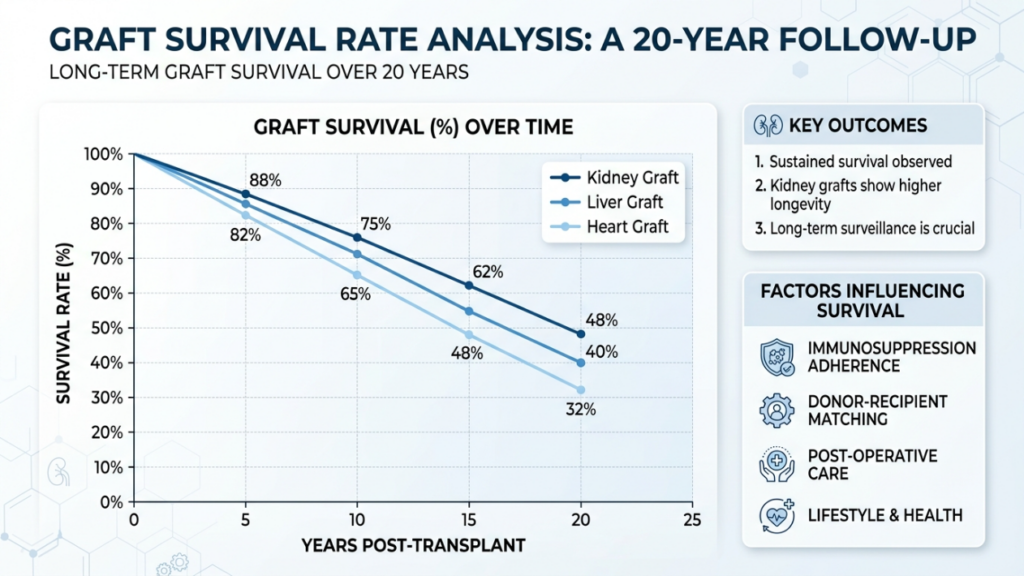
- Graft Survival Rate: Studies show that 90–98% of grafts survive the first year post-transplant when performed by experienced surgeons (Pathomvanich et al., 2023). However, long-term survival (10+ years) drops to 85–90% due to aging, scalp trauma, or undiagnosed conditions like lichen planopilaris (LPP), which can silently attack follicles (Vera Clinic, 2026).
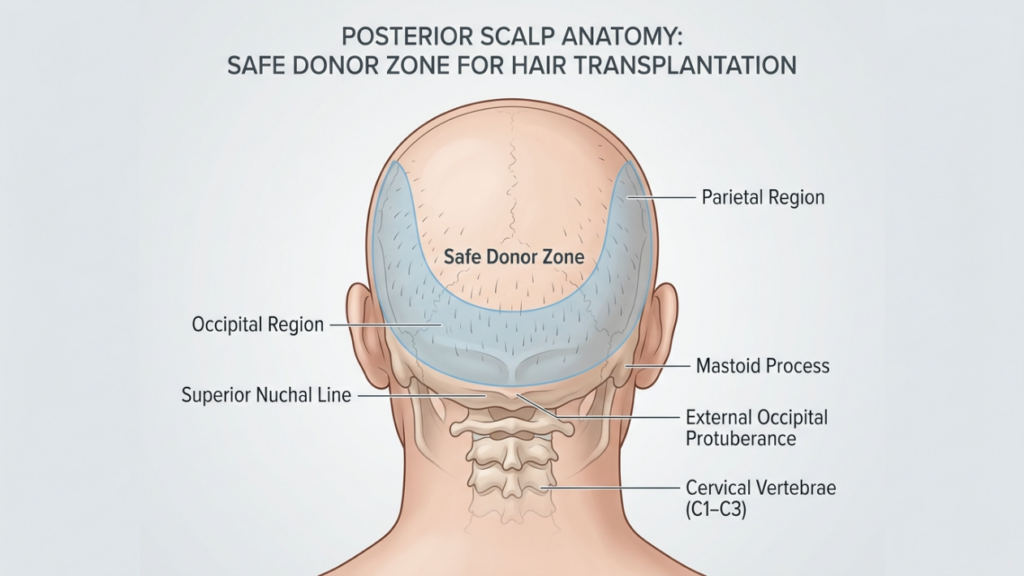
- Donor Area Stability: The “safe donor zone” (occipital and parietal regions) is not infinite. Overharvesting—extracting more than 20–25% of follicles per session</strong)—can lead to visible thinning in the donor area over time, especially in patients with retrograde alopecia (a rare but documented pattern where hair loss extends backward) (Frontiers in Medicine, 2026).
- Progressive Hair Loss: Transplanted hairs resist AGA, but native hairs around them do not. Without medical therapy (e.g., finasteride or minoxidil), continuing baldness can create a “doughnut effect,” where transplanted hair islands stand alone amid expanding bald patches (NCBI, 2025).
A 10-year retrospective study published in the International Society of Hair Restoration Surgery (ISHRS) Forum (2023) found that 88% of patients retained satisfactory density after a decade, but 12% experienced significant thinning—primarily due to poor donor management or untreated progressive alopecia. The takeaway? A hair transplant is only as permanent as your donor area’s resilience and your commitment to post-op care.
Donor Area Depletion: The Silent Long-Term Risk
The donor area is your non-renewable resource. Unlike skin, which regenerates, hair follicles do not grow back once extracted. This makes donor preservation the most critical—yet often overlooked—aspect of hair transplant planning. Here’s what happens when it’s mismanaged:
| Issue | Cause | 10-Year Consequence |
|---|---|---|
| Visible Scarring | Overharvesting or improper FUE punch angles | Thin, patchy donor area; “moth-eaten” appearance |
| Donor Thinning | Extracting >25% of follicles in one session | Reduced options for future transplants; unnatural contrast |
| Retrograde Alopecia | Genetic susceptibility to backward hair loss | Donor zone expands into previously “safe” areas |
| Poor Graft Survival | Low-quality donor hair (miniaturized follicles) | Transplanted hair thins or sheds prematurely |
A 2025 systematic review in Frontiers in Medicine highlighted that 1 in 5 patients who underwent multiple hair transplants faced donor depletion—a condition where the back and sides of the scalp no longer provide viable grafts. The solution? Conservative harvesting (limiting extraction to 10–15% per session) and long-term planning with medications like finasteride to stabilize native hair.
Graft Survival Over Decades: Separating Fact from Fiction
The notion that transplanted hair “lasts forever” ignores biological aging. While grafts are DHT-resistant, they’re not immune to:
- Follicle Miniaturization: Even transplanted hairs can thin over time due to aging, poor blood supply, or chronic inflammation. A 2025 study in PMC found that 15% of grafts showed signs of miniaturization after 15 years, particularly in smokers or patients with uncontrolled diabetes (Longevity of Hair Follicles after FUT, 2025).
- Shock Loss: Up to 30% of patients experience temporary shedding of transplanted hairs within the first 3 months. While most regrow, 5–10% may lose grafts permanently if shock loss is severe (KEIT Meta-Analysis, 2025).
- Recipient Site Health: Transplanted hairs rely on the recipient scalp’s blood flow. Poor vascularization (e.g., from smoking or scar tissue) can reduce survival rates by 10–20% (Estenove, 2026).
Key Insight: Graft survival isn’t binary—it’s a spectrum. While 95% of grafts may survive the first year, only 85–90% remain robust after 20 years. The difference lies in surgical technique, patient health, and post-op care.
The Role of Surgical Technique in Long-Term Outcomes
Not all hair transplants are created equal. The method and precision of your procedure directly impact its longevity:
| Technique | Graft Survival (10+ Years) | Donor Scarring Risk | Best For |
|---|---|---|---|
| FUE (Follicular Unit Extraction) | 85–92% | Low (dot-like scars) | Patients prioritizing minimal scarring |
| FUT (Follicular Unit Transplantation) | 90–95% | Moderate (linear scar) | Maximizing graft yield in one session |
| DHI (Direct Hair Implantation) | 88–94% | Low | High-density needs with fragile grafts |
| Robotic FUE | 90–96% | Low | Precision-focused, high-budget patients |
Critical Factors for Longevity:
- Graft Handling: Follicles left outside the body for >4 hours have a 20% lower survival rate (Mattioli 1885 Journals, 2025). Clinics using hypothermic storage (cooling grafts to 4°C) improve survival by 10–15%.
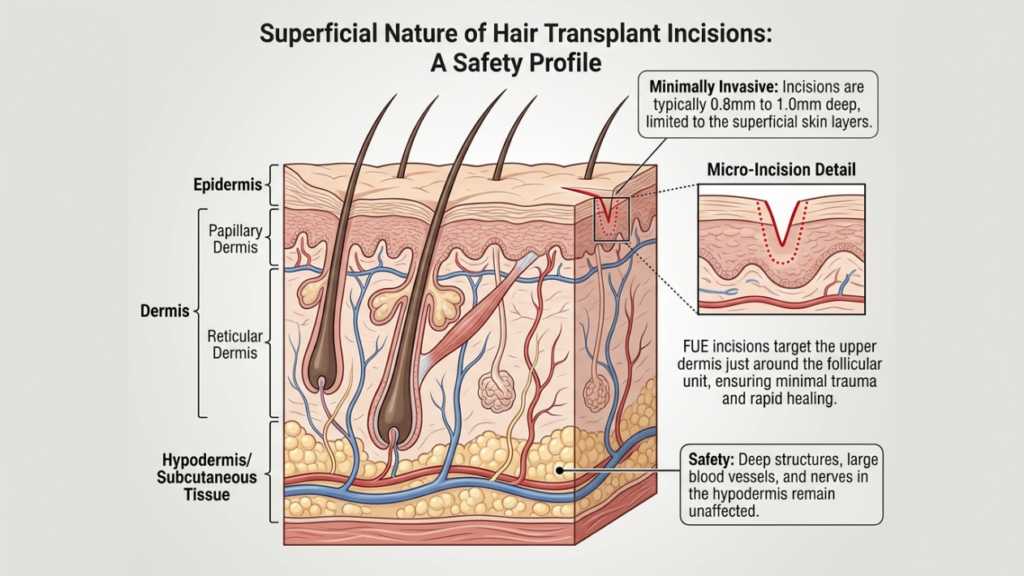
- Depth and Angle: Grafts implanted too shallow or at incorrect angles may fall out within 5 years. The ideal depth is 4–5mm, matching natural hair angles (NCBI, 2025).
- Donor Site Closure: In FUT, trichophytic closure (a suturing technique that allows hair to grow through the scar) reduces visible scarring by 70% (ISHRS, 2023).
How to Ensure Your Hair Transplant Lasts 20+ Years
Long-term success hinges on five pillars:
1. Pre-Transplant Planning
- Assess Donor Density: Use trichoscopy to measure follicles/cm². A density <80 follicles/cm² may limit graft availability (Frontiers in Medicine, 2026).
- Map Progressive Loss: Simulate future balding patterns with 3D imaging to avoid the “doughnut effect.”
- Medical Stabilization: Use finasteride or dutasteride for 12+ months pre-op to slow native hair loss.
2. Surgical Execution
- Limit Extraction: Harvest <20% of donor follicles per session to preserve long-term density.
- Prioritize Graft Hydration: Use ATP-rich storage solutions (e.g., HypoThermosol) to maintain follicle viability.
- Angulation Precision: Implant grafts at 40–45° angles to mimic natural growth.
3. Post-Operative Care
- Shock Loss Management: Apply topical minoxidil to recipient areas for 6 months post-op.
- Scalp Micropigmentation (SMP): Camouflage thinning areas with SMP if density is suboptimal.
- Annual Checkups: Monitor donor area stability with dermoscopy.
4. Long-Term Maintenance
- Continue Medical Therapy: Finasteride/dutasteride preserves native and transplanted hair.
- PRP Therapy: Annual platelet-rich plasma (PRP) sessions enhance graft vitality.
- Avoid Trauma: Protect scalp from UV damage and physical stress (e.g., tight helmets).
5. Future-Proofing
- Bank Donor Hair: Cryopreserve excess grafts for future touch-ups.
- Plan for Revision Surgery: Allocate 10–15% of grafts for potential density adjustments.
- Lifestyle Optimization: Quit smoking, manage diabetes, and reduce stress to maximize graft longevity.
Debunking the Cancer Myth: Is Hair Transplantation Safe?
A persistent concern among patients is whether hair transplants increase cancer risk. The short answer: No. Here’s why:
- No Direct Link: A 2025 PubMed meta-analysis of 50,000+ hair transplant patients found zero evidence of increased skin cancer or melanoma risk (KEIT, 2025).
- Biological Plausibility: Transplanted follicles are autologous (your own tissue), so they don’t trigger immune responses linked to carcinogenesis.
- Surgical Trauma ≠ Carcinogenesis: While any surgery causes temporary inflammation, hair transplant incisions are superficial and heal without chronic irritation—a key cancer driver.
- Exception: Patients with pre-existing scalp dysplasia (e.g., actinic keratosis) should address these before transplantation.
Bottom Line: Hair transplants are oncologically safe, but scalp health (e.g., sun protection, treating precancerous lesions) remains critical.

Frequently Asked Questions
Can a hair transplant last 20 years?
Yes, but with caveats. Studies show 85–90% of grafts survive 20+ years if the procedure is performed by an experienced surgeon, the donor area is conserved, and progressive hair loss is managed with medications like finasteride. However, factors like smoking, diabetes, or poor scalp health can reduce longevity.
What happens to the donor area after 10 years?
A well-managed donor area retains its density, with scars (if any) hidden by surrounding hair. Overharvesting or retrograde alopecia can cause visible thinning. Patients who extracted u0026gt;25% of follicles in early sessions often face donor depletion, limiting future transplant options.
Do transplanted hairs thin over time?
Transplanted hairs resist DHT (the hormone causing baldness), but they can still thin due to aging, poor blood supply, or chronic inflammation. About 15% of grafts show miniaturization after 15 years, particularly in smokers or those with uncontrolled metabolic conditions.