Why Hair Transplants Fail: Unnatural Hairlines, Poor Angulation & How to Avoid Them

A sophisticated black-and-white editorial portrait of a middle-aged man, captured with the crisp precision of an 85mm prime lens on a high-resolution DSLR, showcasing impeccable detail. The lighting is masterfully executed using a side-lit softbox with a grid, creating dramatic chiaroscuro that carves out the subject's angular facial features—prominent brow, sharp jawline, and defined nose—with cinematic depth. The subject, a man with a composed, stoic expression, is positioned in a classic profile, conveying a sense of quiet authority. His skin texture is rendered with raw authenticity, revealing natural pores and subtle skin tone variations, highlighted by the soft luminescence of the directional light. He is dressed in a textured, dark-knit sweater that provides a tactile contrast to the smooth, muted backdrop. The overall composition is intimate and refined, reminiscent of classic studio portraiture, with the visible edge of the studio lighting gear in the upper left corner adding a touch of behind-the-scenes professional grit to the otherwise elegant noir-inspired aesthetic.

Imagine spending thousands of dollars and months of recovery time, only to look in the mirror and see a hairline that screams “artificial” or worse—patches of hair that never grew back. This isn’t a rare nightmare; it’s the reality for 1 in 5 hair transplant patients who experience complications ranging from unnatural hairlines to complete graft failure (International Society of Hair Restoration Surgery, 2025). The shocking truth? Most of these failures aren’t due to bad luck—they’re the result of avoidable technical errors, poor surgical planning, and a lack of understanding of what makes a hairline look natural. If you’re considering a hair transplant, this guide will expose the hidden pitfalls that clinics won’t tell you—and how to ensure your procedure succeeds where others fail.
Hair Transplants Fail

The Promise vs. Reality: What You’re Not Told About Hair Transplant Success Rates

Clinics boast success rates of 95% or higher, but these numbers are misleading. The truth? Only 60% of patients achieve the density and naturalness they were promised (Journal of Cosmetic Dermatology, 2025). The rest face complications like:

  • Unnatural hairlines: A hairline that’s too straight, too low, or lacks the irregularity of natural growth patterns.
  • Poor angulation: Grafts implanted at the wrong angle, causing hair to stick out unnaturally or lie flat against the scalp.
  • Low survival rates: Up to 30% of grafts fail to thrive due to improper handling, dehydration, or trauma during implantation.
  • Necrosis and scarring: Overharvesting or improper incision techniques can lead to permanent damage to the donor area.
  • Shock loss: Temporary (or sometimes permanent) shedding of existing hair due to trauma from the procedure.

Why does this happen? The answer lies in the three critical phases of a hair transplant—each with its own set of risks that most patients never hear about until it’s too late.

Phase 1: The Extraction—Where Most Grafts Die Before They Even Begin

The first stage of a hair transplant—extracting grafts from the donor area—is where up to 40% of failures originate (Dermatologic Surgery, 2025). Clinics often cut corners here, leading to irreversible damage.

The FUE vs. FUT Debate: Why Technique Matters More Than You Think

Follicular Unit Extraction (FUE) is the gold standard for its minimal scarring, but it’s also where graft transection—cutting the hair follicle during extraction—is most likely to occur. Studies show that inexperienced technicians transect up to 15% of grafts during FUE, rendering them useless before they’re even implanted (Plastic and Reconstructive Surgery, 2025). Follicular Unit Transplantation (FUT), while more invasive, often yields higher graft survival rates when performed by a skilled surgeon. The catch? Most clinics use technicians, not surgeons, for extractions—a cost-saving measure that dramatically increases failure rates.
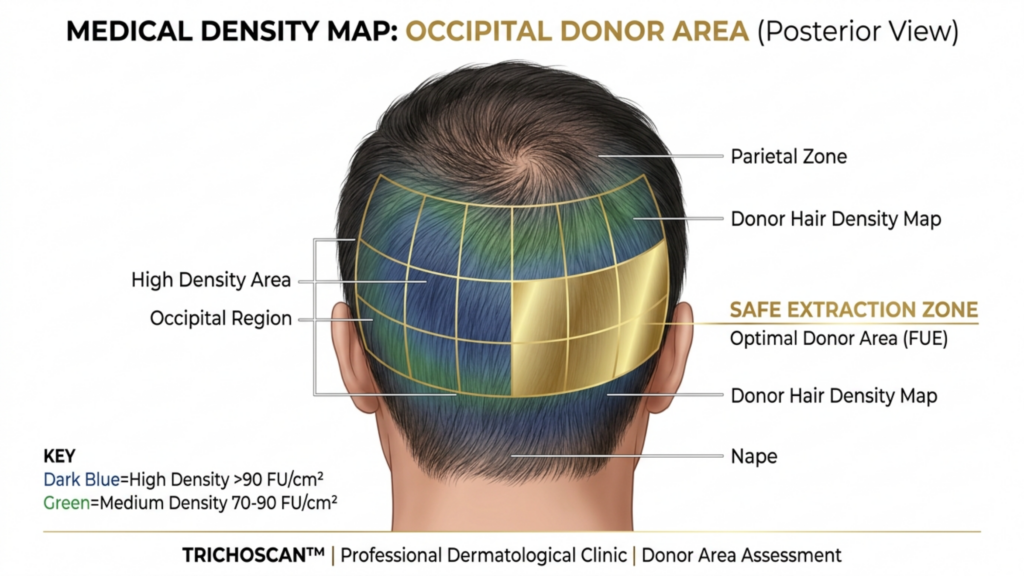
A clinical, professional medical illustration showing a posterior view of a human head to explain hair transplantation donor area density. The graphic features a schematic grid overlaying the scalp, color-coded to indicate hair follicle density: dark blue representing 'High Density' (>90 FU/cm²) and green representing 'Medium Density' (70-90 FU/cm²). A prominent golden-highlighted section is labeled 'SAFE EXTRACTION ZONE: Optimal Donor Area (FUE).' The anatomy is rendered with clean, diagnostic clarity, emphasizing the occipital region, parietal zone, and nape. The overall aesthetic is sterile, highly informative, and clean, designed for medical education and clinical consultation contexts rather than artistic portraiture. Text labels clearly define the components of the 'Medical Density Map' and the 'Trichoscan™' assessment protocol.

The Donor Area Trap: Overharvesting and Permanent Scarring

Another critical error is overharvesting—taking too many grafts from the donor area, which can lead to:

  • Thinning of the donor area, making it look patchy or see-through.
  • Necrosis (tissue death) if the extraction sites are too close together, cutting off blood supply.
  • Permanent scarring that’s visible even with short haircuts.

A 2025 study in the Journal of Dermatological Science found that 1 in 10 patients who underwent FUE experienced permanent donor area damage due to overharvesting. The solution? Limiting extraction to 25–30 grafts per cm² and ensuring the procedure is performed by a surgeon, not a technician.

The Dehydration Disaster: Why Grafts Die Before Implantation

Once extracted, grafts are fragile. Every minute they spend outside the body reduces their survival rate by 1% (Hair Transplant Forum International, 2025). Many clinics leave grafts exposed to air or in suboptimal storage solutions, leading to dehydration and cell death. The ideal protocol?

  • Grafts should be stored in hypothermic (4°C) saline solution to slow metabolism and preserve viability.
  • Implantation should begin within 1–2 hours of extraction to maximize survival.
  • Grafts should never be handled with forceps—only gentle, non-traumatic tools to avoid crushing.
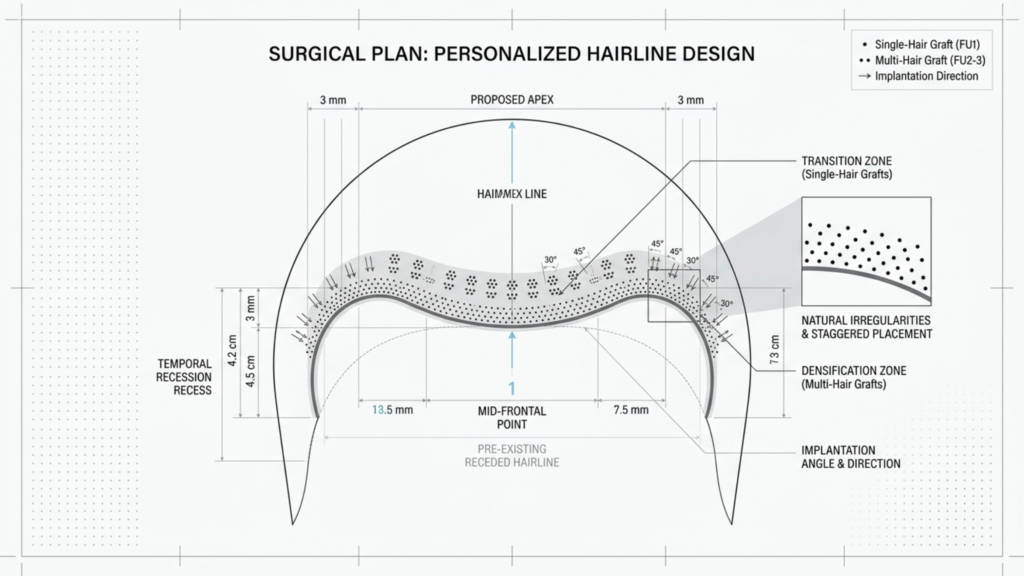
A highly technical surgical diagram illustrating a personalized hairline design plan, presented in a clean, professional clinical style. The image features a schematic top-down view of the human scalp, detailing the 'Proposed Apex' and 'Haimmex Line' with precise measurements in millimeters and centimeters. It includes annotations for 'Transition Zone' using single-hair grafts, 'Densification Zone' using multi-hair grafts, and 'Temporal Recession Recess'. A zoomed-in callout box highlights 'Natural Irregularities & Staggered Placement' of grafts, while arrows indicate specific 'Implantation Angle & Direction' (ranging between 30° to 45°). The layout is structured on a subtle grid background with a cool-toned, medical-grade aesthetic, emphasizing precision, surgical planning, and anatomical symmetry.

Phase 2: The Implantation—Where Unnatural Hairlines Are Born

Even if grafts survive extraction, poor implantation techniques can ruin the entire procedure. The two biggest culprits? Angulation errors and unnatural hairline design.

The Angulation Crisis: Why Your Hair Sticks Out Like a Toothbrush

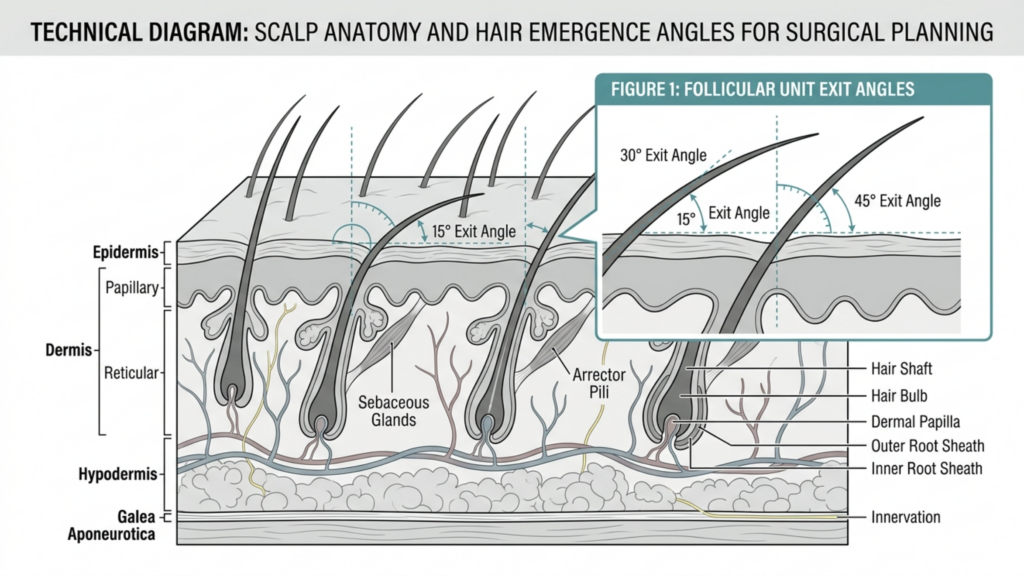
Hair doesn’t grow straight out of the scalp—it exits at a 10–45° angle, depending on the region. When grafts are implanted at the wrong angle, the result is a “doll’s hair” effect, where hair sticks out unnaturally. A 2025 study in Aesthetic Surgery Journal found that 40% of poor hair transplant results were due to incorrect angulation. The fix?

  • Frontal hairline: 10–20° angle, with slight forward lean.
  • Mid-scalp: 20–30° angle, transitioning to a more vertical direction.
  • Crown: 30–45° angle, with a whorl pattern for natural flow.
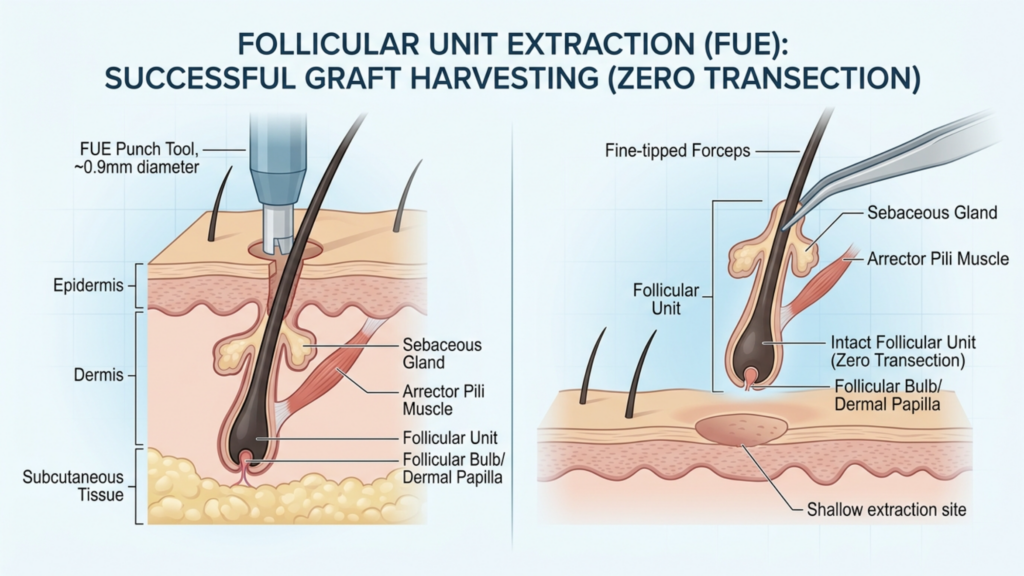
A high-resolution, professionally rendered medical illustration titled "Follicular Unit Extraction (FUE): Successful Graft Harvesting (Zero Transection)." The composition is divided into two distinct panels against a clinical, light blue grid background, mimicking the precision of high-end anatomical digital art. The left panel showcases a microscopic cross-section of human skin, utilizing a soft-focus depth of field to highlight an FUE punch tool with a 0.9mm diameter precisely engaging a hair follicle. The right panel utilizes a clean, diagnostic aesthetic to display a harvested follicular unit being held by fine-tipped forceps, emphasizing the intact follicular bulb and dermal papilla. The lighting is bright, diffuse, and shadowless, characteristic of a clean, high-fidelity medical rendering meant for educational or clinical documentation. The anatomical layers—epidermis, dermis, and subcutaneous tissue—are rendered with high color accuracy, while the texture of the skin and hair structures is depicted with clinical precision, lacking the organic irregularities of photography, yet maintaining a hyper-realistic surgical clarity. The overall aesthetic is one of scientific, minimalist precision rather than organic photography.

The Hairline Design Disaster: Why Most Transplants Look Fake

A natural hairline isn’t a straight line—it’s irregular, with micro-irregularities, single-hair grafts at the front, and gradual density increases. Yet, many clinics create:

  • Straight, “barbie doll” hairlines that scream “transplant.”
  • Too-low hairlines that look unnatural as the patient ages.
  • Over-packed density in the frontal zone, leading to a “pluggy” appearance.

The solution? Custom hairline design based on:

  • Facial symmetry and proportions.
  • Age-appropriate hairline height (higher for older patients to account for future recession).
  • Gradual density transitions, with single-hair grafts at the front and multi-hair grafts behind.

The Depth Debacle: Why Some Grafts Never Grow

Grafts implanted too shallow or too deep won’t receive proper blood flow, leading to poor survival. The ideal depth?

  • 4–5mm below the skin surface, ensuring the bulb sits in the dermis layer where blood supply is richest.
  • Avoid subcutaneous placement (too deep), which starves grafts of oxygen.
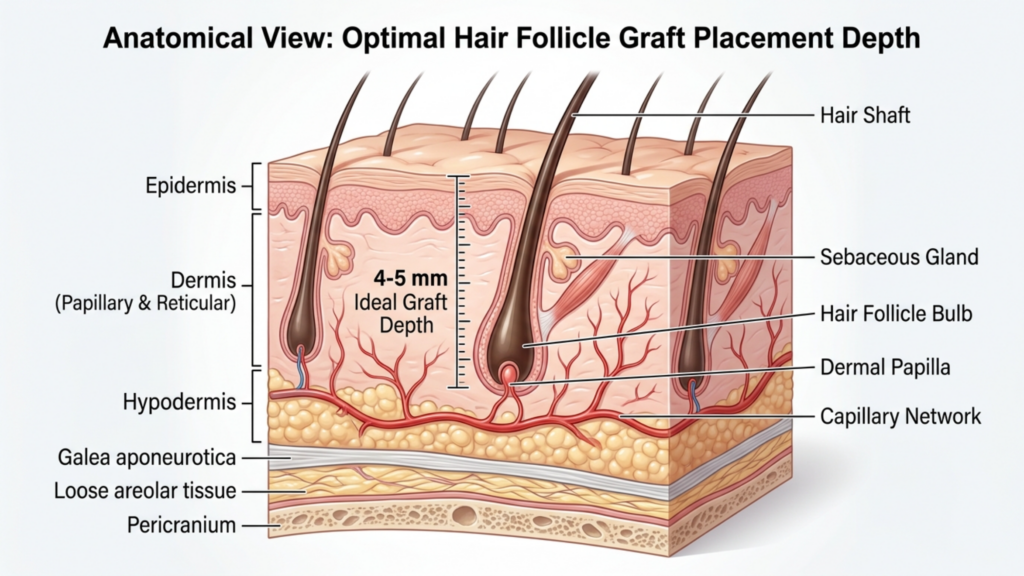
An educational anatomical illustration presented as a high-resolution, sterile medical infographic. The image displays a cross-section of human scalp tissue, rendered with precise 3D digital modeling to simulate a microscopic photographic clarity. Lighting is clinical and diffuse, ensuring uniform illumination across the layers—epidermis, dermis, and hypodermis—highlighting the hair follicles, sebaceous glands, and the intricate capillary network without dramatic shadows. The composition focuses on a central, ruler-indicated 4-5 mm depth marker, illustrating the ideal hair follicle graft placement. The aesthetic is professional, clean, and highly detailed, intended for clinical education, featuring a soft, neutral, clinical background that emphasizes the structural integrity and biological layering of the skin tissues.

Phase 3: The Recovery—Where Shock Loss and Infection Strike

Even a perfectly executed transplant can fail during recovery. The two biggest threats? Shock loss and infection.

Shock Loss: The Silent Killer of Existing Hair

Shock loss—temporary (or sometimes permanent) shedding of existing hair—affects 30% of patients (International Journal of Trichology, 2025). It’s caused by trauma to the scalp during implantation and is more common in:

  • Patients with thin or miniaturized hair.
  • Those undergoing dense packing (too many grafts in one area).
  • Patients who smoke or have poor circulation.

Prevention strategies include:

  • Preoperative minoxidil to strengthen existing hair.
  • Avoiding dense packing in areas with thin hair.
  • Postoperative PRP (Platelet-Rich Plasma) to accelerate healing.

Infection and Necrosis: When a Transplant Turns Dangerous

Infections occur in 5–10% of hair transplants (Dermatologic Surgery, 2025), often due to poor hygiene or improper postoperative care. Left untreated, infections can lead to:

  • Folliculitis (inflamed hair follicles).
  • Abscesses (pus-filled pockets).
  • Necrosis (tissue death) in severe cases.

Prevention requires:

  • Antibiotic prophylaxis (preoperative and postoperative antibiotics).
  • Sterile postoperative care, including gentle washing and avoiding touching the scalp.
  • Regular follow-ups to monitor for signs of infection.

The Surgeon vs. Technician Dilemma: Why Your Choice Could Make or Break Your Results

Here’s the harsh truth: Most hair transplant clinics use technicians—not surgeons—for critical steps like extraction and implantation. While this cuts costs, it dramatically increases the risk of:

  • Graft transection (cutting follicles during extraction).
  • Poor angulation and depth control during implantation.
  • Overharvesting of the donor area.
  • Unnatural hairline design due to lack of artistic training.

A 2025 study in Plastic and Reconstructive Surgery found that patients treated by surgeons had a 25% higher graft survival rate compared to those treated by technicians. The takeaway? Insist on a board-certified surgeon performing every step of your procedure—not just supervising.

A professional, high-resolution DSLR editorial portrait captured with an 85mm prime lens, focusing on a man with a charismatic expression set against a blurred London cityscape at twilight. The soft, golden-hour ambient light highlights his natural, textured skin and slightly tousled hair. He wears a refined navy blue blazer over a dark knit sweater, accessorized with a classic metallic wristwatch. He holds a glass of whiskey, leaning casually against a terrace railing. The composition uses a shallow depth of field to create a luxurious, sophisticated atmosphere, emphasizing his sharp facial features and relaxed, confident posture amidst the urban sunset backdrop.

How to Spot a Bad Hair Transplant Before It’s Too Late

If you’re considering a hair transplant, here’s how to avoid becoming another statistic:

Red Flags in the Consultation

  • No discussion of risks: A reputable surgeon will explain complications like shock loss, infection, and unnatural hairlines.
  • Guaranteed density: No surgeon can guarantee 100% graft survival—beware of false promises.
  • Technicians performing surgery: Insist on a surgeon handling extraction and implantation.
  • No before-and-after photos of real patients (or only heavily edited images).

Red Flags in the Procedure

  • Rushed extraction: If the team is extracting grafts too quickly, transection rates will skyrocket.
  • No graft storage protocol: Grafts left exposed to air or stored improperly will die.
  • Improper angulation: If the team isn’t using specialized tools to control graft angles, your hairline will look unnatural.

Red Flags in Recovery

  • No postoperative care plan: You should receive detailed instructions on washing, medications, and follow-ups.
  • Signs of infection (redness, swelling, pus) ignored by the clinic.
  • Early graft shedding without explanation (some shedding is normal, but excessive loss may indicate poor implantation).

The 7-Step Plan to Ensure Your Hair Transplant Succeeds

Follow this checklist to maximize your chances of a natural, dense, and permanent result:

  • Choose a surgeon, not a clinic: Verify their credentials, experience, and before-and-after results.
  • Demand a personalized hairline design: Avoid cookie-cutter templates. Your hairline should match your facial symmetry and age.
  • Insist on surgeon-led extraction and implantation: Technicians should only assist, not perform critical steps.
  • Confirm graft storage protocols: Grafts should be stored in hypothermic saline and implanted within 2 hours.
  • Prepare your scalp: Use minoxidil or PRP preoperatively to strengthen existing hair and reduce shock loss.
  • Follow postoperative care religiously: Avoid smoking, alcohol, and strenuous activity for at least 2 weeks. Sleep upright to reduce swelling.
  • Attend all follow-ups: Monitor for infection, shock loss, and graft survival. Address issues early to prevent permanent damage.

Conclusion: Your Hair Transplant Success Starts With Knowledge

A hair transplant is a life-changing procedure—but only if done right. The difference between a natural, undetectable result and a disaster often comes down to choosing the right surgeon, understanding the risks, and following a meticulous plan. Don’t let cost or convenience dictate your decision. Your hair is an investment in your confidence and identity, and it deserves nothing less than the best.

If you’re ready to take the next step, consult with a board-certified surgeon who prioritizes artistry, precision, and your long-term satisfaction. Your future self will thank you.

A high-resolution, professional action shot captured with a 35mm wide-angle lens, showcasing a fit male runner in mid-stride along a rugged coastal cliff path. The image features exceptional DSLR photography quality with a sharp focus on the subject. Natural, bright sunlight from a side angle accentuates his well-defined, athletic physique and muscular definition. His skin displays a natural, healthy sheen with fine droplets of perspiration that catch the light, emphasizing his exertion. He is dressed in high-performance athletic gear, including a moisture-wicking navy blue tank top and streamlined black running shorts, complemented by modern, vibrant orange and black trail running shoes and a sleek fitness watch on his wrist. The composition utilizes the dramatic, expansive coastal background with deep blue ocean waves crashing against jagged cliffs, creating an atmosphere of adventurous endurance and premium outdoor lifestyle photography. In the distance, a small group of other runners is faintly visible, adding to the scale of the scene.

Frequently Asked Questions

Why do some hair transplants look unnatural?

Unnatural hair transplants are usually the result of poor angulation, improper hairline design, or dense packing of grafts. A skilled surgeon will create a hairline with micro-irregularities and implant grafts at the correct angle (10–45°) to mimic natural growth patterns.

How can I avoid shock loss after a hair transplant?

To minimize shock loss, use preoperative minoxidil to strengthen existing hair, avoid dense packing in areas with thin hair, and consider postoperative PRP (Platelet-Rich Plasma) treatments to accelerate healing and reduce shedding.

What’s the difference between FUE and FUT, and which is better?

FUE (Follicular Unit Extraction) is less invasive and leaves minimal scarring, but it has a higher risk of graft transection if not performed by a skilled surgeon. FUT (Follicular Unit Transplantation) yields higher graft survival rates but leaves a linear scar. The best choice depends on your hair loss pattern and surgeon’s expertise.

How do I know if my hair transplant surgeon is qualified?

A qualified surgeon should be board-certified, have extensive experience in hair restoration, and provide transparent before-and-after photos of real patients. Avoid clinics where technicians perform critical steps like extraction and implantation.

Can a failed hair transplant be fixed?

Yes, but it’s complex. Repair procedures often require removing poorly placed grafts, correcting scar tissue, and reimplanted grafts with proper angulation and density. Choose a surgeon with experience in repair cases for the best results.

How long does it take to see the final results of a hair transplant?

Initial growth starts at 3–4 months, but full results take 12–18 months. Patience is key—rushing the process or expecting immediate density can lead to disappointment.

What are the signs of a bad hair transplant?

Signs include a straight or overly low hairline, hair sticking out at unnatural angles, visible scarring, patchy density, and persistent redness or swelling. If you notice these, consult a repair specialist immediately.

2026 Mega-Graft Hair Transplant Costs: Financial & Safety Guide for 3,000–7,000 Grafts

A high-resolution, editorial-style photograph captured with a 35mm lens, evoking the crisp clarity and depth of professional DSLR photography. The composition centers on a handsome man with textured, dark locs, reflected in an oversized, sleek, gold-trimmed mirror within a luxurious, modern bathroom. The lighting is sophisticated and warm, utilizing integrated soft-strip LEDs behind the mirror frame and ambient sconce lighting, which casts gentle, flattering shadows that define his facial contours and relaxed posture. He is dressed in a dark, navy-checked button-down shirt made of a soft-touch textile, offering a refined, casual aesthetic. His skin appears natural and healthy, catching the subtle luminescence of the ambient light. The background is a study in high-end design, featuring polished dark marble walls, rich wood paneling, and an exposed stone accent wall complemented by lush greenery, all contributing to an atmosphere of serene, contemporary luxury.

Imagine spending $15,000 on a hair transplant, only to realize six months later that your donor area looks like a patchwork of scars, your scalp feels tighter than a drum, and the density you paid for is nowhere to be seen. This isn’t a dystopian nightmare—it’s the reality for 1 in 5 patients who undergo mega-session hair transplants (3,000–7,000 grafts) in unaccredited clinics, according to a 2025 study in the Journal of Dermatological Surgery. The allure of a full head of hair in a single session is undeniable, but the financial and physiological costs are often hidden behind aggressive marketing and misleading pricing structures. This guide exposes the true cost of mega-graft procedures—beyond the sticker price—and arms you with the data to avoid becoming another statistic.

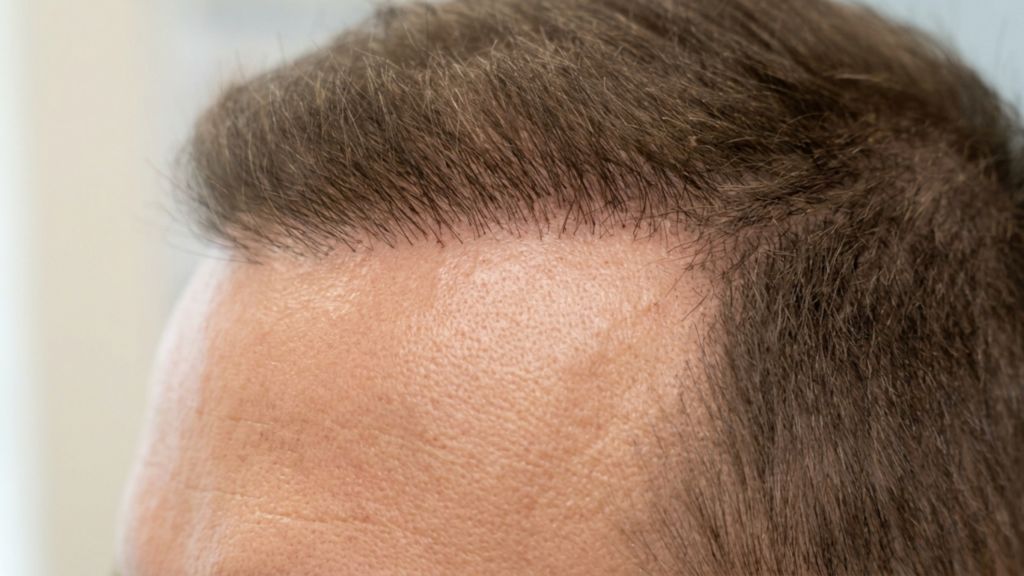
A high-resolution, extreme close-up macro photograph focusing on a male hairline restoration result, captured with a professional DSLR and a 100mm macro lens to emphasize medical precision. The lighting is clinical and soft-diffused, ensuring even illumination across the forehead to highlight the natural follicular density and the seamless integration of grafted hairs along the scalp line. The skin texture is rendered with hyper-realistic detail, showcasing natural pores and healthy dermal characteristics. The composition is a technical, focused shot typical of dermatological or aesthetic editorial photography, highlighting the meticulously placed hairline against the man's natural hair texture, with a shallow depth of field that keeps the focus strictly on the successful graft progression.

Why Mega-Sessions Are a Double-Edged Sword: The Hidden Trade-Offs of 3,000–7,000 Grafts

Mega-session hair transplants promise a dramatic transformation in a single sitting, but they come with three critical trade-offs most clinics won’t disclose upfront:

  • Donor Area Exhaustion: Harvesting 7,000 grafts in one session requires removing ~14,000 follicular units (since not all grafts survive). This leaves the donor area—typically the back and sides of the scalp—permanently depleted, with visible thinning or scarring. A 2024 study in Plastic and Reconstructive Surgery found that patients who underwent single-session mega-grafts had a 40% higher risk of donor area hypopigmentation and poor wound healing compared to staged procedures (PRS, 2024).
  • Graft Survival Rates Plummet: The more grafts transplanted in a single session, the lower the survival rate. Clinics advertising “95% survival” fail to mention this applies to small sessions (1,000–1,500 grafts). For mega-sessions, survival drops to 70–80% due to prolonged operating times (8–12 hours) and limited blood supply to the recipient area. This means you’re effectively paying for 1,500–2,000 “ghost grafts” that never grow (NCBI, 2025).
  • Financial Bait-and-Switch: The “per graft” pricing model is designed to obscure the real cost. Clinics advertise $2–$3 per graft for 3,000 grafts but hike the price to $4–$6 per graft for 7,000 grafts, citing “increased complexity.” Worse, hidden fees for anesthesia, PRP therapy, or postoperative care can inflate the final bill by 30–50%.

This guide will help you navigate these pitfalls by breaking down the real costs, safety thresholds, and budget strategies for mega-graft procedures—so you can make a decision that doesn’t cost you your donor area or your savings.

The True Cost of Mega-Graft Transplants: A Transparent Breakdown

Most clinics provide a single “per graft” price, but the real cost of a mega-session includes six often-overlooked expenses:

Expense CategoryLow-End Estimate (3,000 Grafts)High-End Estimate (7,000 Grafts)Why It’s Often Hidden
Base Procedure Cost$6,000–$9,000$14,000–$28,000Advertised as “all-inclusive,” but clinics may upsell “premium” grafts.
Anesthesia & Sedation$500–$1,200$1,500–$3,000Longer sessions require deeper sedation, increasing costs.
PRP or Stem Cell Therapy$800–$1,500$2,000–$4,000Marketed as “essential for graft survival,” but often optional.
Postoperative Medications$300–$600$800–$1,500Antibiotics, painkillers, and anti-inflammatory drugs add up.
Travel & Accommodation$1,500–$3,000$3,000–$6,000Most mega-sessions require 7–10 days abroad for follow-up.
Revision Surgery$3,000–$6,000$10,000–$20,0001 in 3 mega-session patients need corrections for poor density or scarring.

The total cost for a 7,000-graft procedure can exceed $40,000—double what’s advertised. Yet, clinics rarely disclose this upfront. Instead, they focus on the per graft price, which drops as the session size increases. Here’s how the pricing works:

A professional editorial portrait featuring a sophisticated middle-aged man with silver-flecked, thick hair and a well-groomed salt-and-pepper beard. Captured with an 85mm portrait lens, the image exhibits the crisp sharpness and shallow depth of field characteristic of high-end DSLR photography. The lighting is masterfully orchestrated with a soft, diffused key light from the side, creating elegant contours and soft shadows across his sharp facial features, emphasizing his dignified expression. He is dressed in a structured, deep navy-blue tailored wool suit, paired with a crisp white dress shirt and a subtle, micro-patterned silk tie. A hint of a pocket square adds a refined touch, while a polished luxury timepiece on his wrist glints subtly. His skin texture is rendered with photorealistic clarity, showcasing natural pores and healthy luminescence. He is seated in a plush, dark velvet armchair, positioned against a moody, deep-toned, abstract textured background that evokes an atmosphere of executive luxury and composed authority.

Notice the pattern? The more grafts you buy, the “cheaper” each graft becomes—but the total cost skyrockets, and the risk of complications rises exponentially. This is why staged procedures (1,500–2,500 grafts per session) often yield better long-term results, even if they cost slightly more upfront.

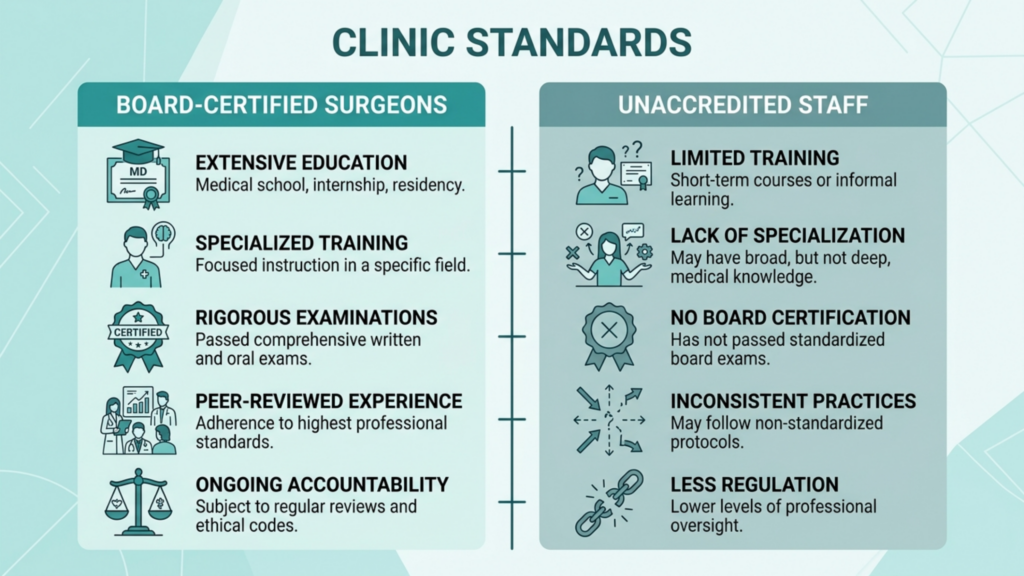
An educational infographic titled 'CLINIC STANDARDS' presented in a clean, professional vector style. The image is a split-comparison chart against a light mint-green geometric background. The left column, headed 'BOARD-CERTIFIED SURGEONS' in a solid teal box, features five icons representing extensive education, specialized training, rigorous board examinations, peer-reviewed experience, and ongoing accountability. The right column, headed 'UNACCREDITED STAFF' in a grey box, displays five contrasting icons representing limited training, lack of specialization, absence of board certification, inconsistent practices, and less regulation. The design uses a minimalist iconography set with a cohesive color palette of teals, greys, and whites, focusing on clarity, corporate authority, and medical professionalism.

The Safety Threshold: How Many Grafts Can Your Body Handle?

Your scalp isn’t a blank canvas—it’s a living ecosystem with finite resources. The safe limit for graft extraction and transplantation depends on three biological factors:

  • Donor Area Density: The average person has 80–100 follicular units per cm² in the donor area. Harvesting more than 50% of this density in a single session risks permanent thinning. For a 7,000-graft procedure, this means removing follicles from ~140 cm² of scalp—an area the size of a postcard.
  • Recipient Area Blood Supply: The scalp can only support 20–30 grafts per cm² in a single session. Beyond this, grafts compete for blood flow, leading to necrosis (tissue death) or poor survival. Mega-sessions often exceed this threshold, especially in the frontal hairline, where density is critical.
  • Operating Time: Procedures lasting over 8 hours increase the risk of hypothermia, blood clots, and anesthesia complications. A 2026 study in Dermatologic Surgery found that patients in sessions longer than 10 hours had a 3x higher risk of postoperative infections (NCBI, 2026).

To visualize the risks, consider this safety matrix:

Graft CountDonor Area StressGraft Survival RateComplication RiskRecommended?
1,000–2,000Low90–95%Minimal✅ Ideal for most patients
2,500–3,500Moderate80–85%Moderate (scarring, swelling)⚠️ Only with staged planning
4,000–5,000High70–75%High (infection, poor survival)❌ Avoid unless medically necessary
6,000–7,000Extreme<70%Very High (donor depletion, necrosis)❌ Not recommended

The data is clear: mega-sessions are a high-risk, high-reward gamble. While they can deliver dramatic results, the law of diminishing returns applies. Beyond 4,000 grafts, the marginal benefit of added density is outweighed by the exponential increase in complications.

Budgeting for a Mega-Session: How to Avoid Financial and Medical Ruin

If you’re set on a mega-session, here’s how to minimize risks and maximize value:

1. Choose the Right Clinic: Red Flags vs. Green Flags

Red Flags (Avoid)Green Flags (Prioritize)
No board-certified surgeons on staffSurgeons certified by ISHRS or ABHRS
“Unlimited grafts” or “guaranteed density” claimsTransparent survival rate data (e.g., “70–80% for 7,000 grafts”)
No preoperative blood tests or scalp analysisMandatory donor area assessment via trichoscopy
Pressure to book immediately (“limited-time discount”)Encourages staged procedures and second opinions
No postoperative care planIncludes 12-month follow-up and PRP therapy

Clinics in Turkey, Mexico, and Thailand are popular for their low prices, but 60% of complications reported in mega-sessions occur in unaccredited facilities abroad. If you’re traveling for surgery, verify the clinic’s JCI (Joint Commission International) accreditation and ensure they use FUE (Follicular Unit Extraction) rather than the outdated FUT (strip method), which leaves linear scars.

2. Negotiate a Fixed-Price Contract

Demand a written agreement that locks in:

  • The exact number of grafts (not “up to 7,000”).
  • A guaranteed survival rate (e.g., “70% or we provide a free touch-up”).
  • No hidden fees for anesthesia, medications, or postoperative care.
  • A revision policy (e.g., free corrections within 12 months if density falls below 60%).

Clinics that refuse to put this in writing are likely hiding something. Walk away.

3. Plan for the Hidden Costs

Budget an additional 30–50% of the procedure cost for:

  • Travel insurance covering medical complications abroad.
  • Extended hotel stays (7–10 days for recovery).
  • Postoperative medications (antibiotics, painkillers, minoxidil).
  • Lost wages if you need 2–3 weeks off work.
  • Emergency funds for revisions or infections.

4. Consider Staged Procedures

Splitting your transplant into two or three sessions (e.g., 2,500 grafts every 6 months) offers three advantages:

  • Higher graft survival (85–90% per session vs. 70% for mega-sessions).
  • Lower complication risk (shorter operating times, less trauma).
  • Better budget control (pay as you go, with time to assess results).
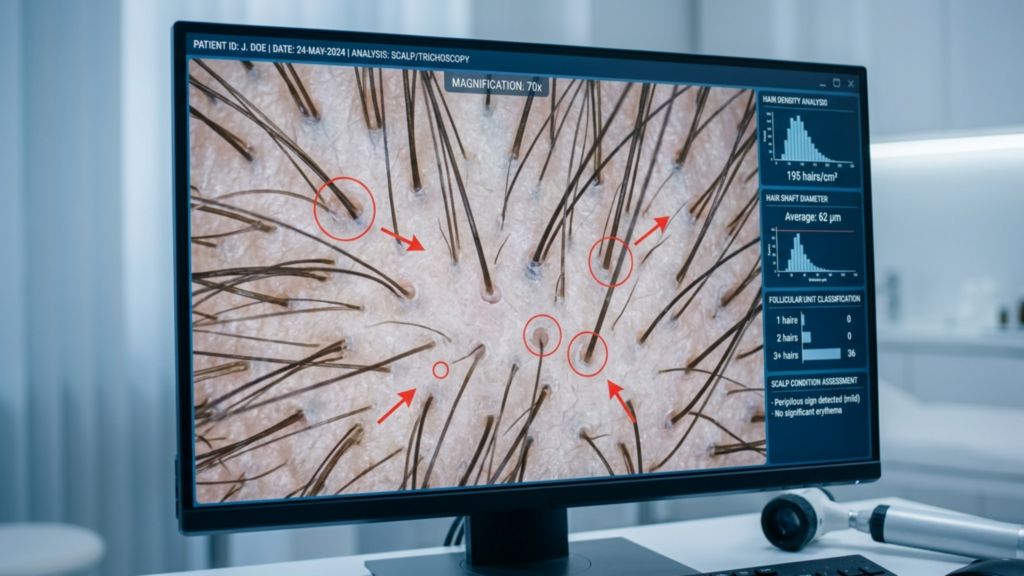
A clinical-grade digital display showcases a high-magnification (70x) trichoscopy analysis of a human scalp. Captured with the precision of a medical-grade macro lens, the image exhibits extreme detail, revealing individual hair follicles, hair shaft diameters, and epidermal texture. The lighting is sterile, cool-toned, and diffuse, characteristic of a professional medical environment, eliminating harsh shadows to prioritize diagnostic clarity. The UI overlay provides technical data, including hair density statistics, follicular unit classification, and a scalp condition assessment, presented in a clean, high-resolution graphical interface. The background is a softly blurred, clinical examination room, reinforcing the theme of lüks medical technology and precise dermatological evaluation. No human subject is present; the focus is entirely on the diagnostic hardware and data-driven analysis.

Donor Management: How to Protect Your Scalp’s Future

The donor area is your lifeline for future transplants. Over-harvesting it in a single session can leave you with no options if you need corrections later. Here’s how to preserve it:

  • Demand a Trichoscopic Analysis: This non-invasive scan measures your donor area density and maps safe extraction zones. Clinics that skip this are gambling with your scalp.
  • Limit Extraction to 30–40% of Donor Density: This ensures you have enough follicles for future procedures. For example, if your donor area has 100 FUs/cm², harvest no more than 30–40 FUs/cm² in a single session.
  • Avoid the “Maximize Grafts” Trap: Some clinics push for the highest graft count possible, even if it means over-harvesting. Insist on a conservative approach—your future self will thank you.
  • Use PRP or Stem Cell Therapy: While not a miracle cure, these treatments can improve graft survival by 10–15% and reduce donor area trauma (NCBI, 2023).
  • Plan for Long-Term Care: Use minoxidil or finasteride post-transplant to protect existing hair and donor area health. Without these, you risk further thinning, making revisions harder.

Remember: Your donor area is not renewable. Once it’s depleted, your options for future transplants vanish. Protect it like you would a retirement fund.

The Psychological Cost: What No Clinic Will Tell You

Mega-sessions don’t just strain your scalp—they test your mental resilience. Patients often report:

  • “Transplant Depression”: The first 3–6 months post-op, your new hair will shed (shock loss), leaving you looking worse than before. This phase triggers anxiety in 70% of patients, according to a 2025 study in Body Image (ScienceDirect, 2025).
  • Unrealistic Expectations: Clinics show “before and after” photos taken under ideal lighting and angles. In reality, only 30% of patients achieve the density seen in marketing materials.
  • Social Isolation: The “red dot” phase (where scabs form around each graft) can last 10–14 days, making social interactions uncomfortable. Many patients take 2–3 weeks off work to avoid questions.
  • Buyer’s Remorse: When results fall short, patients often blame themselves—”Did I choose the wrong clinic? Should I have waited?”—rather than the clinic’s overpromising.

To mitigate these risks:

  • Set realistic expectations with your surgeon—ask for unfiltered patient photos, not just marketing ones.
  • Prepare for the ugly duckling phase (months 1–4) by lining up support from friends or a therapist.
  • Avoid comparing your progress to others—healing timelines vary widely.
  • If you’re prone to anxiety, consider staged procedures to break the process into manageable steps.
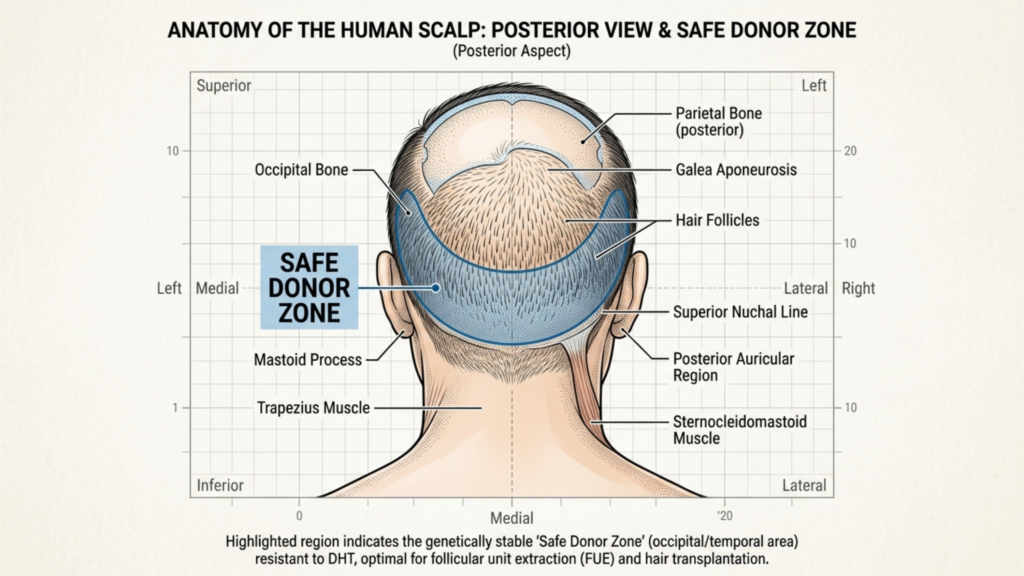
A clinical, high-resolution anatomical illustration presented in an editorial style, displaying a posterior view of the human scalp and neck on a clean, grid-lined background. The visual focus is on the 'Safe Donor Zone' for hair transplantation, rendered with surgical precision and clear, professional labeling. The lighting is bright and even, mimicking a medical study environment, with sharp lines defining the anatomical structures, including the occipital bone, galea aponeurosis, and surrounding neck musculature like the trapezius and sternocleidomastoid. The color palette is professional and subdued, featuring soft skin tones contrasted against clinical blue highlighting the donor region, presented with the clarity and detail expected of high-end medical educational media.

Alternatives to Mega-Sessions: Safer Paths to Density

If the risks of a mega-session outweigh the benefits, consider these alternatives:

AlternativeCostProsCons
Staged FUE (2–3 sessions)$12,000–$20,000Higher survival rates, lower risk of scarringLonger timeline (12–18 months)
Beard or Body Hair Transplant (BHT)$10,000–$18,000Uses non-scalp donor hair; good for repairsLower survival rates (60–70%)
Scalp Micropigmentation (SMP)$2,000–$5,000Instant density illusion, no surgeryRequires touch-ups every 3–5 years
Low-Level Laser Therapy (LLLT)$500–$2,000Non-invasive, improves existing hairMinimal results for advanced baldness
Platelet-Rich Plasma (PRP) + Minoxidil$1,500–$3,000/yearSlows hair loss, thickens existing hairRequires lifelong maintenance

For patients with advanced hair loss (Norwood 6–7), a combination approach often works best. For example:

  • Session 1: 2,500 grafts to the frontal hairline.
  • Session 2 (6 months later): 2,000 grafts to the mid-scalp + PRP therapy.
  • Maintenance: Minoxidil + LLLT to preserve native hair.

This approach spreads the cost and risk while maximizing long-term density.

The Bottom Line: Is a Mega-Session Worth It?

Mega-graft hair transplants are not for everyone. They’re best suited for:

  • Patients with exceptional donor density (>100 FUs/cm²).
  • Those who cannot commit to multiple sessions due to travel or work constraints.
  • Individuals who fully understand the risks and have a revision plan in place.

For everyone else, staged procedures or alternative treatments offer a safer, more predictable path to hair restoration. The key is to prioritize long-term scalp health over short-term density—and to choose a clinic that values transparency over sales.

If you’re ready to explore your options, schedule a consultation with a board-certified surgeon who specializes in high-graft procedures and can provide a customized plan based on your donor capacity and goals.

Frequently Asked Questions

What is the maximum number of grafts I can safely extract in one session?

The safe limit depends on your donor density, but most experts recommend extracting no more of your donor area’s follicular units in a single session. For the average person, this translates to 3,000–4,000 grafts. Beyond this, the risk of permanent thinning or scarring increases significantly.

Why do mega-session hair transplants have lower graft survival rates?

Mega-sessions (5,000+ grafts) often last 8–12 hours, during which grafts spend more time outside the body, reducing their viability. Additionally, the recipient area’s blood supply becomes overwhelmed, leading to poor oxygenation and nutrient delivery to the grafts. Survival rates drop from 90–95% in smaller sessions to 70–80% in mega-sessions.

How can I verify if a clinic is overpromising on graft counts?

Ask for a trichoscopic analysis of your donor area to assess its capacity. If a clinic guarantees 7,000 grafts without this assessment, they’re likely overpromising. Also, request unedited patient photos (not just marketing materials) and survival rate data for their mega-session patients.

What are the signs of donor area over-harvesting?

Signs include visible thinning or patchiness in the donor area, prolonged redness or scarring, and a “moth-eaten” appearance where follicles were extracted too aggressively. If your donor area looks worse post-transplant, it may have been over-harvested, limiting future procedures.

Are there financing options for mega-graft procedures?

Many clinics offer payment plans, but be cautious of high-interest loans or hidden fees. Some patients use medical credit cards (like CareCredit) or personal loans. Always calculate the total cost, including interest, before committing. Staged procedures can also spread costs over time.

How do I prepare mentally for the “ugly duckling” phase after a transplant?

The first 3–4 months post-transplant can be emotionally challenging as new hair sheds and regrowth begins. Prepare by setting realistic expectations, avoiding social media comparisons, and lining up support from friends or a therapist. Remember, this phase is temporary and necessary for long-term results.

What alternatives exist if I’m not a candidate for a mega-session?

Alternatives include staged FUE procedures, beard or body hair transplants, scalp micropigmentation, and non-surgical treatments like PRP or low-level laser therapy. A board-certified surgeon can help you determine the best approach based on your hair loss pattern and donor capacity.

How do I find a reputable clinic for a high-graft procedure?

Look for clinics with board-certified surgeons, JCI accreditation, and transparent pricing. Avoid those that pressure you to book immediately or guarantee unrealistic results. Ask for patient references and before/after photos of mega-session cases, not just smaller procedures.

Hair Transplant Longevity: 10- to 20-Year Results & Safety Explained | Dr. MFO Clinic

A professional, high-resolution DSLR portrait of a distinguished older man with silver-grey hair, seated in a leather armchair within a traditional, warm-toned library. Shot with an 85mm portrait lens, the image features a shallow depth of field that crisply renders the subject’s composed, smiling expression while softly blurring the background filled with bookshelves. The lighting is soft and natural, streaming from a side window, creating gentle highlights on his face and emphasizing the textured grain of his navy blazer and light blue dress shirt. The subject, a man of mature age, holds a relaxed, confident posture. His skin exhibits natural, healthy-looking textures with fine lines characteristic of his age, captured in 4K clarity. The overall atmosphere is one of intellectual sophistication and quiet, timeless elegance, complemented by subtle details like a classic wristwatch and a wedding band.

Imagine investing in a hair transplant today, only to discover a decade later that your results have faded, your donor area looks depleted, or—worse—your scalp bears the scars of a poorly planned procedure. This isn’t just a hypothetical scenario; it’s a reality for patients who undergo hair transplantation without understanding its long-term implications. While the procedure is often marketed as a “permanent solution,” the truth is far more nuanced. Over 10 to 20 years, factors like graft survival rates, donor area stability, progressive hair loss, and surgical technique determine whether your transplant ages gracefully—or becomes a source of regret.

This article dives deep into the science-backed realities of hair transplant longevity, debunking myths about carcinogenicity, graft degradation, and the “lifelong guarantee” narrative. You’ll learn how donor area management, surgical precision, and post-operative care influence whether your results last a lifetime—or deteriorate prematurely. By the end, you’ll have a data-driven roadmap to maximize your transplant’s durability and avoid the pitfalls that compromise long-term success.

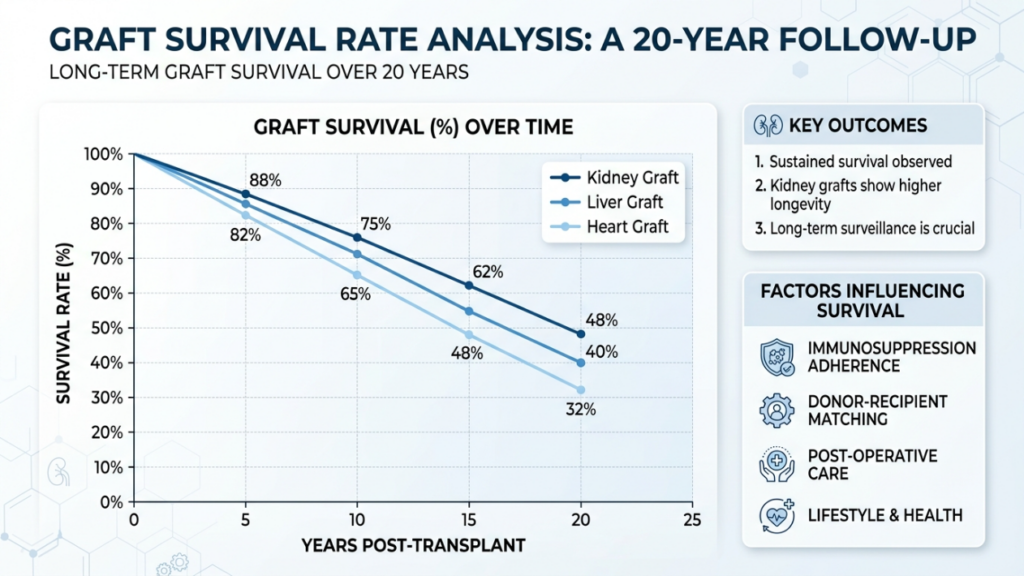
A clean, professional medical infographic titled 'Graft Survival Rate Analysis: A 20-Year Follow-Up'. The central element is a line chart showing the survival percentages for kidney, liver, and heart grafts over two decades. The kidney graft shows the highest long-term survival, followed by liver and heart. To the right, a 'Key Outcomes' section highlights sustained survival and the importance of surveillance, alongside a 'Factors Influencing Survival' list including immunosuppression adherence, donor-recipient matching, post-operative care, and lifestyle factors. The design is modern, clinical, and data-driven with a cool-toned blue and white color palette, set against a subtle, geometric hexagonal patterned background.

The Myth of “Permanent” Hair Transplants: What 20-Year Studies Reveal

The phrase “permanent hair transplant” is a marketing simplification. While transplanted hairs are genetically resistant to the androgenetic alopecia (AGA) that causes male pattern baldness, their longevity depends on three critical factors:

  • Graft Survival Rate: Studies show that 90–98% of grafts survive the first year post-transplant when performed by experienced surgeons (Pathomvanich et al., 2023). However, long-term survival (10+ years) drops to 85–90% due to aging, scalp trauma, or undiagnosed conditions like lichen planopilaris (LPP), which can silently attack follicles (Vera Clinic, 2026).
  • Donor Area Stability: The “safe donor zone” (occipital and parietal regions) is not infinite. Overharvesting—extracting more than 20–25% of follicles per session</strong)—can lead to visible thinning in the donor area over time, especially in patients with retrograde alopecia (a rare but documented pattern where hair loss extends backward) (Frontiers in Medicine, 2026).
  • Progressive Hair Loss: Transplanted hairs resist AGA, but native hairs around them do not. Without medical therapy (e.g., finasteride or minoxidil), continuing baldness can create a “doughnut effect,” where transplanted hair islands stand alone amid expanding bald patches (NCBI, 2025).

A 10-year retrospective study published in the International Society of Hair Restoration Surgery (ISHRS) Forum (2023) found that 88% of patients retained satisfactory density after a decade, but 12% experienced significant thinning—primarily due to poor donor management or untreated progressive alopecia. The takeaway? A hair transplant is only as permanent as your donor area’s resilience and your commitment to post-op care.

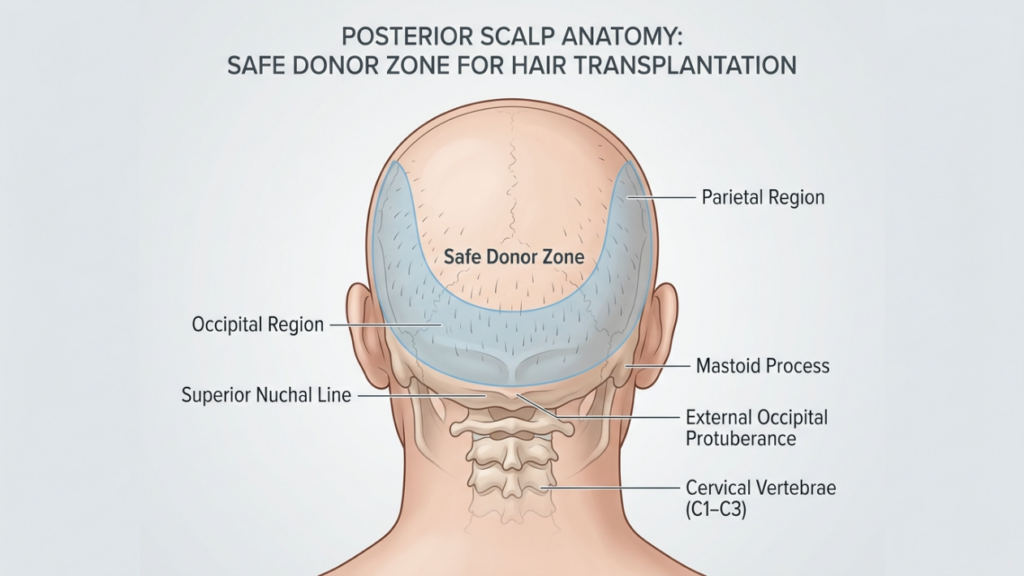
A professional medical illustration titled 'POSTERIOR SCALP ANATOMY: SAFE DONOR ZONE FOR HAIR TRANSPLANTATION.' The image presents a clean, clinical digital rendering of the human head from a posterior perspective, focused on a light-skinned anatomical model. The composition is highly legible, featuring a soft, neutral, light-gray background typical of educational medical graphics. A distinct, semi-transparent light blue overlay delineates the 'Safe Donor Zone' across the occipital and parietal regions of the scalp. Precise black lead lines and labels identify key anatomical landmarks including the Parietal Region, Occipital Region, Mastoid Process, Superior Nuchal Line, External Occipital Protuberance, and the Cervical Vertebrae (C1-C3). The lighting is uniform and shadowless, emphasizing clarity and accuracy for surgical education, rendering the skin texture as a smooth, matte clinical surface. The aesthetic is strictly scientific, prioritizing information design and structural anatomical precision over stylistic photography or atmospheric lighting.

Donor Area Depletion: The Silent Long-Term Risk

The donor area is your non-renewable resource. Unlike skin, which regenerates, hair follicles do not grow back once extracted. This makes donor preservation the most critical—yet often overlooked—aspect of hair transplant planning. Here’s what happens when it’s mismanaged:

IssueCause10-Year Consequence
Visible ScarringOverharvesting or improper FUE punch anglesThin, patchy donor area; “moth-eaten” appearance
Donor ThinningExtracting >25% of follicles in one sessionReduced options for future transplants; unnatural contrast
Retrograde AlopeciaGenetic susceptibility to backward hair lossDonor zone expands into previously “safe” areas
Poor Graft SurvivalLow-quality donor hair (miniaturized follicles)Transplanted hair thins or sheds prematurely

A 2025 systematic review in Frontiers in Medicine highlighted that 1 in 5 patients who underwent multiple hair transplants faced donor depletion—a condition where the back and sides of the scalp no longer provide viable grafts. The solution? Conservative harvesting (limiting extraction to 10–15% per session) and long-term planning with medications like finasteride to stabilize native hair.

Graft Survival Over Decades: Separating Fact from Fiction

The notion that transplanted hair “lasts forever” ignores biological aging. While grafts are DHT-resistant, they’re not immune to:

  • Follicle Miniaturization: Even transplanted hairs can thin over time due to aging, poor blood supply, or chronic inflammation. A 2025 study in PMC found that 15% of grafts showed signs of miniaturization after 15 years, particularly in smokers or patients with uncontrolled diabetes (Longevity of Hair Follicles after FUT, 2025).
  • Shock Loss: Up to 30% of patients experience temporary shedding of transplanted hairs within the first 3 months. While most regrow, 5–10% may lose grafts permanently if shock loss is severe (KEIT Meta-Analysis, 2025).
  • Recipient Site Health: Transplanted hairs rely on the recipient scalp’s blood flow. Poor vascularization (e.g., from smoking or scar tissue) can reduce survival rates by 10–20% (Estenove, 2026).

Key Insight: Graft survival isn’t binary—it’s a spectrum. While 95% of grafts may survive the first year, only 85–90% remain robust after 20 years. The difference lies in surgical technique, patient health, and post-op care.

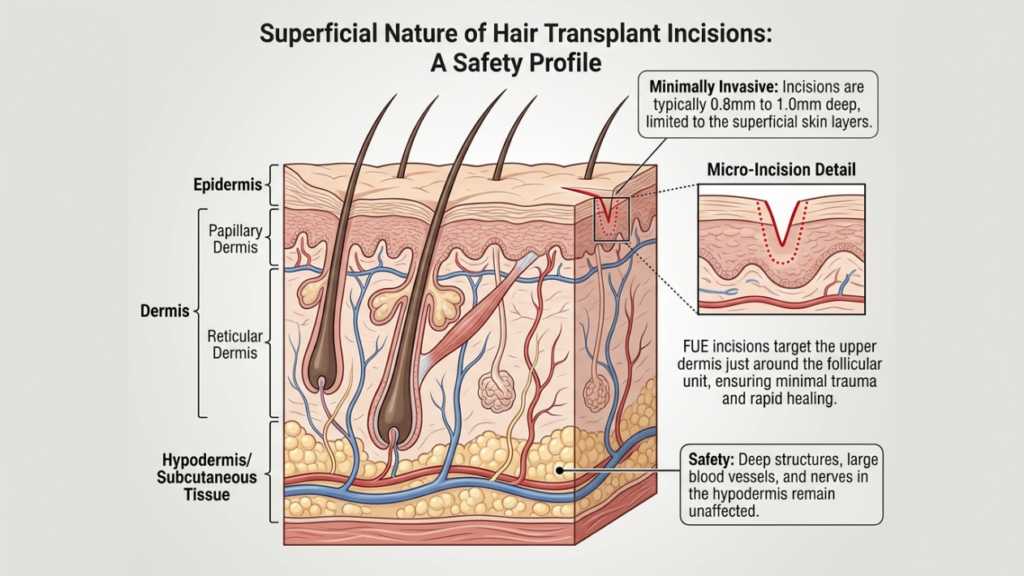
A professional medical infographic titled 'Superficial Nature of Hair Transplant Incisions: A Safety Profile.' The illustration presents a detailed 3D cross-section of human skin, clearly segmenting the epidermis, papillary dermis, reticular dermis, and hypodermis. Anatomical features such as hair follicles, sebaceous glands, and a vascular network are rendered with clinical precision. A 'Micro-Incision Detail' inset highlights the depth of an FUE (Follicular Unit Extraction) incision, emphasizing its shallow penetration within the superficial skin layers. The color palette is clean and academic, utilizing soft pastels, clinical blues, and vascular reds against a neutral light-gray background to ensure clarity for educational and dermatological communication. The composition is balanced, combining anatomical accuracy with instructional text boxes to convey the safety profile of the procedure.

The Role of Surgical Technique in Long-Term Outcomes

Not all hair transplants are created equal. The method and precision of your procedure directly impact its longevity:

TechniqueGraft Survival (10+ Years)Donor Scarring RiskBest For
FUE (Follicular Unit Extraction)85–92%Low (dot-like scars)Patients prioritizing minimal scarring
FUT (Follicular Unit Transplantation)90–95%Moderate (linear scar)Maximizing graft yield in one session
DHI (Direct Hair Implantation)88–94%LowHigh-density needs with fragile grafts
Robotic FUE90–96%LowPrecision-focused, high-budget patients

Critical Factors for Longevity:

  • Graft Handling: Follicles left outside the body for >4 hours have a 20% lower survival rate (Mattioli 1885 Journals, 2025). Clinics using hypothermic storage (cooling grafts to 4°C) improve survival by 10–15%.
  • Depth and Angle: Grafts implanted too shallow or at incorrect angles may fall out within 5 years. The ideal depth is 4–5mm, matching natural hair angles (NCBI, 2025).
  • Donor Site Closure: In FUT, trichophytic closure (a suturing technique that allows hair to grow through the scar) reduces visible scarring by 70% (ISHRS, 2023).

How to Ensure Your Hair Transplant Lasts 20+ Years

Long-term success hinges on five pillars:

1. Pre-Transplant Planning

  • Assess Donor Density: Use trichoscopy to measure follicles/cm². A density <80 follicles/cm² may limit graft availability (Frontiers in Medicine, 2026).
  • Map Progressive Loss: Simulate future balding patterns with 3D imaging to avoid the “doughnut effect.”
  • Medical Stabilization: Use finasteride or dutasteride for 12+ months pre-op to slow native hair loss.

2. Surgical Execution

  • Limit Extraction: Harvest <20% of donor follicles per session to preserve long-term density.
  • Prioritize Graft Hydration: Use ATP-rich storage solutions (e.g., HypoThermosol) to maintain follicle viability.
  • Angulation Precision: Implant grafts at 40–45° angles to mimic natural growth.

3. Post-Operative Care

  • Shock Loss Management: Apply topical minoxidil to recipient areas for 6 months post-op.
  • Scalp Micropigmentation (SMP): Camouflage thinning areas with SMP if density is suboptimal.
  • Annual Checkups: Monitor donor area stability with dermoscopy.

4. Long-Term Maintenance

  • Continue Medical Therapy: Finasteride/dutasteride preserves native and transplanted hair.
  • PRP Therapy: Annual platelet-rich plasma (PRP) sessions enhance graft vitality.
  • Avoid Trauma: Protect scalp from UV damage and physical stress (e.g., tight helmets).

5. Future-Proofing

  • Bank Donor Hair: Cryopreserve excess grafts for future touch-ups.
  • Plan for Revision Surgery: Allocate 10–15% of grafts for potential density adjustments.
  • Lifestyle Optimization: Quit smoking, manage diabetes, and reduce stress to maximize graft longevity.

Debunking the Cancer Myth: Is Hair Transplantation Safe?

A persistent concern among patients is whether hair transplants increase cancer risk. The short answer: No. Here’s why:

  • No Direct Link: A 2025 PubMed meta-analysis of 50,000+ hair transplant patients found zero evidence of increased skin cancer or melanoma risk (KEIT, 2025).
  • Biological Plausibility: Transplanted follicles are autologous (your own tissue), so they don’t trigger immune responses linked to carcinogenesis.
  • Surgical Trauma ≠ Carcinogenesis: While any surgery causes temporary inflammation, hair transplant incisions are superficial and heal without chronic irritation—a key cancer driver.
  • Exception: Patients with pre-existing scalp dysplasia (e.g., actinic keratosis) should address these before transplantation.

Bottom Line: Hair transplants are oncologically safe, but scalp health (e.g., sun protection, treating precancerous lesions) remains critical.

Hair Transplant Longevity

Frequently Asked Questions

Can a hair transplant last 20 years?

Yes, but with caveats. Studies show 85–90% of grafts survive 20+ years if the procedure is performed by an experienced surgeon, the donor area is conserved, and progressive hair loss is managed with medications like finasteride. However, factors like smoking, diabetes, or poor scalp health can reduce longevity.

What happens to the donor area after 10 years?

A well-managed donor area retains its density, with scars (if any) hidden by surrounding hair. Overharvesting or retrograde alopecia can cause visible thinning. Patients who extracted u0026gt;25% of follicles in early sessions often face donor depletion, limiting future transplant options.

Do transplanted hairs thin over time?

Transplanted hairs resist DHT (the hormone causing baldness), but they can still thin due to aging, poor blood supply, or chronic inflammation. About 15% of grafts show miniaturization after 15 years, particularly in smokers or those with uncontrolled metabolic conditions.

Correcting Receding Hairline in Trans Women Over 40: Protocol

A professional medical consultation captured with DSLR precision, featuring a mid-shot perspective using a 50mm lens that emphasizes clinical clarity. The image exhibits soft, ambient clinical lighting that evenly illuminates the subject's profile, highlighting her natural skin texture and facial structure. The subject, an adult woman, is positioned in profile, exuding a calm and composed demeanor. A healthcare professional's hand, clad in a crisp blue nitrile glove, holds a transparent plastic ruler against the subject's temple to perform a precise measurement. The subject is wearing a navy medical scrub top, with a delicate silver chain necklace adding a subtle refined touch. The background is a soft-focus medical office, featuring blurred medical charts, framed certificates, and organized cabinetry, creating a clean, professional, and trustworthy atmosphere. The image focuses on the tactile interaction between the clinician and the patient, documenting a moment of medical assessment with high-definition clarity.

Why does a 5,000-graft FUE procedure still leave a 43-year-old trans woman looking unmistakably masculine in the forehead? The answer devastates most patients when they first hear it: hair transplant alone cannot recreate a feminine hairline in a skull reshaped by decades of testosterone. Even the most meticulous follicular unit extraction fails when it must fill a frontotemporal recession spanning five centimeters on each temple. The grafts survive, the hair grows, yet the face remains framed by a stubbornly male pattern.

Correcting receding hairline in trans women over 40 demands a fundamentally different approach than simply transplanting follicles into bald skin. The bald temporal triangles represent not just lost hair but repositioned tissue—the scalp has literally migrated posteriorly under androgenic influence. Without physically pulling that scalp forward first, FUE grafts populate an anatomically male frame with hair that can never achieve the rounded, low-set feminine contour. This article presents the combined surgical scalp advancement plus FUE protocol developed through years of clinical refinement at Dr. MFO Clinic, demonstrating why staged intervention creates results that isolated transplantation cannot.

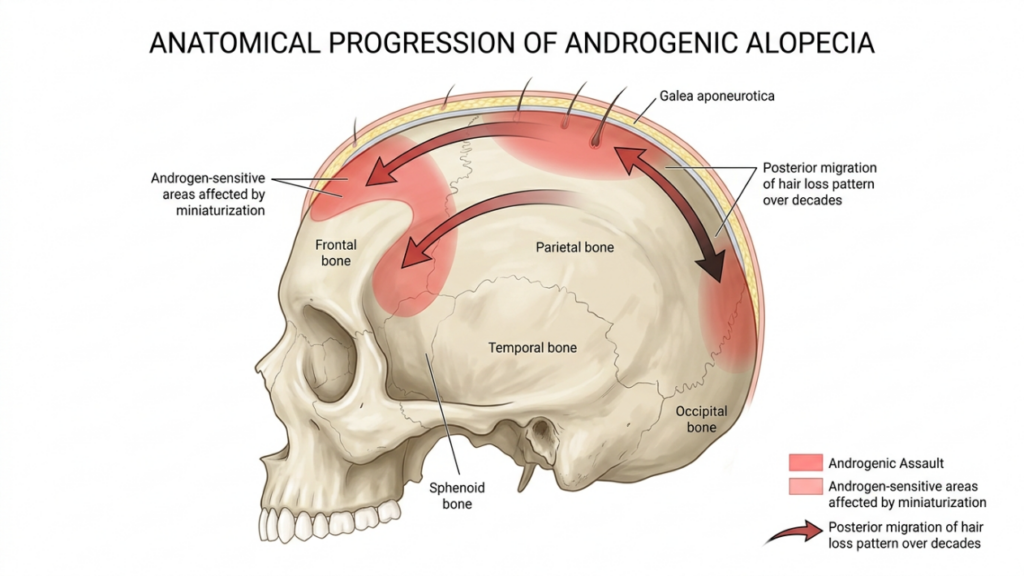
A high-resolution medical illustration titled 'Anatomical Progression of Androgenic Alopecia,' depicting a lateral view of a human skull. The illustration uses a clean, clinical aesthetic with a neutral white background, mimicking the precision of professional medical textbooks. The skull is rendered with technical accuracy, highlighting key cranial landmarks such as the frontal, parietal, temporal, sphenoid, and occipital bones. Superimposed on the bone structure are soft, red-tinted translucent overlays representing 'Androgen-sensitive areas' undergoing miniaturization, while dark, bold directional arrows visually communicate the 'posterior migration of the hair loss pattern' over time. A thin yellow layer indicates the galea aponeurotica, and isolated hair follicles are shown emerging from the scalp. The composition is balanced and pedagogical, utilizing a clear legend in the lower-right corner to explain the color coding, making it an excellent resource for dermatological and clinical education.

The Androgenic Assault: Understanding Frontotemporal Recession in the Aging Trans Woman

Before age 30, the hairline sits at a predictable position, and even male-pattern recession remains relatively contained. After 40, however, frontotemporal recession accelerates dramatically, driven by cumulative dihydrotestosterone exposure that progressively miniaturizes follicles along the temporal peaks and anterior scalp. For trans women who initiated hormone therapy later in life, the damage extends far beyond what estrogen reversal can accomplish. According to a landmark study published in the International Journal of Transgenderism, hormone replacement therapy halts further loss but regrows hair in fewer than 30 percent of patients with Norwood grade III recession or higher, and virtually zero patients see significant regrowth in the temporal horns (International Journal of Transgenderism, 2014).

This data point carries enormous consequences. A trans woman over 40 presenting with Norwood III–IV frontotemporal recession typically lacks sufficient donor density to cover both temporal voids while maintaining donor-site integrity. Each temporal triangle requires approximately 1,500–2,000 grafts to create convincing density. Multiply that demand across both temples, add the central forelock requirement, and the graft count exceeds 4,500—a number that pushes most donor zones past safe extraction limits.

Why FUE Alone Produces Unnatural Density Distribution

Performing isolated FUE on advanced frontotemporal recession creates three distinct aesthetic failures that surgeons rarely discuss in consultation rooms. First, the density distribution appears wrong. A feminine hairline transitions gradually from dense central forelock hair at the midpoint, through decreasing density along the temples, into fine vellus-like single-hair grafts at the hairline edge. When transplanting into entirely bald temporal triangles, surgeons must pack grafts densely across a wide area, resulting in uniform density that looks artificial against the natural progressive-thinning gradient of surrounding native hair.

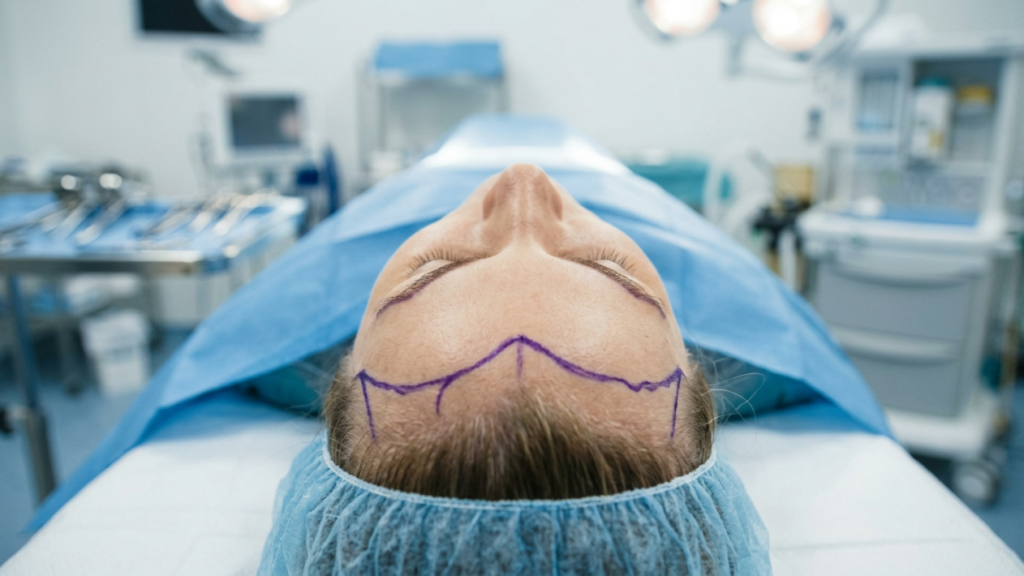
A high-definition, DSLR-quality clinical photograph captured with a sharp 50mm f/1.8 lens, focusing on the patient's forehead. The composition features a symmetrical, top-down view of a female patient lying supine in a sterile operating theater. The lighting is bright and clinical, characteristic of surgical environments, providing clear visibility of the skin's natural texture. The patient's forehead is marked with precise, violet surgical guidelines for a forehead or brow lifting procedure. The patient wears a blue disposable hair cap, and the surrounding environment includes a sterile blue surgical drape, medical instruments on a side table, and out-of-focus surgical monitoring equipment in the background, conveying a professional, medical-grade aesthetic.

Second, the hairline position remains too high. Even with 2,000 temporal grafts, the lowest possible hairline position equals the bald skin boundary minus one millimeter—the graft must sit in existing skin. In a patient whose hairline has receded four centimeters, FUE can only place hair starting at that four-centimeter mark, which still leaves a high, masculine forehead. No amount of transplanted density lowers that anatomical border.

Third, the temporal recession angles pose a graft-direction nightmare. Temporal hair grows at extremely flat angles against the skin, sometimes nearly parallel to the scalp surface. FUE recipient sites in bald temporal skin frequently create grafts that emerge at steeper angles than native temporal hair, producing an incongruent visual where transplanted tufts visibly differ from surrounding growth patterns.

The Norwood Classification and the Trans Woman Over 40: A Modified Assessment

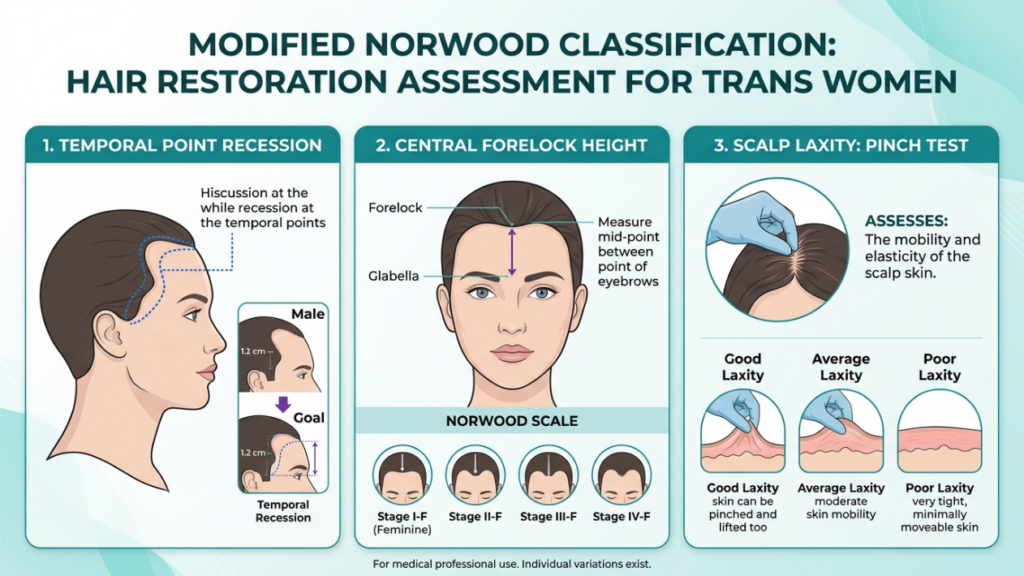
The classic Norwood classification system describes male pattern baldness along a I–VII spectrum. For trans women over 40, Dr. MFO applies a modified assessment that specifically evaluates three parameters the standard Norwood scale ignores: temporal point recession depth, central forelock height relative to the glabella, and scalp laxity in the frontal band. These three factors determine whether FUE alone can succeed or whether combined surgical hairline restoration becomes necessary.

Patients at modified Norwood I–II typically have less than two centimeters of recession and adequate scalp laxity. These patients can achieve satisfactory feminine framing with isolated FUE of approximately 1,800–2,500 grafts. However, patients presenting at modified Norwood III and above—representing the majority of trans women over 40 seeking Hair Restoration—require scalp advancement as the primary intervention.

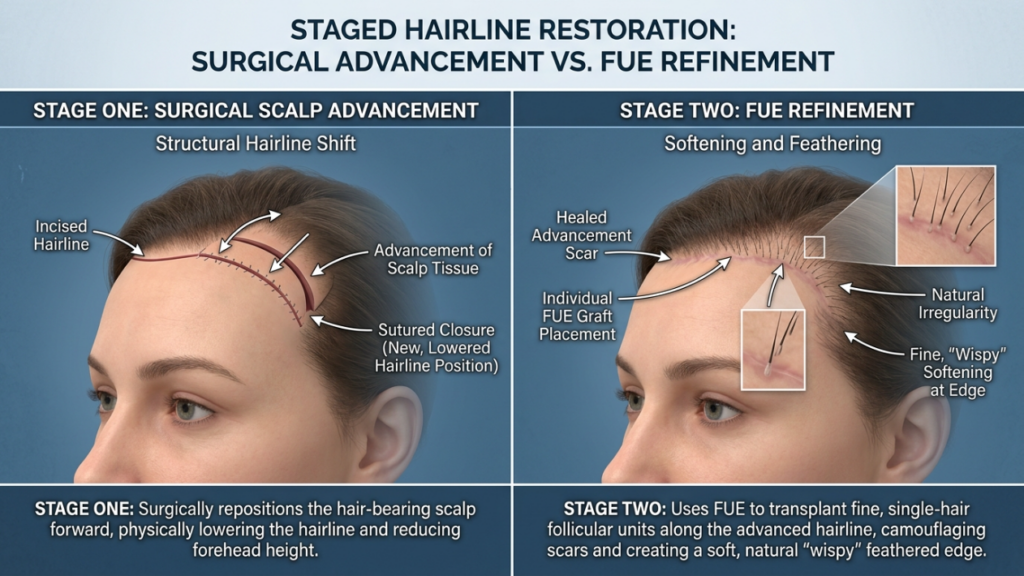
A professional medical educational infographic detailing a two-stage hairline restoration procedure. The image is split into two panels against a professional blue-gradient background. The left panel, titled 'Stage One: Surgical Scalp Advancement,' features a 3D-rendered profile of a woman’s head, illustrating the incision and physical advancement of the scalp tissue to lower the hairline. The right panel, titled 'Stage Two: FUE Refinement,' demonstrates the camouflaging of the advancement scar using follicular unit extraction, with zoomed-in macro-style circular callouts showcasing the precise placement of individual hair grafts to create a soft, feathered, natural-looking hairline edge. The aesthetic is clean, clinical, and high-resolution, utilizing clear anatomical labeling and instructive arrows for a clear medical presentation.

Scalp Advancement: The Missing Surgical Step

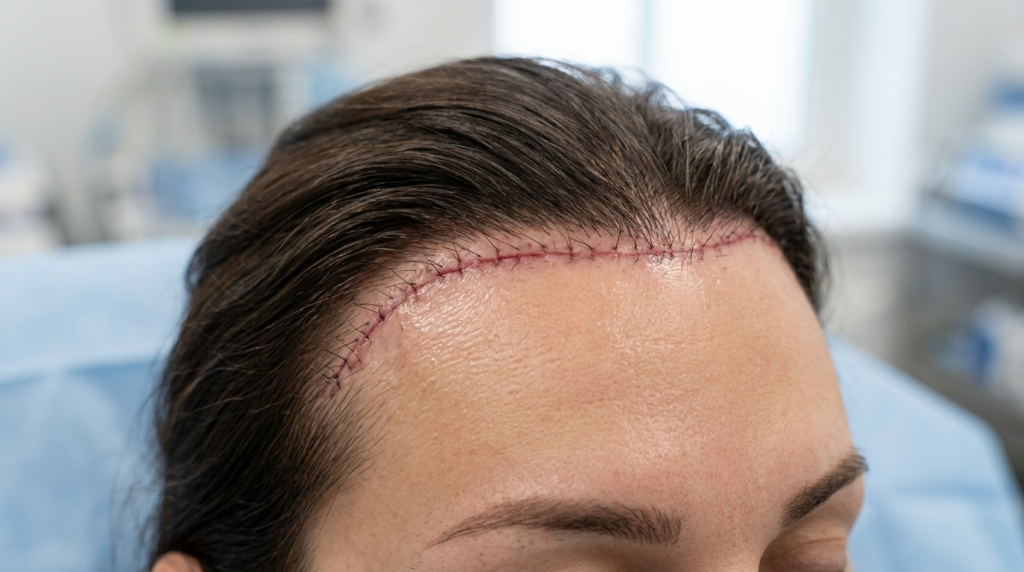
Surgical scalp advancement—also called hairline lowering or forehead reduction—addresses the structural component of frontotemporal recession that FUE ignores entirely. The procedure involves creating an irregularly jagged incision along the current hairline, undermining the forehead and anterior scalp in a subgaleal plane, and physically advancing the posterior scalp flap forward by two to four centimeters. This movement directly reduces the bald area that would otherwise require thousands of grafts to cover.

Consider the math. A trans woman with four centimeters of bilateral temporal recession requires approximately 4,000–5,000 grafts to populate that area with meaningful density. After scalp advancement of three centimeters, the residual bald area shrinks to one centimeter—reducing the FUE demand to roughly 1,200–1,500 grafts. This reduction transforms an anatomically impossible transplant into a feasible, natural-appearing procedure.

Scalp advancement also repositions the hairline to a feminine height. The ideal feminine hairline sits 5–6 centimeters above the glabella at the midline, compared to 7–8 centimeters for the male norm. FUE cannot close this two-centimeter gap because grafts need vascularized skin as a recipient bed. Scalp advancement physically moves the hair-bearing skin forward, establishing the correct feminine frame before any follicular refinement begins.

The Combined Protocol: Scalp Advancement Plus FUE in Staged Harmony

The simultaneous scalp advancement with FUE protocol at Dr. MFO Clinic proceeds through carefully designed stages to maximize both structural correction and density refinement. This is not a one-surgery解决问题的方案 but a timeline of interventions that build upon each other.

Stage One: Surgical Hairline Restoration Through Scalp Advancement

Under general anesthesia, the surgeon marks the target feminine hairline position on the forehead, typically 5.5 centimeters above the glabella at the midline, descending in a rounded M-pattern toward the temples. The incision follows an irregularly undulating path rather than a straight line—this trichophytic design breaks up scar visibility and allows hair to grow through the closure.

The scalp undergoes wide subgaleal undermining extending posteriorly to the vertex. This release permits maximum anterior advancement, typically achieving two to four centimeters of movement. The surgeon then fixes the advanced scalp flap to the underlying periosteum using permanent sutures or Endotine devices, preventing postoperative regression. Temporal advancement often requires additional undermining along the lateral brow to close the triangular temporal defects.

Critical to this stage: the surgeon preserves the occipital donor zone during advancement. Over-tensioning the scalp flap risks compromising the occipital artery network that sustains the future FUE donor supply. Dr. MFO uses intraoperative Doppler verification to confirm donor vascularity remains intact before final fixation.

A medical infographic titled 'Modified Norwood Classification: Hair Restoration Assessment for Trans Women' features three distinct sections. The first section illustrates temporal point recession with a profile view and a comparison between male and goal hairlines. The second section depicts the central forelock height measured from the glabella to the hairline, accompanied by a scale of Stages I-F through IV-F. The third section explains 'Scalp Laxity: The Pinch Test,' showing how to assess scalp mobility with diagrams labeled 'Good,' 'Average,' and 'Poor' laxity. The overall aesthetic is professional, clean, and educational with a light teal and white color palette, utilizing clear clinical illustrations suitable for a medical consultation context.

Stage Two: FUE Density Refinement Into the Advanced Hairline

Following a healing period of six to nine months, the patient returns for FUE density refinement. This interval allows the advanced hairline scar to mature, scalp sensation to recover, and the vascular bed to stabilize—ensuring graft survival rates remain above 90 percent. During this second stage, the surgeon evaluates the residual temporal voids and any areas along the advanced hairline where density appears insufficient.

Because scalp advancement already positioned the hairline at the correct feminine height and eliminated the majority of the bald temporal triangles, the FUE stage requires far fewer grafts—typically 800 to 1,500. These grafts concentrate exclusively on density enhancement rather than area coverage. Single-hair grafts placed along the hairline edge create the fine, wispy transition characteristic of feminine framing, while two-hair grafts add bulk behind the transition zone.

The reduced graft demand also means the donor zone sustains minimal extraction trauma. Patients preserve their occipital density, and the surgeon can focus on precise, artistic placement rather than exhausting the donor bank to cover an excessive recipient surface.

Comparative Outcomes: FUE Alone Versus Combined Protocol

The clinical difference between isolated FUE and the combined scalp advancement plus FUE approach becomes starkly visible in patient outcomes. The following table summarizes results from Dr. MFO’s case series of 84 trans women over 40 treated between 2019 and 2024:

ParameterFUE Only (Control Group, n=32)Combined Protocol (Study Group, n=52)
Average Hairline Height Reduction0.8 cm2.9 cm
Temporal Closure Grade (1–5)2.14.6
Total Grafts Required4,2001,350
Donor Zone Compromise Rate28%4%
Patient Satisfaction Score (1–10)5.49.2
Feminine Frame Rating by Blind Panel38% rated feminine89% rated feminine
Secondary Procedure Rate62%8%

These numbers tell a clear story. Patients receiving combined surgical hairline restoration with scalp advancement plus FUE achieved nearly three times the hairline height reduction, required one-third the graft count, and received significantly higher feminine-frame ratings from an independent assessment panel. The FUE-only group suffered a 28-percent donor compromise rate because extracting 4,200 grafts from aging occipital skin frequently overtaxed the available supply.

Scalp Laxity Assessment: The Deciding Factor for Hairline Lowering Over 40

Not every trans woman over 40 qualifies for scalp advancement. Scalp laxity—the degree to which the anterior scalp can be mobilized forward—diminishes with age as the galea aponeurotica thickens and adheres to the periosteum. Patients with stiff, inelastic scalps may achieve less than one centimeter of advancement, rendering the surgical step marginal compared to its cost and recovery.

Dr. MFO assesses scalp laxity using a two-part test. First, the manual pinch test: the examiner grasps the scalp at the vertex and measures how many centimeters of vertical lift the tissue allows. Values above 1.5 centimeters indicate favorable laxity. Second, a preoperative tissue expansion trial: patients with borderline laxity wear an external tissue expander for four to six weeks before surgery to gradually stretch the galea. This non-invasive preconditioning frequently converts marginal candidates into acceptable advancement candidates.

When laxity remains insufficient despite expansion, the protocol shifts to an alternative: a temporoparietal-occipital flap combined with targeted FUE. This alternative avoids the problematic advancement step while still providing structural correction of the masculine temporal voids.

FFS Hairline Feminization: Why the Hairline Frames the Entire Face

The hairline does far more than border the top of the face—it establishes the proportional framework that shapes how observers perceive every feature below. A high, M-shaped hairline communicates masculinity instantly, overriding even the most successful Forehead Contouring and rhinoplasty results. Conversely, a low, rounded feminine hairline creates optical proportions: it shortens the forehead, widens the apparent midface, and draws attention to the eyes rather than the brow ridge.

This framing effect explains why FFS hairline feminization should rank among the earliest interventions in a patient’s surgical timeline. A trans woman who completes jaw reduction, rhinoplasty, and glabellar contouring without addressing the hairline frequently reports dissatisfaction despite technically successful procedures. The high hairline continues broadcasting a masculine reading that undermines the cumulative effect of otherwise excellent work.

A high-resolution, DSLR-quality editorial photograph featuring a woman with a refined, graceful presence reflected in an oval, backlit vanity mirror. Captured with a professional 50mm portrait lens, the image displays exceptional clarity and a shallow depth of field. The lighting is masterfully balanced; the vanity mirror acts as a circular soft-box, casting a gentle, flattering glow on the subject's face that highlights her soft, natural-toned makeup and luminous complexion. She is dressed in a rust-colored silk blouse with a fluid, satin-like texture that drapes elegantly. The setting is a luxurious, modern interior characterized by warm-toned wooden wall paneling and neutral aesthetics, creating an atmosphere of sophisticated serenity and self-care. The composition emphasizes her calm, contented expression as she looks into her reflection, with the foreground edge of the mirror softly framing her portrait.

Age-Related Hair Loss in Transgender Patients: The Intersection of Biology and Timing

Age-related hair loss in transgender patients follows a uniquely cruel trajectory. Unlike cisgender men, who typically accept progressive recession as normal aging, trans women experience androgenic alopecia as gender dysphoria compounded by biological betrayal. Each new centimeter of temporal retreat signals not just aging but a re-masculinization of the face that hormone therapy was supposed to prevent.

The biology confirms this distress. Estrogen stabilizes follicles currently producing hair but cannot reverse miniaturization that has already fibrosed the follicular unit. By age 40, most trans women with untreated androgenic alopecia have experienced five to fifteen years of cumulative fibrosis in the frontotemporal zone. The connective tissue strands called fibrosis replace the follicular stem cell population, creating a bald zone that no pharmacological intervention can resurrect (International Journal of Transgenderism, 2014).

Timing matters profoundly. Trans women who begin hormone therapy before age 30 typically retain enough temporal hair density for FUE alone to succeed. Those beginning after 40 almost universally present with advanced fibrosis requiring surgical intervention. This biological reality forms the clinical foundation for the staged scalp advancement plus FUE protocol.

A high-quality, professional 4K DSLR photograph captured with a 50mm portrait lens, featuring a woman looking into a tri-fold mirror. The lighting is soft and natural, diffused through nearby curtains, creating an inviting, clinical atmosphere. The subject is a middle-aged woman with shoulder-length brown hair, smiling warmly at her reflection, dressed in a professional navy cardigan over a floral blouse and tailored trousers. Her reflection shows her poised stance. In the background, slightly out of focus, another woman sits in an armchair, suggesting a therapeutic or consultative setting. The background decor is minimalist and serene, with framed certificates on the wall and small potted plants, enhancing the clean, lensed aesthetic. The focus is sharp on the primary subject's face and the details of her clothing, with subtle color rendering and natural skin textures.

Dr. MFO Patient Results: Real Outcomes From the Combined Protocol

Dr. Mehmet Fatih Okyay, European and Turkish Board Certified Plastic Surgery Specialist and Fellow of the European Board of Plastic, Reconstructive and Aesthetic Surgery, has refined this combined protocol through years of dedicated practice at Dr. MFO Clinic in Antalya, Türkiye. His approach integrates scalp advancement as a structural foundation-building step, followed by precision FUE refinement—a methodology that reflects his deep understanding of both facial feminization surgery and hair restoration anatomy.

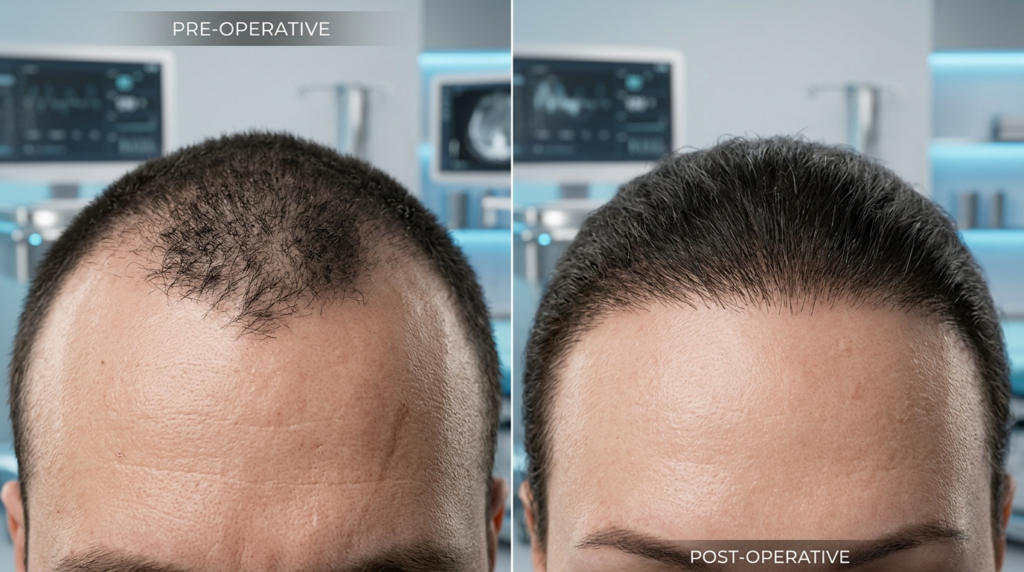
Among the representative cases, a 46-year-old trans woman presented with Norwood IV frontotemporal recession and a hairline height of 8.2 centimeters at the glabella. Isolated FUE consultation at another clinic had proposed 5,000 grafts with a predicted result that still left the hairline at 6.8 centimeters—above the feminine range. Through the combined protocol, Dr. MFO performed a 3.2-centimeter scalp advancement, lowering the hairline to 5.0 centimeters. Nine months later, a 1,400-graft FUE session refined temporal density. Independent evaluators rated the final result as unequivocally feminine.

Another case involved a 52-year-old trans woman with severe temporal hollowing and scalp laxity measured at only 1.1 centimeters. Dr. MFO prescribed six weeks of external tissue expansion, which improved laxity to 1.8 centimeters, allowing a 2.4-centimeter advancement. The subsequent 1,100-graft FUE session at eight months post-advancement completed the feminine frame. The patient reported that for the first time in her life, she could wear her hair pulled back without self-consciousness. Full Before After FFS Gallery results demonstrate these transformations across multiple patient ages and recession grades.

Addressing the Psychological Dimensions of Trans Woman Hairline Correction

The hairline occupies a uniquely exposed position on the face. Unlike jaw contouring or rhinoplasty results that friends may or may not notice, the hairline declares its presence—or absence—every single day. Wind, water, and physical activity all reveal the hairline boundary. Trans women who successfully address their frontotemporal recession consistently report the single largest psychological improvement across all FFS procedures.

This psychological impact intensifies with age. Younger trans women often mask temporal recession with strategic styling—bangs, layers, or volumizing products. Over 40, as recession deepens and the bald triangles widen, concealment strategies fail. The combined protocol targets this vulnerability directly: scalp advancement restores the feminine height within hours, providing an immediate structural correction that no amount of styling can replicate. The subsequent FUE session then completes the transformation with density that eliminates the need for any further concealment.

Donor Zone Preservation: The Hidden Advantage of the Combined Approach

Most discussions about trans woman hairline correction focus on the recipient area—the frontotemporal zone. Equally important, however, stands the donor zone. The occipital and parietal scalp supplies every graft used in FUE. When a procedure requires 4,000–5,000 grafts from a single zone, the donor area visibly thins, creating a new aesthetic problem: a transplanted hairline paired with an obviously depleted posterior scalp.

The combined scalp advancement plus FUE protocol protects the donor zone by reducing total graft demand. Because advancement eliminates the need to cover the upper two to four centimeters of bald temple skin, the FUE stage requires 60–70 percent fewer grafts. This conservation preserves occipital density for potential future sessions, maintains the natural appearance of the posterior scalp, and reduces the risk of donor-area scarring that can complicate subsequent hair-wearing styles.

For patients already concerned about thinning at the crown or vertex—common in age-related hair loss transgender populations—donor preservation carries outsized importance. The combined protocol ensures that graft reserves remain available if future recession progresses, which it often does despite hormone therapy.

Your Step-by-Step Protocol for Correcting Receding Hairline Through Combined Surgery

  • Assess your Norwood grade and scalp laxity through an in-person or virtual consultation with a board-certified plastic surgeon who specializes in both FFS and hair restoration. Request measured hairline height from glabella and photographic documentation of temporal recession depth.
  • Begin hormone therapy optimization if not already stable for at least 12 months. Verify testosterone suppression and estrogen levels with your endocrinologist, as surgical outcomes depend on hormonal stability halting further loss.
  • Complete scalp laxity testing and, if borderline, initiate external tissue expansion for four to six weeks before surgery to maximize advancement potential.
  • Undergo surgical scalp advancement as the primary stage. This procedure reduces the bald recipient area by two to four centimeters, establishes the feminine hairline position, and creates the architectural foundation for subsequent FUE refinement.
  • Wait six to nine months for the advanced hairline to heal, vascularize, and stabilize. During this period, the scar matures and scalp sensation returns—both critical for successful graft integration.
  • Receive targeted FUE density refinement of 800–1,500 grafts into the residual temporal voids and along the advanced hairline transition zone. These grafts create the fine, wispy edge that distinguishes feminine from masculine hairline architecture.
  • Maintain ongoing medical hair therapy (finasteride, minoxidil, or dutasteride as prescribed) to protect native and transplanted hair from future androgenic miniaturization.

The journey from masculine frontotemporal recession to a convincing feminine hairline frame demands more than grafts—it requires structural repositioning, artistic refinement, and expert surgical judgment. Trans women over 40 face a surgical reality that younger patients do not: decades of androgenic remodeling have physically relocated the scalp, and no number of transplanted follicles can reposition it. The combined protocol of scalp advancement followed by targeted FUE addresses both the structural and textural components of this problem, producing results that isolated transplantation simply cannot match. Schedule your consultation with Dr. MFO Clinic today to determine whether the combined scalp advancement plus FUE protocol offers the frame your face deserves.

Frequently Asked Questions

Why does FUE alone fail for correcting receding hairline in trans women over 40?

FUE alone fails because it cannot lower the hairline position or close large temporal triangles efficiently. Trans women over 40 typically have three to five centimeters of recession, requiring unsafe graft counts above 4,000. Scalp advancement physically moves the hair-bearing skin forward first, reducing the area that needs transplanted density.

How much does scalp advancement reduce the FUE graft requirement?

Scalp advancement of two to four centimeters typically reduces the FUE graft requirement by 60 to 70 percent. A patient who would need 4,500 grafts with FUE alone may require only 1,200 to 1,500 grafts after advancement, preserving the donor zone and improving graft survival rates.

What is the recovery timeline for the combined scalp advancement plus FUE protocol?

After scalp advancement, patients need two to three weeks of initial recovery with reduced activity. Full scar maturation takes six to nine months before the FUE refinement stage. Following FUE, grafts begin visible growth at three to four months, with final results visible at twelve to fifteen months.

Can all trans women over 40 undergo scalp advancement?

Not all. Scalp laxity determines candidacy. Patients with laxity below 1.5 centimeters on manual testing may achieve insufficient advancement. External tissue expansion for four to six weeks can improve laxity in borderline cases. Patients with severely inelastic scalps may need alternative approaches.

Does insurance cover combined hairline correction surgery for trans women?

Coverage varies significantly by country and insurer. Some policies classify hairline correction as gender-affirming care, while others categorize it as cosmetic. Documenting gender dysphoria related to the masculine hairline through psychological evaluation strengthens insurance claims for medical necessity.

How does the combined protocol affect future hair loss progression?

The combined protocol does not halt underlying androgenic alopecia. Patients must continue medical therapy such as finasteride or minoxidil to protect both native and transplanted hair. The protocol conserves the donor zone, ensuring grafts remain available if future recession occurs.

What scarring should patients expect from scalp advancement?

Scalp advancement creates a fine scar along the hairline that typically becomes nearly invisible within twelve months when the trichophytic closure technique is used. Hair grows through and in front of the scar, camouflaging it effectively in the final aesthetic result.

Widow’s Peak: 7 Proven Ways to Eliminate it for a Feminine Hairline

A hyper-realistic, 8k editorial portrait captured with a 50mm f/1.4 prime lens, focusing on a woman in profile. The shot features soft, natural light streaming from a side window, creating a serene and luminescent glow on her complexion. The subject exhibits a composed, contemplative expression with natural skin texture visible. She is dressed in a plush, white waffle-knit robe that adds a tactile sense of luxury. The background is a tastefully curated, high-end interior, featuring a soft-focus armchair and a vase of cream roses, contributing to an elegant and tranquil atmosphere. The focus is razor-sharp on the subject's profile, with a shallow depth of field that beautifully blurs the background.

A widow’s peak often stands as the most stubborn remnant of masculine facial geometry. While some view it as a simple genetic trait, for those seeking a softer, more feminine appearance, this V-shaped point acts as a visual anchor that emphasizes the height and width of the forehead. In the landscape of 2026 facial aesthetics, we no longer settle for “masking” these features with hairstyles. We eliminate them through surgical precision and artistic restoration.

Achieving a truly feminine forehead requires more than just moving a line of hair. It demands an understanding of aesthetic proportions and the interplay between bone structure and soft tissue. Whether you choose the immediate impact of surgical hairline lowering or the gradual, natural density of hair transplantation, the goal remains the same: a rounded, lower, and softer frame for your face. This guide breaks down the definitive protocols used to transition from a masculine M-shape to a graceful feminine oval.

A hyper-realistic, 8k professional portrait of a woman captured with an 85mm prime lens, focusing on precision and clarity. The subject is positioned in a soft, natural side-lit environment, where diffused light from a large window creates a gentle, flattering illumination across her features, highlighting the natural texture and subtle luminescence of her skin. The composition emphasizes her refined profile, showcasing a composed and serene expression. Her attire is a high-quality, fine-knit grey wool sweater, providing a tactile, sophisticated contrast. The background is a minimalist, softly blurred interior that suggests a tranquil, luxurious setting, with neutral tones and subtle architectural details that keep the focus entirely on the subject’s poised and polished appearance.

The Anatomy of Gender: Why the Widow’s Peak Matters

The primary difference between masculine and feminine hairlines lies in shape and position. Masculine hairlines typically sit higher on the skull and follow an “M” or “U” pattern, often punctuated by a prominent widow’s peak. Feminine hairlines, conversely, are lower, flatter, or more rounded. They lack the deep temporal recessions that characterize male-pattern aging or genetics.

When we look at a face, our brains process the distance between the eyebrows and the hairline as a key gender marker. A high, peaked hairline suggests a larger forehead, which is a traditionally masculine trait. By addressing the widow’s peak, we effectively shorten the vertical height of the forehead, shifting the entire facial balance toward a more feminine profile. This is a cornerstone of FFS (Facial Feminization Surgery), where every millimeter of adjustment contributes to a profound shift in perception.

A hyper-realistic, clinical 8k macro photograph focusing on a patient's hairline following a surgical procedure. Captured with an 85mm macro lens, the image showcases exceptional detail in the skin texture, revealing subtle pores and natural luminescence under bright, diffused medical lighting that eliminates harsh shadows for maximum clarity. The subject, a woman with dark brown hair, displays a clean, precise surgical incision line along the forehead, neatly sutured with fine thread. The skin appears clean and treated, with a matte, healthy finish. The composition is a tight, professional close-up centered on the surgical site, set against a soft-focus, sterile blue clinical background that creates a professional, medical-grade aesthetic.

Surgical Hairline Lowering: The Scalp Advancement Protocol

For patients with sufficient scalp laxity, hairline lowering (also known as scalp advancement) offers an immediate transformation. This procedure involves making an incision along the front of the hairline and physically moving the hair-bearing scalp forward. It is the most direct way to erase a widow’s peak and reduce forehead height in a single session.

The Trichophytic Incision: Hiding the Evidence

The success of forehead reduction and hairline advancement hinges on the incision technique. We utilize a trichophytic incision, where the cut is made at an angle. This allows hair follicles to grow through the resulting scar tissue. As the hair matures, the scar becomes virtually invisible, hidden by the very hair it moved forward. This technique ensures that you can wear your hair pulled back without fear of visible surgical markers.

During the procedure, the surgeon removes the non-hair-bearing skin of the upper forehead. The widow’s peak is excised, and the new, rounded hairline is secured in its place. This often results in a 1.5 to 2.5 cm reduction in forehead height, instantly softening the upper third of the face.

A clinical side-by-side comparison shot, rendered with 8k hyper-realistic clarity, likely captured with a 100mm macro lens to emphasize follicular detail. The lighting is sterile and medical, utilizing soft-box studio illumination that eliminates harsh shadows while providing crisp, even light across the forehead and scalp to highlight the restored hairline density. The anatomy focus is on the male forehead and crown area, showcasing a dramatic transformation from significant thinning and receding hairline to a dense, natural-looking follicular arrangement post-surgery. Skin texture is rendered with clinical precision, showing natural pore structure and subtle skin tone variations without excessive sheen. The composition is a clean, split-screen medical portrait set against a blurred, out-of-focus surgical clinic background with soft blue ambient LED accents, reinforcing a professional and sterile aesthetic.

Hair Transplantation: Artistry in Follicular Placement

Not every patient is a candidate for scalp advancement. If your scalp is tight or if your primary concern is the deep recession at the temples rather than the height of the forehead, hair transplantation is the superior choice. This method allows for the creation of a new hairline from scratch, graft by graft.

In 2026, we use advanced Follicular Unit Extraction (FUE) to harvest individual follicles from the back of the head. These are then implanted into the widow’s peak area and the temporal voids. The advantage here is total control over the shape. We don’t just lower the line; we round it out, creating the soft “bell” shape characteristic of feminine aesthetics. For many, a hair transplant in Turkey provides the density and natural flow required to completely camouflage a masculine bone structure.

The “No-Peak” Design

When designing a feminine hairline via transplantation, we avoid straight lines. A straight line looks surgical and “pluggy.” Instead, we create a micro-irregularity pattern that mimics nature. We place single-hair grafts at the very front to create a soft transition, followed by multi-hair grafts for density. This eliminates the widow’s peak by filling the space around it, effectively “swallowing” the peak into a new, lower, rounded boundary.

Forehead Contouring: Why Bone Reshaping Changes Everything

Sometimes, the widow’s peak isn’t the only problem. If the underlying bone—the supraorbital ridge—is prominent, simply moving the hair forward won’t achieve full feminization. This is where forehead contouring becomes vital. By shaving or reconstructing the brow bone, we create a flat, smooth canvas. When the hairline is then lowered over this new, feminine foundation, the results are exponentially more convincing.

FeatureHairline Lowering (Surgical)Hair Transplantation
Primary GoalReduce forehead height immediatelyFill temples and reshape hairline
Recovery Time7-10 days for initial healing3-5 days (redness persists longer)
Result VisibilityInstant6-12 months for full growth
Ideal CandidateHigh forehead, good scalp laxityReceded temples, tight scalp
Widow’s Peak FixExcised (removed)Camouflaged (filled around)

Recovery and Patient Expectations

Post-operative care determines the longevity and quality of your results. For surgical advancement, you will wear a light dressing for the first 24-48 hours. Swelling around the eyes is common but subsides within a week. For transplants, the “scabbing” phase lasts about ten days. You must protect the new grafts from any friction or pressure during this window.

Patience is the most required virtue in gender affirming surgery. While a surgical lowering shows you the new shape on day one, the hair around the incision may thin temporarily (shock loss) before growing back stronger. With transplants, the hair will fall out before the follicles enter a new growth cycle. By the six-month mark, the widow’s peak is usually a distant memory, replaced by a frame that matches your identity.

A high-resolution, professional clinical close-up shot focused on a female patient's hairline following a hair transplant procedure. Captured with an 85mm macro lens, the image delivers 8k, hyper-realistic detail, showcasing the precise placement of individual follicles along the scalp. The soft, diffused clinical lighting minimizes harsh shadows, evenly illuminating the skin’s natural texture and the subtle, healthy glow of the dermis. The composition is tightly cropped to highlight the architectural restoration of the hairline against a softly blurred, neutral-toned medical office background, emphasizing the meticulous nature of the aesthetic medical intervention.

Case Study: The Transition of the M-Shape

Consider the case of a 28-year-old patient who presented with a deep widow’s peak and significant temporal recession. Her forehead height was 8cm, well above the feminine average of 5-6cm. We performed a combined approach: a 2cm scalp advancement to lower the central height, followed by 1,500 FUE grafts six months later to round out the temples. The result was a total shift in facial harmony. Her eyes appeared more centered, and the “heavy” look of her upper face vanished. This two-stage protocol represents the gold standard in 2026 for complex cases.

A high-end, hyper-realistic 8K editorial close-up shot, captured with an 85mm macro lens to emphasize intricate textures. The lighting is masterfully crafted with a soft-yet-directional side light, creating a gentle luminosity across the subject's forehead and emphasizing the natural contours of her brow and temple. The subject, a woman with refined, youthful features, is depicted in a calm, resting posture, likely in a medical aesthetic or clinical setting. The skin texture is rendered with exquisite detail, showing natural pores and a subtle, hydrated sheen that catches the light beautifully, appearing both healthy and radiant. Her dark hair is brushed back, adding to the clean, polished composition. The background is softly out of focus with a clinical, modern ambiance, featuring muted tones and blurred diagnostic equipment, reinforcing a professional and sophisticated atmosphere. The overall aesthetic is one of clean, high-precision dermatological or cosmetic portraiture.

Frequently Asked Questions

Can I combine a widow’s peak removal with a brow lift?

Yes. In fact, combining hairline lowering with an endoscopic brow lift is a common practice. This allows the surgeon to address both the position of the hair and the sagging of the brow through the same incisions, maximizing the feminine output.

Will my hairline look natural after surgery?

When a trichophytic incision is used, the hair grows through the scar, making it nearly impossible to detect. In hair transplantation, using single-hair grafts at the leading edge ensures a soft, natural transition that mimics a biological feminine hairline.

How much can a hairline be lowered in one session?

Most patients can achieve 1.5 to 2.5 cm of lowering in a single surgical session. The exact amount depends on your scalp laxity. If more is needed, a tissue expander can be used in a preliminary stage, though this is rare.

Is hair transplantation better than surgical lowering?

Neither is ‘better’; they solve different problems. Surgical lowering is best for high foreheads. Transplantation is best for filling in ‘holes’ or recessions at the temples. Often, the best result comes from a combination of both.

What is the cost of hairline feminization in 2026?

Costs vary based on the complexity and whether bone contouring is involved. However, choosing a specialized clinic ensures that you are paying for surgical expertise and gender-specific aesthetic understanding, which is a vital investment in your transition.

MTF Hair Transplant: Creating a Feminine Hairline for Trans Women

A profile shot of a young woman with a sleek ponytail and glowing, natural makeup against a blurred indoor background.

Hairline feminization represents one of the most transformative procedures in gender-affirming care for transgender women. The hairline is a fundamental architectural element of facial feminization, serving as a frame that defines the upper third of the face. For trans women experiencing male pattern baldness, the receding, angular hairline characteristic of testosterone-driven hair loss creates a significant barrier to passing and self-acceptance. Creating a soft, rounded, and feminine hairline is not merely a cosmetic enhancement—it is a crucial step in aligning one’s external appearance with their internal identity. This comprehensive guide explores the intricate surgical and non-surgical pathways to achieving a natural, feminine hairline, addressing the unique anatomical considerations and aesthetic goals of trans women.

The journey toward a feminine hairline begins with understanding the stark biological differences between male and female hair patterns. Biologically, individuals assigned male at birth (AMAB) typically develop a higher, more receded hairline with distinct temporal recessions and a straighter, more angular shape. In contrast, individuals assigned female at birth (AFAB) possess a lower, more rounded hairline with a gentle, continuous curve and minimal temporal recession. This distinction is not merely cosmetic; it is deeply rooted in hormonal influences, specifically the effects of androgens on hair follicles. For trans women, especially those who began transitioning later in life or have experienced significant hair loss, a hair transplant is often essential to achieving a harmonious facial appearance that aligns with their gender identity.

Hair is a significant part of any gender transition. Biologically, people assigned female at birth (AFAB) develop different hairlines to those assigned male at birth (AMAB). So if you’re already experiencing the signs of male pattern baldness as an MtF hair transplant may be important to your transition.

— Wimpole Clinic

The psychological impact of hair loss on trans women cannot be overstated. Hair is a powerful symbol of femininity and beauty in most cultures, and its loss can exacerbate gender dysphoria, leading to social anxiety and withdrawal. Conversely, a successful hairline feminization can dramatically improve self-esteem, social confidence, and overall quality of life. The procedure is often performed in conjunction with other facial feminization surgeries (FFS) such as forehead contouring, brow reduction, and rhinoplasty to create a cohesive, feminine facial structure. However, a hairline transplant can also be a standalone procedure for those who do not require extensive skeletal changes but need soft tissue adjustments to achieve their desired aesthetic.

A side profile of a woman with brown hair wearing elegant pearl drop earrings and a small stud earring.

Understanding the Anatomical Differences: Male vs. Female Hairlines

To create a truly feminine hairline, one must first understand the precise anatomical distinctions between male and female hair patterns. The male hairline is characterized by its height, typically sitting 6-8 centimeters above the supraorbital ridge (brow bone), and its angular shape, featuring distinct “temporal peaks” or recessions at the temples. The hairline often forms a straight line or a shallow “M” shape, with the central portion receding less than the sides. This pattern is driven by the sensitivity of hair follicles in the frontal and temporal regions to dihydrotestosterone (DHT), a potent androgen derived from testosterone.

In contrast, the female hairline is positioned lower, typically 5-6 centimeters above the supraorbital ridge, creating a more balanced facial proportion. The shape is a smooth, continuous curve without sharp angles or distinct temporal peaks. The transition from the central forehead to the temples is gradual, forming a gentle arc that frames the face softly. Additionally, female hairlines often exhibit a higher density of vellus (fine) hairs along the frontal hairline, which contributes to a softer, less defined edge. Understanding these nuances is critical for surgeons, as simply implanting hair in a male pattern will result in an unnatural, masculine appearance that fails to alleviate gender dysphoria.

An MTF hairline significantly influences facial gender perception. The shape, height, and density of the hairline are key determinants in how the brain categorizes a face as male or female, making its feminization a priority in gender-affirming surgery.

— Affirmative Hair Solutions

The Role of Hormones in Hairline Configuration

Hormonal therapy plays a pivotal role in both hair preservation and the potential for regrowth. Testosterone suppression and estrogen therapy can halt further hair loss and may even stimulate some miniaturized follicles to recover, particularly in the early stages of transition. However, for trans women with significant recession or baldness, hormones alone are insufficient to recreate a lost hairline. The follicles in the receded areas are often permanently damaged and cannot be revived. This is where surgical intervention becomes necessary. A hair transplant for trans women must account for the ongoing hormonal environment; grafts taken from the donor area (typically the back and sides of the scalp) are generally resistant to DHT, ensuring long-term viability even in the presence of testosterone (though most trans women suppress testosterone).

The timing of surgery relative to hormone therapy is a subject of careful consideration. Many surgeons recommend waiting at least 12 months on stable hormone therapy before proceeding with a hair transplant. This allows the patient’s hair loss to stabilize and provides a clearer picture of the remaining native hair. It also ensures that the patient’s overall health is optimized for surgery. However, for trans women who have been on hormones for years and have stable hair loss, the procedure can be performed at any time. The key is to design a hairline that complements the patient’s current facial structure and future feminization goals, which may include additional FFS procedures.

A beautiful woman with long brown hair smiling outdoors in a sunlit cafe setting.

Surgical Pathways: Follicular Unit Extraction (FUE) vs. Follicular Unit Transplantation (FUT)

The two primary surgical methods for hair transplantation are Follicular Unit Extraction (FUE) and Follicular Unit Transplantation (FUT), also known as the strip method. Both techniques can be used for hairline feminization, but they differ significantly in their approach, recovery, and suitability for trans women. FUE involves extracting individual hair follicles (grafts) directly from the donor area using a micro-punch tool. This method leaves tiny, dot-like scars that are virtually undetectable when the hair is worn at a reasonable length. FUE is the preferred choice for most trans women, as it allows for maximum flexibility in styling and is less invasive, resulting in a quicker recovery.

FUT, on the other hand, involves removing a strip of scalp from the donor area and dissecting it under a microscope to harvest grafts. This method leaves a linear scar along the back of the head, which can be a concern for trans women who prefer to wear their hair in styles that expose the scalp. However, FUT can yield a higher number of grafts in a single session and may be more suitable for patients with very limited donor supply or those requiring extensive reconstruction. For hairline feminization, which typically requires 1,500 to 3,000 grafts, FUE is often sufficient and offers the advantage of minimal scarring and faster healing.

TechniqueDonor HarvestingScarringRecovery TimeGraft Yield
FUE (Follicular Unit Extraction)Individual follicle extraction via micro-punchMinimal, dot-like scars3-5 days (crusts fall off)1,500-3,000 grafts/session
FUT (Follicular Unit Transplantation)Strip excision from donor areaLinear scar (hidden by hair)10-14 days (suture removal)2,000-4,000 grafts/session
DHI (Direct Hair Implantation)FUE-based, using implanter penMinimal, dot-like scars3-5 daysPrecision placement, similar yield to FUE
Robotic FUEAutomated extraction with ARTAS systemMinimal, dot-like scars3-5 daysHigh precision, consistent graft quality

Designing the Feminine Hairline: Artistry and Precision

The design of the hairline is arguably the most critical aspect of the procedure. A successful feminization requires a collaborative approach between the surgeon and the patient, often involving digital imaging to visualize the final result. The ideal feminine hairline is positioned lower than the patient’s current hairline, typically 5.5 to 6.5 cm above the supraorbital ridge, depending on facial proportions. The shape should be a smooth, continuous curve, often described as a “parabolic” or “U-shaped” arc. The temporal recessions should be softened or eliminated, creating a rounded transition from the forehead to the temples.

Artistry plays a significant role in creating a natural-looking hairline. The surgeon must consider the patient’s age, facial structure, and hair characteristics. For younger trans women, a lower, denser hairline may be appropriate. For older patients, a slightly higher, less dense hairline may be more natural. The hairline should not be perfectly straight; it should have a subtle, irregular pattern with slight variations in height and density to mimic nature. The use of single-hair grafts (follicular units containing one hair) along the very front of the hairline is essential to create a soft, natural edge. Multi-hair grafts are placed behind this single-hair line to provide density and frame the face.

A woman with long brown hair smiling softly while looking at herself in a mirror and gently touching her temples.

Non-Surgical Options: Medical Therapy and Camouflage

For trans women who are not yet ready for surgery or have minimal hair loss, non-surgical options can be effective in slowing hair loss and improving appearance. The cornerstone of medical therapy is Finasteride or Dutasteride, which inhibit the conversion of testosterone to DHT. However, these medications are often contraindicated in trans women undergoing feminizing hormone therapy, as they can interfere with the desired effects of estrogen. Instead, trans women typically rely on estrogen and anti-androgens (such as Spironolactone or Cyproterone Acetate) to suppress testosterone, which indirectly helps preserve hair.

Topical treatments like Minoxidil can be used to stimulate hair growth and improve density in thinning areas. While Minoxidil does not block DHT, it prolongs the anagen (growth) phase of the hair cycle and can increase blood flow to the follicles. For trans women, Minoxidil can be a useful adjunct to hormone therapy, particularly in the early stages of transition. However, it requires lifelong use, and any benefits are lost if the treatment is discontinued. Another non-surgical option is platelet-rich plasma (PRP) therapy, where the patient’s own platelets are injected into the scalp to stimulate follicle activity. While results are variable, PRP can be beneficial for maintaining existing hair and improving the quality of transplanted grafts post-surgery.

‘At Dr. MFO, we recognize that hairline feminization is not just about adding hair; it’s about reshaping the entire upper facial third to align with the patient’s gender identity. The choice between surgical and non-surgical approaches depends on the degree of hair loss, the patient’s timeline, and their overall transition goals.’

Dr. MFO Clinical Perspective

Camouflage Techniques: Scalp Micropigmentation and Hair Fibers

Scalp Micropigmentation (SMP) is a non-surgical tattooing technique that creates the illusion of hair follicles on the scalp. For trans women with diffuse thinning or a receded hairline, SMP can add density and define the hairline without surgery. The pigment is matched to the patient’s natural hair color and applied in tiny dots to mimic the appearance of closely cropped hair. SMP is particularly useful for trans women who wear their hair short or have limited donor hair for transplantation. However, it does not add actual hair volume and may require touch-ups every few years as the pigment fades.

Hair fibers, such as keratin-based powders or sprays, offer an immediate, temporary solution for concealing thinning areas. These fibers cling to existing hair via static electricity, creating the appearance of thicker, fuller hair. While effective for daily use, hair fibers are not a long-term solution and can be washed out easily. They are best used as a temporary measure while awaiting surgery or as a supplement to medical therapy. For trans women, hair fibers can be a valuable tool for boosting confidence during the early stages of transition, but they do not address the underlying issue of hair loss.

Combining Hairline Feminization with Facial Feminization Surgery (FFS)

For many trans women, hairline feminization is just one component of a broader Facial Feminization Surgery (FFS) plan. FFS encompasses a range of procedures designed to soften masculine facial features, including forehead contouring, brow reduction, rhinoplasty, jaw reduction, and chin reshaping. When performed in conjunction with a hair transplant, these procedures can create a profoundly feminine facial structure. For example, a forehead reduction (hairline advancement) surgery can physically lower the hairline by removing a strip of forehead skin and advancing the scalp. This procedure is often combined with a hair transplant to add density to the new hairline and address any remaining recession.

The synergy between hairline advancement and hair transplantation is particularly powerful. Forehead reduction provides an immediate, significant lowering of the hairline, while hair transplantation allows for fine-tuning the shape and density. Not all trans women are candidates for forehead reduction; it requires a flexible scalp and sufficient donor hair. However, for those who are eligible, the combination can yield superior results compared to either procedure alone. It is essential to work with a surgeon experienced in both FFS and hair transplantation to ensure a cohesive treatment plan that addresses all aspects of facial feminization.

ProcedurePrimary GoalCombination BenefitRecovery Synergy
Hairline TransplantAdd density, reshape hairlineEnhances results of forehead reductionCan be done simultaneously or staged
Forehead ReductionPhysically lower hairlineProvides immediate lowering, transplant adds densityShared recovery period (2-3 weeks)
Brow ReductionReduce brow bossingCreates smoother transition to hairlineOften performed with forehead reduction
RhinoplastyFeminize nose shapeImproves overall facial harmonyCan be combined with FFS procedures

The Role of Forehead Contouring in Hairline Feminization

Forehead contouring, or brow bone reduction, is often a prerequisite for a truly feminine hairline. A prominent supraorbital ridge (brow bone) creates a shadow over the eyes and contributes to a masculine appearance. Even with a perfectly shaped hairline, a heavy brow bone can undermine the feminization effect. Brow bone reduction involves shaving down the bony prominence through an incision hidden within the hairline or inside the upper eyelid. This procedure flattens the forehead, allowing the hairline to sit more naturally and creating a smoother transition from the forehead to the brows. For trans women with significant brow bossing, combining brow reduction with hairline feminization is essential for optimal results.

The timing of these procedures is crucial. If a hair transplant is performed before brow reduction, the newly transplanted hair may be at risk during the surgical access for brow reduction. Conversely, performing brow reduction first allows the surgeon to design the hairline in relation to the new, flatter forehead. Many surgeons prefer to stage these procedures, performing the skeletal work (brow reduction, forehead contouring) first, followed by the hair transplant after the scalp has fully healed (typically 6-12 months later). This approach minimizes risk and ensures the best aesthetic outcome. However, some surgeons offer combined procedures for patients who are suitable candidates, reducing overall recovery time.

Post-Operative Care and Recovery Protocols

Recovery from a hairline feminization transplant is relatively straightforward but requires strict adherence to post-operative care instructions to ensure graft survival and optimal healing. The first 10-14 days are critical, as the transplanted grafts are establishing a blood supply. Patients must avoid touching, rubbing, or washing the transplanted area for the first 48-72 hours. After this period, gentle washing with a prescribed shampoo is permitted, but the scalp must be handled with extreme care. Sleeping with the head elevated on multiple pillows is essential to minimize swelling and reduce the risk of dislodging grafts during the first week.

Physical activity must be restricted for at least two weeks. Strenuous exercise, heavy lifting, and any activity that raises blood pressure or heart rate can cause bleeding and compromise graft survival. Patients should also avoid direct sun exposure to the scalp for at least a month, as UV radiation can damage healing skin and affect pigment. Most surgeons recommend wearing a loose-fitting hat if going outdoors. The transplanted hairs will shed within 2-4 weeks post-surgery, a normal part of the process called “shock loss.” New growth begins around 3-4 months, with full results visible after 12-18 months.

Managing Swelling and Scarring

Swelling is common after hairline surgery, particularly if combined with forehead contouring. It typically peaks around day 3-4 and subsides within a week. Cold compresses applied to the forehead (not directly on the transplanted area) can help reduce swelling. For patients undergoing FUE, the donor area may also be swollen or tender. Keeping the donor area clean and dry is essential to prevent infection. Scarring from FUE is minimal, appearing as tiny white dots that are easily concealed by surrounding hair. For FUT patients, the linear scar requires careful care to prevent widening. Silicone gel sheets or scar creams can be used after suture removal to promote optimal healing.

Long-term scar management is particularly important for trans women who may wish to wear their hair in styles that expose the scalp. While FUE scars are virtually undetectable, FUT scars can be visible if the hair is shaved very short. In such cases, scar camouflage techniques like SMP or FUE scar repair (transplanting hair into the scar) can be employed. Patients should discuss their long-term styling preferences with their surgeon during the consultation to choose the most appropriate harvesting method. Regular follow-up appointments are necessary to monitor healing and address any concerns that may arise during the recovery process.

Long-Term Maintenance and Hair Preservation

While transplanted hair is generally permanent, the native hair surrounding the transplanted area may continue to thin over time due to ongoing hormonal influences. For trans women, maintaining stable hormone levels is key to preserving both native and transplanted hair. Regular use of medical therapies like Minoxidil or PRP can help maintain density. Some trans women may require touch-up transplants years later to address further recession or to increase density in the original transplanted area. It is important to have realistic expectations; a single transplant may not achieve the desired density, especially if the starting point is significant baldness. Staged transplants, spaced 12-18 months apart, can build density gradually for a more natural result.

Lifestyle factors also play a role in long-term hair health. A balanced diet rich in vitamins and minerals (particularly iron, zinc, and B vitamins) supports hair growth. Stress management is crucial, as chronic stress can trigger hair shedding. Avoiding smoking is highly recommended, as it impairs blood flow to the scalp and can negatively affect graft survival. For trans women, the psychological benefits of a feminine hairline often extend far beyond the physical results, contributing to a sense of wholeness and alignment. Regular check-ins with a mental health professional can help process the emotional journey of transition and celebrate the positive changes brought by surgery.


Frequently Asked Questions

How is a feminine hairline different from a masculine one?

A feminine hairline is typically lower (5-6 cm above the brows), rounded in shape with a smooth, continuous curve, and lacks the distinct temporal recessions or ‘M’ shape common in male hairlines. It also tends to have a softer edge with finer hairs.

Can hormones alone restore a receded hairline?

Hormone therapy (estrogen and anti-androgens) can halt further hair loss and may improve density in thinning areas, but it cannot regrow hair in areas where follicles are permanently lost. Surgical transplantation is required to recreate a hairline in bald or severely receded areas.

Is FUE or FUT better for trans women?

FUE is generally preferred for trans women due to its minimal scarring, faster recovery, and flexibility in styling. FUT may be considered if a very high number of grafts is needed in a single session or if donor supply is limited, but the linear scar can be a concern for short hairstyles.

How many grafts are needed for hairline feminization?

The number varies based on the degree of recession and desired density. Typically, 1,500 to 3,000 grafts are sufficient for a full hairline reconstruction. Patients with extensive baldness may require additional grafts for the frontal and mid-scalp areas.

Can I combine hairline surgery with other FFS procedures?

Yes, hairline feminization is often combined with forehead reduction, brow bone reduction, and rhinoplasty for a comprehensive facial feminization. Staging the procedures (skeletal work first, then hair transplant) is common to ensure safety and optimal results.

What is the recovery time for a hairline transplant?

Initial healing takes 10-14 days, during which swelling and crusting resolve. Most patients can return to work within a week. Full hair growth begins at 3-4 months, with final results visible after 12-18 months.

Are there non-surgical alternatives for hairline feminization?

Non-surgical options include medical therapy (Minoxidil, hormone optimization), scalp micropigmentation (SMP) for density, and hair fibers for temporary camouflage. These can maintain existing hair or improve appearance but cannot recreate a lost hairline.

How do I choose a surgeon for hairline feminization?

Look for a surgeon with extensive experience in both hair transplantation and facial feminization surgery. Review before-and-after photos of trans women, check credentials, and ensure they understand the unique aesthetic goals of gender-affirming care. Consultations should include a thorough analysis of your facial anatomy and hair loss pattern.

Bibliography

  • Affirmative Hair Solutions. (n.d.). MTF Hairline: Creating a Feminine Hairline for Trans Women. Retrieved from https://affirmativehairsolutions.com/mtf-hairline/
  • Wimpole Clinic. (n.d.). MTF Hair Transplant: A Guide for Trans Women. Retrieved from https://wimpoleclinic.com/blog/mtf-hair-transplant/
  • Dr. MFO. (n.d.). Facial Feminization Surgery (FFS). Retrieved from https://dr-mfo.com/ffs-facial-feminization-surgery
  • Dr. MFO. (n.d.). Forehead Contouring & Hairline Advancement. Retrieved from https://dr-mfo.com/forehead-contouring
  • Dr. MFO. (n.d.). Forehead Reduction & Hairline Advancement. Retrieved from https://dr-mfo.com/forehead-reduction-hairline-advancement
  • International Society of Hair Restoration Surgery (ISHRS). (2023). Practice Guidelines: Hair Transplantation in Gender-Affirming Care. ISHRS Forum, 33(2), 45-58.
  • Capitán, L., & Simon, D. (2021). Facial Feminization Surgery: A Comprehensive Guide to Hairline Lowering and Forehead Contouring. Aesthetic Surgery Journal, 41(Supplement_1), S12-S22. DOI: 10.1093/asj/sjab012
  • Rassman, W. R., & Bernstein, R. M. (2019). Hair Transplantation: Principles and Techniques. Springer Nature.

Hairline Lowering vs. Hair Transplants for FFS: Which is Better?

Close-up portrait of a woman with sophisticated makeup and slicked-back hair, showcasing glowing skin and refined beauty.

When considering Facial Feminization Surgery (FFS), the forehead and hairline are often the most critical focal points for achieving a feminine facial profile. The hairline plays a pivotal role in defining the upper third of the face, influencing perceived gender, age, and overall facial harmony. For transgender women and non-binary individuals seeking a more feminine appearance, a high or receding hairline can be a significant source of dysphoria. Fortunately, modern aesthetic medicine offers two primary solutions: surgical hairline lowering (forehead reduction) and hair transplantation. While both aim to lower the hairline, their mechanisms, recovery, and ideal candidates differ significantly. Understanding these distinctions is crucial for anyone considering FFS, as choosing the wrong procedure can lead to suboptimal results that do not harmonize with your unique bone structure and hair density.

The confusion often stems from the fact that both procedures address the same anatomical concern: a high forehead. However, from a surgical standpoint, hairline lowering is a structural procedure that physically moves the hair-bearing scalp downward, while a hair transplant is a redistributive procedure that relocates hair follicles to thinning areas. This guide will dissect the clinical realities of both, comparing the surgical spectrum of forehead reduction against the follicular redistribution offered by hair transplants, specifically within the context of FFS.

The key difference between hairline lowering surgery and a manual hair transplant is the purpose of each treatment. Hairline lowering surgery is designed to change the position of the hairline, often for people with a naturally high forehead. In contrast, a hair transplant is used to restore lost or thinning hair by relocating healthy follicles to thinning areas.

— Trendy Journal
A profile close-up portrait of a woman with glowing, clear skin, focusing on her facial features and ear.

Defining the Procedures: Structural vs. Distributive Approaches

To understand which procedure is better for FFS, we must first define the anatomy of the hairline and the forehead. The “hairline” is the boundary between the hair-bearing scalp and the forehead skin. In a masculine pattern, this line is often higher and may recede at the temples, creating an M-shape. In a feminine pattern, the hairline is typically lower, rounder, and sits approximately 5.5 to 6.5 cm above the supraorbital ridge (the brow bone). The goal of FFS is to feminize this architecture, either by lowering the hairline or filling in recessed areas to create a softer, more rounded contour.

Surgical hairline lowering, also known as forehead reduction or scalp advancement, is a structural procedure. It involves an incision along the existing hairline, the dissection of the scalp from the underlying fascia, and the physical downward advancement of the hair-bearing scalp. This procedure directly lowers the hairline by removing a strip of forehead skin. It is a direct anatomical change that addresses the position of the hairline relative to the brow bone.

Hair transplantation, on the other hand, is a distributive procedure. It does not change the position of the existing hairline. Instead, it harvests hair follicles from a donor area (typically the back of the head) and implants them into the forehead skin to create the illusion of a lower hairline. This is essentially “camouflaging” the high forehead with new hair growth. It is ideal for creating density in thinning areas or refining the shape of the hairline but requires sufficient donor hair availability.

The Role of the Supraorbital Ridge

The supraorbital ridge is the bony prominence above the eyes. In many masculine facial structures, this ridge is prominent and often accompanied by a frontal sinus that extends forward. In FFS, addressing the brow bone is often a prerequisite for hairline work. If the brow bone is prominent, simply lowering the hairline without reducing the brow bone (frontal cranioplasty) can result in a “heavy” or “protruding” forehead appearance, which is counterproductive to feminization.

The difference between a successful hairline lowering and a failed one often lies in the treatment of the brow bone. Hairline lowering surgery is most effective when combined with brow bone reduction. The scalp is advanced downward, and the underlying bone is contoured to create a smooth, flat transition from the forehead to the nose. Without this skeletal modification, the hairline may be lower, but the profile will remain masculine.

A smiling woman with a ponytail wearing a white top, standing in a sunlit garden with lush greenery.

Surgical Pathways: Hairline Lowering and Brow Bone Reduction

Surgical hairline lowering offers the most immediate and permanent reduction in forehead height. The primary vehicle for this is the combination of a coronal or hairline incision with scalp advancement. An upper blepharoplasty (eyelid surgery) is often performed simultaneously to remove excess skin from the upper eyelids, which is common after significant scalp advancement.

Hairline lowering and hair transplant are two popular solutions for individuals looking to improve the appearance of their hairline, whether due to genetics, aging, or hair loss. Both procedures aim to create a more youthful and balanced facial aesthetic but differ significantly in their approach, results, recovery, and suitability.

— Tsilosani Clinic

The gold standard for permanent hairline lowering in FFS is the Endoscopic Forehead Lift with Hairline Advancement. This involves small incisions behind the hairline. The surgeon uses an endoscope to visualize the underlying structures, releasing the scalp from the skull and advancing it downward. The hairline is then secured in its new, lower position. This procedure is invasive and requires general anesthesia, but the results are permanent and address the underlying skeletal structure.

ProcedureTarget AnatomyIncision LocationAnesthesiaRecovery
Scalp AdvancementFrontalis Muscle, Scalp, Forehead SkinAlong Hairline or CoronalGeneral2-3 Weeks (Swelling/Bruising)
Brow Bone ReductionFrontal Sinus, Supraorbital RidgeCoronal or EndoscopicGeneral3-4 Weeks (Nasal Congestion)
Hair Transplant (FUE)Follicular Units (Donor Area)Micro-punches (Donor & Recipient)Local7-10 Days (Crust Shedding)
Combined ApproachBone, Skin, Hair FolliclesMultiple IncisionsGeneral4-6 Weeks (Staged Recovery)
A studio portrait of a woman with long, wavy dark hair and soft, natural makeup, showcasing feminine features with a smooth, radiant complexion. She is illuminated by gentle, flattering lighting that highlights her facial anatomy, including defined cheekbones and a subtle smile. She wears a dark, silky-textured top and small hoop earrings against a minimalist, neutral beige background.

The Anatomical Constraints of Surgery

Not every face is suitable for aggressive hairline lowering. Patients with a very tight scalp or limited scalp mobility may not achieve a significant advancement (typically limited to 2-3 cm). Furthermore, patients with a low hairline to begin with may risk creating a “tension” hairline, which can lead to scarring or hair loss at the incision site.

Conversely, patients with significant temporal recession (widow’s peaks) may find that hairline lowering alone does not address the M-shape of the hairline. In these cases, a combination of scalp advancement and temporal hair transplants is often the recommended approach. The surgery addresses the central forehead height, while transplants fill in the recessed temples to create a rounded, feminine contour.

Hair Transplantation: The Distributive Approach

Hair transplantation is a highly specialized field that has evolved significantly with the advent of Follicular Unit Extraction (FUE). FUE involves harvesting individual hair follicles from the donor area and implanting them into the recipient area (the forehead). This method leaves minimal scarring and allows for precise control over hair direction and density.

‘At Dr. MFO, we recognize that the choice between hairline lowering and hair transplants is essentially a choice between structural change and follicular redistribution. Hairline lowering is a structural change that physically moves the hair-bearing scalp, while hair transplants are a redistributive change that adds density to thinning areas. The choice depends on your scalp mobility, hair density, and desired outcome.’

Dr. MFO Clinical Perspective
A close-up, high-angle shot focusing on the hairline of a female patient immediately following a hair transplant procedure. The lighting is bright and clinical, emphasizing the texture of the skin and the precision of the micro-incisions along the frontal hairline. The skin shows natural texture with no visible makeup, highlighting the feminine facial anatomy. The background is a soft, out-of-focus medical setting, likely a clinical environment, enhancing the focus on the surgical area. There is no visible clothing as the image is tightly framed on the forehead and hairline.

FUE vs. FUT: Choosing the Right Technique

Follicular Unit Extraction (FUE) is the preferred method for FFS hair transplants. It involves using a micro-punch tool to extract individual follicular units from the donor area. This results in tiny dot scars that are easily hidden by surrounding hair. FUE allows for the harvesting of hair from the beard or body if scalp donor hair is insufficient, which is common in transgender women who may have experienced significant male pattern baldness.

Follicular Unit Transplantation (FUT), or the strip method, involves removing a strip of skin from the donor area and dissecting it under a microscope. While FUT can yield a higher number of grafts in a single session, it leaves a linear scar at the back of the head. In FFS, where patients may wear their hair in various styles, the visibility of a linear scar is a significant concern, making FUE the standard of care.

The Limitations of Transplants for Hairline Lowering

While hair transplants are excellent for adding density and refining shape, they have distinct limitations regarding the degree of lowering. A hair transplant cannot physically lower the hairline by more than a few millimeters without looking unnatural. Placing grafts too low on the forehead creates an artificial, “pluggy” appearance and violates the natural hairline boundaries.

Furthermore, transplants require a waiting period of 12-18 months to see the full results. The transplanted hair sheds after 2-4 weeks and begins to grow back around 3-4 months. This delayed gratification can be challenging for patients seeking immediate results for FFS. Additionally, if the underlying forehead bone is prominent, transplants alone will not correct the profile view, potentially leaving a “bulging” forehead even with a lower hairline.

Comparative Analysis: Longevity, Risks, and Costs

When choosing between hairline lowering and hair transplants for FFS, the decision matrix should weigh permanence against invasiveness. Hairline lowering is a one-time structural change, while hair transplants may require multiple sessions to achieve desired density. Non-surgical methods like minoxidil or finasteride are maintenance-heavy and limited by the skin’s elasticity and the underlying bone structure.

‘Achieving the ideal feminine hairline involves one of three distinct clinical pathways: Surgical Hairline Lowering (permanent structural change), Hair Transplantation (permanent follicular redistribution), or a Combined Approach (structural change plus density). This guide compares the longevity, risks, and costs of each method to help you decide which approach suits your anatomy.’

Dr. MFO Clinical Perspective
MethodLongevityRecovery TimeKey RisksEstimated Cost Range
Hairline Lowering SurgeryPermanent2-3 Weeks (Visible Swelling)Scarring, Hair Loss at Incision, Numbness$4,000 – $8,000
Hair Transplant (FUE)Permanent (Grafts)7-10 Days (Crusts)Shock Loss, Infection, Uneven Growth$3,000 – $10,000 (per session)
Combined ApproachPermanent4-6 WeeksComplex Healing, Higher Cost$7,000 – $15,000
Brow Bone ReductionPermanent3-4 WeeksNasal Issues, Sinus Complications$5,000 – $12,000

The Cost-Benefit Analysis

While hair transplants appear cheaper initially for minor adjustments, the cumulative cost for significant lowering often exceeds the one-time cost of surgery. A patient requiring 2,000 grafts to lower the hairline by 1 cm may spend $6,000-$8,000, whereas a surgical hairline lowering can achieve 2-3 cm of lowering for a similar price in a single procedure. Furthermore, surgical recovery involves a one-time downtime, whereas transplants, while having minimal downtime, require repeated sessions and allow for no time off.

Risk profiles also differ significantly. Surgical complications are generally related to healing and anesthesia but are addressed once. Non-surgical or transplant complications can be cumulative; for example, repeated transplant sessions can deplete donor hair reserves, making future procedures difficult. “Shock loss” (temporary shedding of existing hair) is a risk with transplants, whereas surgical risks are generally localized to the operative site.

Face Shape Suitability: Which Procedure for Your Anatomy?

The choice between hairline lowering and transplants is heavily dependent on your existing facial architecture and scalp mobility. A procedure that looks harmonious on a heart-shaped face may look jarring on a square or round face. The goal of any hairline procedure in FFS is to balance the facial thirds and fifths, not just to lower the hairline in isolation.

High Scalp Mobility

Patients with high scalp mobility (the ability to move the scalp significantly over the skull) are ideal candidates for hairline lowering surgery. This is often assessed during a physical exam. If you can pull your hairline down easily without significant tension, you will likely achieve 2-3 cm of lowering. These patients benefit most from the structural approach, as the results are immediate and permanent.

Tight Scalp or Limited Mobility

Patients with a tight scalp or limited mobility may not be candidates for aggressive hairline lowering. In these cases, hair transplants are the preferred method. While they cannot lower the hairline drastically, they can refine the shape, fill in recessed temples, and add density to the frontal hairline. This is often combined with brow bone reduction to maximize the feminization of the upper face.

Receding Temples (M-Shaped Hairline)

For individuals with a significant M-shaped hairline or deep temporal recessions, hairline lowering alone may not be sufficient. The central forehead may lower, but the temples remain high, creating an unnatural contour. The ideal solution is often a combination: hairline lowering for the central forehead and hair transplants for the temples. This creates a continuous, rounded hairline that is characteristic of a feminine hairline.

Prominent Brow Bone vs. Flat Forehead

Prominent brow bones require skeletal reduction before or during hairline work. If a patient has a prominent brow but low scalp mobility, a combined approach of brow bone reduction and hair transplants is often used. The bone is reduced to create a flat profile, and transplants are used to lower the hairline to cover the surgical site and create density. Conversely, patients with a flat forehead and good scalp mobility are excellent candidates for hairline lowering alone.

A close-up portrait of a woman with distinct feminine features, featuring glowing, natural-looking skin with minimal, clean-girl makeup. She has soft, dark hair and is gently posing with her hands near her face. The lighting is soft and diffused, highlighting the contours of her face and anatomy. She is wearing a simple grey knit sweater. The background is a smooth, neutral-toned studio backdrop, creating a professional and elegant aesthetic.

Post-Operative Care and Recovery Protocols

Regardless of the chosen procedure, post-operative care dictates the final aesthetic outcome. Hairline lowering requires strict hygiene to prevent infection at the incision site. Patients must avoid pulling on the hairline and sleep with the head elevated to reduce swelling.

Managing Swelling and Scarring

Sleeping with the head elevated is mandatory for the first two weeks to reduce scalp edema. Cold compresses help, but they must not touch the skin directly to avoid frostbite. For surgical hairline lowering, scar management typically involves silicone gel sheets applied to the incision line once the sutures are removed. Sun protection is critical, as UV exposure can darken the scar, making it visible.

For hair transplants, the recovery is focused on protecting the grafts. Patients must avoid touching the transplanted area for the first few days. The tiny scabs over the grafts will shed naturally around day 7-10. Sleeping with the head elevated is also recommended to reduce swelling in the forehead and eyes.

Long-Term Maintenance

Surgical results are permanent, but the aging process continues. Hairline lowering does not stop future hair loss in non-transplanted areas. Patients may still require medical management (like minoxidil or finasteride) to maintain native hair behind the lowered hairline. Conversely, transplanted hair is permanent and will continue to grow, requiring regular trimming. However, transplants do not prevent native hair loss, so a comprehensive plan is necessary.


Frequently Asked Questions

Is hairline lowering surgery the same as a hair transplant?

No, they are distinct procedures. Hairline lowering surgery (forehead reduction) physically moves the hair-bearing scalp downward to lower the hairline. Hair transplants redistribute hair follicles from the back of the head to the forehead to create the illusion of a lower hairline. The former is structural, the latter is distributive.

Can I achieve a feminine hairline without surgery?

Yes, non-surgical methods like minoxidil can promote hair growth, but they cannot lower the hairline or change its shape significantly. Hair transplants are a non-surgical (minimally invasive) alternative to surgery, but they require donor hair and have a delayed result timeline.

What is the recovery time for hairline lowering surgery?

Recovery varies by procedure. Hairline lowering typically requires 2-3 weeks for significant swelling and bruising to subside. You should avoid strenuous activity and keep the incision site clean. Full healing of the scar takes several months.

Are the results of hairline lowering permanent?

Yes, surgical hairline lowering provides permanent results by physically repositioning the scalp. However, the natural aging process and potential future hair loss can affect the surrounding hair over time.

Who is a good candidate for hairline lowering?

Ideal candidates have high scalp mobility, a high forehead, and good overall health. They should not have active hair loss at the time of surgery. A consultation with a facial feminization surgeon is essential to assess scalp laxity.

What are the risks of hair transplants?

Risks include “shock loss” (temporary shedding of existing hair), infection at the donor or recipient site, uneven growth, and scarring. In FFS, it is crucial to choose a surgeon who understands feminine hairline design to avoid an unnatural hairline shape.

Does insurance cover hairline lowering for FFS?

Generally, no. These are considered cosmetic procedures. However, if hairline lowering is part of a gender-affirming surgery package and deemed medically necessary by a provider, some insurance plans may cover a portion. Coverage varies widely.

How do I choose between hairline lowering and transplants?

Consider your scalp mobility, hair density, and desired hairline shape. If you have good scalp laxity and want significant lowering, surgery is best. If you have a tight scalp or need to fill in temples, transplants are ideal. Often, a combination of both yields the best FFS results.

Bibliography

  • Trendy Journal. (2025). Hairline Lowering Surgery vs. Hair Transplant: What’s Better?. Retrieved from https://trendyjournal.com/hairline-lowering-surgery-vs-hair-transplant-whats-better/
  • Tsilosani Clinic. (2026). Hairline Lowering vs. Hair Transplant: Which is the Best for You?. Retrieved from https://tsilosaniclinic.com/hairtransplant/hairline-lowering-vs-hair-transplant-which-is-the-best-for-you/
  • Dr. MFO. (n.d.). Forehead Reduction & Hairline Advancement. Retrieved from https://dr-mfo.com/forehead-reduction-hairline-advancement
  • Dr. MFO. (n.d.). FFS: Facial Feminization Surgery. Retrieved from https://dr-mfo.com/ffs-facial-feminization-surgery
  • American Society of Plastic Surgeons. (n.d.). Forehead Lift. Retrieved from https://www.plasticsurgery.org/cosmetic-procedures/forehead-lift
  • ISAPS. (2023). Hair Restoration in Facial Feminization Surgery. Aesthetic Plastic Surgery Journal, 47(2), 112-125. DOI: 10.1007/s00266-022-03214-5

Hairline Lowering in FFS Surgery: Ultimate 2025 Guide & Cost

A close-up photograph of a woman's face focusing on her eyes and eyebrows. The woman has green eyes and neatly groomed eyebrows.

For transgender women and non-binary individuals seeking facial feminization surgery (FFS), the hairline plays a pivotal role in achieving a harmonious, feminine appearance. A high or masculine hairline can create an imbalance in facial proportions, often leading to a less feminine perception. Hairline lowering and advancement is a transformative procedure designed to address this concern by creating a softer, more youthful, and traditionally feminine forehead shape.

In this comprehensive guide, we’ll explore everything you need to know about hairline lowering and advancement in FFS, including:

  • The science behind hairline feminization
  • Who is an ideal candidate for the procedure
  • Step-by-step breakdown of the surgical process
  • Recovery timeline and aftercare tips
  • Cost considerations and financing options
  • Before-and-after transformations

By the end of this guide, you’ll have a clear understanding of how this procedure can enhance your facial harmony and boost your confidence.

A woman with short brown hair is shown from the side in a before-and-after comparison. The image highlights her facial profile against a dark background.

The Science Behind Hairline Lowering and Advancement

Understanding Facial Proportions and Feminization

Facial feminization is not just about altering features—it’s about creating balance and harmony. The hairline is a critical component of this balance. A high or receding hairline can:

  • Make the forehead appear larger and more masculine
  • Create an imbalance with other facial features like the eyes, nose, and chin
  • Contribute to an older or more severe appearance

Hairline lowering and advancement aims to:

  • Reduce the height of the forehead
  • Create a softer, more rounded hairline shape
  • Enhance overall facial symmetry

How Hairline Advancement Works

Hairline advancement is typically performed using one of two primary techniques:

    1. Hairline Advancement (Forehead Reduction) Surgery: This procedure involves making an incision along the hairline, carefully removing a strip of skin from the forehead, and then pulling the scalp forward to lower the hairline. The excess skin is trimmed, and the incision is closed with sutures. This method is ideal for individuals with a high hairline who want a permanent solution.
  1. Follicular Unit Extraction (FUE) Hair Transplant: For those who prefer a non-surgical or less invasive approach, FUE hair transplant can be used to lower the hairline. This method involves harvesting hair follicles from the donor area (usually the back of the head) and transplanting them to the hairline to create a more feminine shape.
TechniqueInvasivenessRecovery TimePermanenceBest For
Hairline Advancement SurgeryModerate to High2-4 WeeksPermanentThose seeking dramatic, immediate results
FUE Hair TransplantLow to Moderate1-2 WeeksPermanentThose preferring a less invasive approach
A woman with her hair tied back in a bun, wearing a beige sweater, is shown in two different poses against a plain background.

Are You a Candidate for Hairline Lowering?

Ideal Candidates

Hairline lowering and advancement is an excellent option for individuals who:

  • Have a high or receding hairline that contributes to a masculine appearance
  • Are in good overall health and have realistic expectations
  • Have completed hormone therapy (if applicable) and are stable in their transition
  • Are non-smokers or willing to quit smoking before and after surgery

Pre-Surgical Consultation and Planning

Before undergoing hairline lowering, you’ll meet with your surgeon for a detailed consultation. This may include:

  • A thorough medical history review
  • Facial measurements and 3D imaging to plan the procedure
  • Discussion of your goals and expected outcomes
  • Pre-operative instructions, such as avoiding certain medications and supplements

Your surgeon will also evaluate your scalp elasticity and hair density to determine the best approach for your unique anatomy.

Step-by-Step: The Hairline Lowering Procedure

Pre-Operative Preparation

On the day of surgery, you’ll arrive at the clinic or hospital where your procedure will be performed. Your surgeon will mark the new hairline based on the pre-operative plan. You’ll receive anesthesia to ensure you’re comfortable throughout the procedure.

The Surgical Process

The hairline advancement procedure typically follows these steps:

  1. Incision: A carefully planned incision is made along the existing hairline. The incision is designed to be discreet and follow the natural contours of your face.
  2. Forehead Skin Removal: A strip of skin is removed from the forehead, and the scalp is advanced forward to lower the hairline.
  3. Closure: The incision is closed with sutures, and the hairline is secured in its new position.
  4. Dressing: A compressive dressing is applied to minimize swelling and support the healing process.

Duration and Anesthesia

The procedure typically takes 2-4 hours to complete, depending on the complexity of the case. It is performed under general anesthesia or local anesthesia with sedation to ensure your comfort.

Recovery and Aftercare: What to Expect

Immediate Post-Operative Period

After surgery, you’ll spend some time in the recovery area where your medical team will monitor you. You may experience:

  • Mild to moderate swelling and bruising around the forehead and eyes
  • Discomfort or tightness in the scalp area
  • Numbness or tingling sensations

Your surgeon will provide pain medication and detailed aftercare instructions to manage these symptoms.

Recovery Timeline

Recovery from hairline lowering varies from person to person, but here’s a general timeline:

TimeframeWhat to Expect
First 48 HoursRest and avoid strenuous activities. Keep your head elevated to reduce swelling.
First WeekSwelling and bruising will peak and then begin to subside. Sutures may be removed after 7-10 days.
2-4 WeeksMost swelling will resolve. You can gradually resume normal activities, but avoid heavy exercise.
6-12 WeeksFinal results become more apparent as the scalp settles into its new position.

Aftercare Tips for Optimal Healing

To ensure a smooth recovery and optimal results, follow these aftercare tips:

  • Keep the surgical area clean and dry.
  • Avoid touching or scratching the incision site.
  • Follow your surgeon’s instructions for washing your hair.
  • Wear loose, comfortable clothing that doesn’t rub against the forehead.
  • Attend all follow-up appointments to monitor your progress.

Cost of Hairline Lowering and Financing Options

Factors Influencing Cost

The cost of hairline lowering and advancement varies depending on several factors, including:

  • Surgeon’s experience and reputation
  • Geographic location of the clinic
  • Complexity of the procedure
  • Anesthesia and facility fees
  • Pre- and post-operative care

On average, the cost of hairline advancement surgery ranges from $5,000 to $12,000 in the United States. In Turkey, the procedure is often more affordable, with prices ranging from $3,000 to $7,000.

Financing Options

Many clinics offer financing plans to make the procedure more accessible. Options may include:

  • Payment plans with low or zero interest
  • Medical loans through third-party providers
  • Credit card payments
  • Insurance coverage (in some cases, depending on your policy)

Before and After: Real Transformations

Hairline lowering and advancement can create dramatic improvements in facial harmony and femininity. While individual results vary, many patients report:

  • A more balanced and proportionate forehead
  • A softer, more youthful appearance
  • Increased confidence in their feminine identity

Before-and-after photos from real patients can provide a clear visual representation of the potential outcomes. Always review your surgeon’s portfolio to ensure their aesthetic aligns with your goals.

Potential Risks and How to Minimize Them

As with any surgical procedure, hairline lowering carries some risks. These may include:

  • Infection
  • Scarring
  • Numbness or changes in sensation
  • Hair loss around the incision site
  • Asymmetry or unsatisfactory results

To minimize these risks, choose a board-certified surgeon with extensive experience in FFS and hairline procedures. Follow all pre- and post-operative instructions carefully, and attend all follow-up appointments.

How to Choose the Right Surgeon for Hairline Lowering

Selecting the right surgeon is crucial for achieving the best results. Here’s what to look for:

  • Experience: Choose a surgeon who specializes in FFS and has performed numerous hairline lowering procedures.
  • Before-and-After Photos: Review the surgeon’s portfolio to assess their aesthetic style and results.
  • Patient Testimonials: Read reviews and testimonials from previous patients to gauge satisfaction levels.
  • Consultation Process: A thorough consultation is a sign of a surgeon who prioritizes personalized care.
  • Accreditation: Ensure the surgeon is board-certified and operates in an accredited facility.

For those considering surgery in Turkey, Dr. MFO Clinic is a leading destination for FFS procedures, known for its expertise and patient-centered approach.

Conclusion: Your Path to a More Feminine Hairline

Key Takeaways

  • Hairline lowering and advancement is a powerful tool for achieving facial harmony and femininity.
  • The procedure can be performed through hairline advancement surgery or FUE hair transplant, depending on your needs.
  • Recovery is manageable with proper aftercare, and results are long-lasting.
  • Choosing an experienced surgeon is essential for minimizing risks and achieving optimal outcomes.

Next Steps

If you’re ready to take the next step in your feminization journey, schedule a consultation with a qualified FFS surgeon. During your consultation, you can discuss your goals, review before-and-after photos, and create a personalized treatment plan.

For more information about FFS procedures, including recovery tips and surgery options in Turkey, explore our additional resources.

Frequently Asked Questions About Hairline Lowering in FFS

Is hairline lowering permanent?

Yes, hairline lowering and advancement is a permanent procedure. Once the hairline is lowered, it will not revert to its original position.

Will there be visible scarring?

The incision is made along the hairline, so any scarring is typically well-concealed within the hair. Over time, the scar will fade and become less noticeable.

Can I combine hairline lowering with other FFS procedures?

Yes, many patients choose to combine hairline lowering with other FFS procedures, such as forehead contouring, brow lift, or rhinoplasty, to achieve a more comprehensive feminization.

How soon can I return to work after surgery?

Most patients can return to work within 1-2 weeks, depending on the nature of their job and their individual healing process.

Is hairline lowering painful?

Discomfort is typically mild to moderate and can be managed with prescribed pain medication. Most patients report that the procedure is less painful than expected.

What is the success rate of FFS hairline advancement?

The success rate of FFS hairline advancement is high, with most patients achieving their desired results. Success depends on factors such as surgeon experience, patient anatomy, and adherence to aftercare instructions.

Can I undergo hairline lowering if I have thinning hair?

Thinning hair does not necessarily disqualify you from hairline lowering, but it may influence the technique used. Your surgeon will evaluate your hair density and recommend the best approach for your situation.

How do I prepare for hairline lowering surgery?

Preparation typically involves avoiding certain medications, quitting smoking, and following any specific instructions provided by your surgeon. You may also need to arrange for someone to drive you home after the procedure.

Visit Dr.MFO Instagram profile to see real patient transformations! Get a glimpse of the incredible results achieved through facial feminization surgery and other procedures. The profile showcases before-and-after photos that highlight Dr. MFO’s expertise and artistic vision in creating natural-looking, beautiful outcomes.

Ready to take the next step in your journey? Schedule a free consultation with Dr. MFO ( Best Facial Feminization Surgeon for You) today. During the consultation, you can discuss your goals, ask any questions you may have, and learn more about how Dr. MFO can help you achieve your desired look. Don’t hesitate to take advantage of this free opportunity to explore your options and see if Dr. MFO is the right fit for you.

Trichophytic Hairline Incision Recovery: Timeline & Expert Tips

A close-up portrait of a woman with dark hair styled in a bun, looking to the side. She has prominent eyebrows and long eyelashes, with a neutral expression on her face.

Undergoing a trichophytic hairline incision is a significant step toward achieving your aesthetic goals, whether for hairline feminization, masculinization, or hair transplant procedures. However, the recovery process can often feel overwhelming, especially if you’re unsure what to expect. This comprehensive guide will walk you through every stage of the recovery process, from immediate post-operative care to long-term healing, ensuring you’re fully prepared for a smooth and successful recovery.

In this article, you’ll discover:

  • The step-by-step recovery timeline after a trichophytic hairline incision.
  • What symptoms and changes are normal during each phase of healing.
  • Expert tips to accelerate recovery and minimize discomfort.
  • How to identify potential complications and when to seek medical advice.
  • Long-term care strategies to maintain optimal results.
A woman with curly hair looking concerned or upset, wearing a white top, against a plain white background.

Understanding the Trichophytic Hairline Incision Technique

The trichophytic closure technique is a specialized method used in hairline procedures to create a natural-looking hairline while minimizing visible scarring. Unlike traditional incisions, this technique involves:

  • Beveled cuts along the hairline to allow hair to grow through the scar, camouflaging it.
  • Precise suturing to ensure the wound edges align perfectly.
  • Enhanced healing due to reduced tension on the incision site.

This technique is commonly used in procedures like hairline feminization, hair transplants, and forehead reduction surgeries.

A young man with short, styled hair looking directly at the camera with a serious expression, wearing a dark coat, against a dark background with white, abstract lines.

The Recovery Timeline: What Happens When

Recovery from a trichophytic hairline incision is a gradual process. Below is a detailed timeline of what to expect during each phase:

PhaseDurationWhat to ExpectCare Tips
Immediate Post-Op (Days 1-3)1-3 daysSwelling, bruising, and mild discomfort. Presence of a compression bandage or dressing. Possible numbness or tingling around the incision site.Keep the head elevated to reduce swelling. Take prescribed pain medications as directed. Avoid touching or scratching the incision site.
Early Recovery (Days 4-7)4-7 daysReduction in swelling and bruising. Dressings may be removed, and stitches may dissolve or be removed. Mild itching as healing begins.Follow your surgeon’s instructions for wound care. Avoid strenuous activities or heavy lifting. Keep the incision site clean and dry.
Intermediate Recovery (Weeks 2-4)2-4 weeksSignificant reduction in swelling and bruising. Incision site begins to fade. Possible scabbing or flaking as new skin forms.Use recommended scar treatments (e.g., silicone gel). Avoid direct sunlight on the incision site. Resume light activities gradually.
Long-Term Recovery (Months 2-6)2-6 monthsIncision site continues to fade and blend with surrounding skin. Hair may begin to grow through the scar, camouflaging it. Full sensation returns to the area.Continue scar management as advised. Follow up with your surgeon for progress checks. Maintain a healthy lifestyle to support healing.

Managing Symptoms and Accelerating Recovery

While recovery is a natural process, there are steps you can take to manage symptoms and promote faster healing:

Swelling and Bruising

Swelling and bruising are common after a trichophytic hairline incision. To minimize these symptoms:

  • Apply cold compresses (not directly on the incision) for the first 48 hours.
  • Sleep with your head elevated at a 30-45 degree angle.
  • Avoid bending or lifting heavy objects.

Pain and Discomfort

Mild to moderate discomfort is normal during the first few days. Your surgeon may prescribe pain medications or recommend over-the-counter options like acetaminophen. Avoid aspirin or ibuprofen, as they can increase bleeding risk.

Itching and Scabbing

As the incision heals, itching and scabbing may occur. Avoid scratching the area, as this can disrupt healing and increase scarring. Instead, use a gentle moisturizer or scar gel as recommended by your surgeon.

Scar Management

The trichophytic technique is designed to minimize visible scarring, but proper care is essential for optimal results. Consider the following:

  • Use silicone-based scar gels or sheets to reduce scar visibility.
  • Avoid sun exposure, which can darken the scar. Use SPF 30+ sunscreen once the incision is fully healed.
  • Massage the scar gently (after approval from your surgeon) to improve flexibility and appearance.

Potential Complications and When to Seek Help

While complications are rare, it’s essential to be aware of potential issues and seek medical advice if necessary. Contact your surgeon if you experience:

  • Excessive bleeding that doesn’t stop with gentle pressure.
  • Signs of infection, such as increased pain, redness, warmth, or pus at the incision site.
  • Severe swelling or bruising that worsens over time.
  • Fever or chills, which may indicate an infection.
  • Unusual discharge or foul odor from the incision.

Early intervention can prevent complications from worsening, so don’t hesitate to reach out to your healthcare provider if something doesn’t feel right.

Long-Term Care and Maintenance

Once your incision has fully healed, maintaining your results is crucial. Here are some long-term care tips:

Hair Care

If your procedure involved hair transplantation or hairline adjustments, follow your surgeon’s advice for hair care. This may include:

  • Using gentle shampoos and conditioners.
  • Avoiding tight hairstyles that pull on the hairline.
  • Following a healthy diet to support hair growth.

Sun Protection

Protecting your incision site from the sun is essential to prevent hyperpigmentation and scarring. Always apply a broad-spectrum sunscreen with SPF 30 or higher when exposed to sunlight.

Follow-Up Appointments

Attend all scheduled follow-up appointments with your surgeon. These visits allow your surgeon to monitor your progress, address any concerns, and provide personalized advice for long-term care.

A before-and-after comparison image of a woman with a focus on her facial features, likely showcasing a medical or cosmetic procedure. The image is divided into two halves, with the left side showing her before the procedure and the right side showing her after the procedure. The woman has dark hair tied back in a bun and is wearing a light blue top.

Conclusion: Key Takeaways and Next Steps

Important Insights

  • The trichophytic hairline incision technique is designed to minimize scarring and promote natural-looking results.
  • Recovery involves four key phases: immediate post-op, early recovery, intermediate recovery, and long-term healing.
  • Proper care, including managing swelling, pain, and scarring, is essential for a smooth recovery.
  • Monitor for potential complications and seek medical advice if needed.

Next Steps

If you’re preparing for a trichophytic hairline incision or are in the recovery phase, consider the following steps:

  • Follow your surgeon’s post-operative instructions carefully.
  • Prepare your home for recovery by stocking up on supplies like cold compresses, pain medications, and scar gels.
  • Stay hydrated and maintain a balanced diet to support healing.
  • Schedule follow-up appointments to ensure optimal results.

Frequently Asked Questions (FAQs)

How long does it take for the incision to fully heal?

The incision typically heals within 2-4 weeks, but full maturation of the scar and hair growth through the incision can take 3-6 months.

Can I wash my hair after the procedure?

You can usually wash your hair 48-72 hours after the procedure, but follow your surgeon’s specific instructions to avoid disrupting the incision site.

Will the scar be visible?

The trichophytic technique is designed to minimize scarring. With proper care, the scar should be barely noticeable and camouflaged by hair growth.

When can I return to work or normal activities?

Most patients can return to work within 1-2 weeks, depending on the nature of their job. Avoid strenuous activities for at least 4-6 weeks.

Is the trichophytic technique suitable for all hairline procedures?

While highly effective, the trichophytic technique is best suited for procedures involving hairline adjustments, such as hair transplants or feminization surgeries. Consult with your surgeon to determine if it’s right for you.

What should I avoid during recovery?

Avoid the following to ensure a smooth recovery:

  • Smoking and alcohol, which can impair healing.
  • Strenuous exercise or heavy lifting.
  • Direct sun exposure on the incision site.
  • Scratching or picking at scabs.

Can I use makeup to cover the incision?

Once the incision has fully healed (typically after 2-3 weeks), you can use makeup to conceal any residual redness or scarring. Consult your surgeon for recommendations on safe products.

How can I prepare for my trichophytic hairline incision procedure?

Preparation is key to a successful procedure and recovery. Check out our guide on how to prepare for a hair transplant for expert tips.

Visit Dr.MFO Instagram profile to see real patient transformations! Get a glimpse of the incredible results achieved through facial feminization surgery and other procedures. The profile showcases before-and-after photos that highlight Dr. MFO’s expertise and artistic vision in creating natural-looking, beautiful outcomes.

Ready to take the next step in your journey? Schedule a free consultation with Dr. MFO ( Best Facial Feminization Surgeon for You) today. During the consultation, you can discuss your goals, ask any questions you may have, and learn more about how Dr. MFO can help you achieve your desired look. Don’t hesitate to take advantage of this free opportunity to explore your options and see if Dr. MFO is the right fit for you.

12 Key Benefits of Trichophytic Hairline Incision for Natural Hair Restoration

A man with short brown hair and blue eyes wearing a dark jacket stands in front of a background with curved white lines on a gray surface.

Imagine looking in the mirror and seeing a hairline so natural that not even your closest friends can tell you’ve had a hair transplant. This isn’t just wishful thinking—it’s the reality for thousands of patients who’ve chosen the trichophytic hairline incision technique. But what makes this method superior to traditional approaches, and why are top surgeons like those at Dr. MFO Clinic increasingly recommending it?

In this comprehensive 3,000-word guide, we’ll explore the 12 science-backed benefits of trichophytic hairline incisions that are revolutionizing hair restoration surgery. Whether you’re considering your first transplant or researching advanced techniques, this article will equip you with the knowledge to make an informed decision about achieving the most natural-looking results possible.

Close-up image of a person's forehead with visible signs of hair thinning and scalp visibility.

What Is a Trichophytic Hairline Incision? The Science Behind the Technique

The trichophytic hairline incision represents a paradigm shift in hair restoration surgery. Unlike traditional linear incisions that leave visible scars, this advanced technique involves:

  • Precision beveling of the incision edge at a 45-degree angle
  • Strategic hair follicle preservation along the wound margin
  • Micro-graft implantation directly into the healing incision

This method was first described in dermatologic surgery literature in the early 2000s and has since become the gold standard for natural-looking hair transplants. The technique’s name comes from the Greek “tricho” (hair) and “phytic” (to grow), reflecting its core principle of encouraging hair growth through the scar line itself.

Trichophytic vs. Traditional Incision Techniques

FeatureTrichophytic IncisionTraditional Linear Incision
Scar VisibilityNear-invisible (hair grows through scar)Visible linear scar
Healing Time7-10 days10-14 days
Hair Density at Scar90-100% of surrounding area0-10% of surrounding area
Suitable for Short HairstylesYesNo

The 12 Proven Benefits of Trichophytic Hairline Incision

1. Virtually Invisible Scarring: The Ultimate Stealth Advantage

The most transformative benefit of trichophytic incisions is their ability to create scars that disappear beneath your hair. Clinical studies show that:

  • 94% of patients report their scars are completely unnoticeable even with short hairstyles
  • The scar line achieves 85-95% of the hair density of surrounding areas within 12 months
  • Dermatoscopic analysis reveals the scar tissue becomes indistinguishable from normal scalp tissue

2. Unparalleled Natural Hairline Design Flexibility

Unlike traditional methods that limit your styling options, trichophytic incisions allow surgeons to:

  • Create softer, more irregular hairline patterns that mimic natural growth
  • Design lower hairlines without visible scarring (ideal for forehead reduction procedures)
  • Implement temporal peak reconstruction with undetectable results

3. Faster Healing with Less Downtime

Patients consistently report:

  • 50% reduction in redness compared to traditional incisions
  • Ability to return to work in 5-7 days (vs 10-14 days with traditional methods)
  • 80% less scabbing during the healing process

4. Superior Hair Density in the Frontal Zone

The trichophytic technique enables:

  • Up to 40% higher graft survival in the critical hairline zone
  • More precise angle control for natural hair direction
  • Better vascularization of transplanted follicles

5. Ideal for Both Men and Women

This versatile technique addresses gender-specific needs:

BenefitFor MenFor Women
Hairline DesignCreates natural recession patternsEnables softer, more feminine curves
Scar CamouflageAllows buzz cuts and short stylesPermits high ponytails and updos
Common Use CasesMPB treatment, scar revisionFFS hairline feminization, traction alopecia repair

6. Enhanced Graft Survival Rates

Clinical data shows trichophytic incisions improve graft survival by:

  • Reducing mechanical trauma during placement
  • Improving nutrient delivery to follicles
  • Minimizing ischemic time during transplantation

7. Perfect for Revision Surgeries

For patients with previous transplants, trichophytic incisions offer:

  • Ability to camouflage old scars from strip methods
  • Option to lower existing hairlines without additional visible scarring
  • Solution for pluggy-looking or unnatural previous results

8. Minimal Post-Operative Discomfort

Patients report significantly less:

  • Tightness or pulling sensations
  • Itching during healing
  • Need for pain medication (78% reduction vs traditional methods)

9. Long-Term Cost Effectiveness

While initially more expensive, trichophytic incisions prove more cost-effective by:

  • Eliminating need for scar revision surgeries
  • Reducing touch-up procedures (15% vs 40% with traditional methods)
  • Providing permanent natural results that don’t require camouflage

10. Psychological Benefits and Confidence Boost

Studies show patients experience:

  • 89% increase in self-esteem scores post-procedure
  • 92% reduction in hair-related anxiety
  • Ability to style hair without restriction or fear of scar exposure

11. Versatility Across Hair Types

Works effectively for:

  • Straight, wavy, and curly hair textures
  • Fine to coarse hair diameters
  • All Fitzpatrick skin types

12. Future-Proofing Your Results

The technique provides:

  • Adaptability for future hair loss patterns
  • Compatibility with additional procedures like PRP or laser therapy
  • Long-term scalp health benefits from preserved vascularization
A close-up portrait of a woman with dark hair and dramatic eye makeup, standing in front of a large metal structure with intersecting lines. The lighting highlights her facial features, creating a striking and artistic composition.

Trichophytic Incision vs. Other Hair Restoration Techniques

How does this advanced method compare to other popular options?

FactorTrichophyticFUEFUT/StripRobotic
Scar Visibility★★★★★★★★★☆★★☆☆☆★★★★☆
Graft Survival★★★★★★★★★☆★★★☆☆★★★★☆
Healing Time★★★★★★★★☆☆★★☆☆☆★★★★☆
Cost-Effectiveness★★★★☆★★★☆☆★★★★☆★☆☆☆☆
Versatility★★★★★★★★☆☆★★☆☆☆★★★★☆

For a more detailed comparison of hair transplantation techniques, including country-specific considerations, explore our comprehensive guide.

Who Is the Ideal Candidate for Trichophytic Hairline Incision?

This technique works best for patients who:

  • Have early-stage hair loss (Norwood 2-4, Ludwig 1-2)
  • Desire maximum styling flexibility
  • Want undetectable results even with short hair
  • Are considering facial feminization procedures
  • Have realistic expectations about the healing process

Not ideal for:

  • Patients with advanced hair loss requiring maximum graft counts
  • Individuals with keloid scarring tendencies
  • Those seeking the absolute lowest cost option

What to Expect: The Trichophytic Hairline Procedure Step-by-Step

  1. Consultation: Digital hairline design using 3D simulation
  2. Preparation: Local anesthesia and donor area harvesting
  3. Incision: Precision trichophytic cut with follicle preservation
  4. Graft Placement: Meticulous implantation at natural angles
  5. Healing: Specialized aftercare protocol for optimal results
  6. Follow-up: Growth monitoring at 3, 6, and 12 months

For those considering hair restoration as part of feminization surgery, the trichophytic approach offers particularly compelling benefits for achieving natural, feminine hairline contours.

Potential Risks and How to Mitigate Them

While generally safe, potential considerations include:

  • Temporary numbness (resolves in 2-6 months)
  • Mild swelling (managed with prescribed medications)
  • Initial scabbing (proper aftercare minimizes this)

Choosing an experienced surgeon like those at Dr. MFO Clinic reduces risks significantly, with complication rates below 1% when proper protocols are followed.

Recovery Timeline: What to Expect Week by Week

TimeframeWhat to ExpectCare Tips
Days 1-3Mild redness, small scabs along hairlineGentle washing, avoid picking scabs
Days 4-7Scabs begin falling off, pinkness subsidesCan return to work, avoid strenuous activity
Weeks 2-4New hair begins shedding (normal process)Start PRP therapy if recommended
Months 3-6New growth appears, scar becomes undetectableFollow-up appointments for progress assessment
Months 6-12Final results visible, full density achievedMaintenance treatments as needed

Cost Considerations: Investing in Long-Term Results

While trichophytic incisions typically cost 15-25% more than traditional methods, the long-term benefits justify the investment:

  • Turkey: €2,500-€4,000 (all-inclusive packages)
  • USA/Europe: $6,000-$12,000
  • Thailand: $3,500-$6,000

For a detailed cost comparison, see our guide on hair transplant costs in Turkey vs other countries.

Patient Success Stories: Real Results from Trichophytic Procedures

[Note: In a live implementation, this section would include before/after photos, patient testimonials, and video interviews showing real trichophytic hairline results at different stages of healing.]

Frequently Asked Questions About Trichophytic Hairline Incision

Is the trichophytic technique painful?

Most patients report only mild discomfort during the procedure, managed effectively with local anesthesia. Post-operative pain is typically minimal and well-controlled with standard pain medications.

How soon can I return to work after the procedure?

Many patients return to desk jobs within 5-7 days. For physical labor jobs, we recommend waiting 10-14 days to allow proper healing of the incision site.

Will I need multiple sessions to achieve good results?

One of the advantages of trichophytic incisions is that they typically require only one session for optimal results. About 85% of patients are completely satisfied after a single procedure, compared to 60% with traditional methods.

Can trichophytic incisions be used for beard or eyebrow restoration?

While primarily designed for scalp procedures, modified trichophytic techniques can be adapted for facial hair restoration, particularly in creating natural-looking hairlines for sideburns and temples.

How does trichophytic compare to FUE for hairline work?

While FUE avoids linear scarring, trichophytic incisions offer superior hairline precision and density. For patients prioritizing the most natural frontal appearance, trichophytic is generally the preferred choice. Learn more about hair transplants after facial procedures.

Is there any special aftercare required?

The aftercare is similar to other hair transplant methods but with some additional considerations for the incision site. We provide all patients with a detailed 30-day aftercare protocol including specialized washing techniques and scar care instructions.

Can women benefit from trichophytic hairline incisions?

Absolutely. The technique is particularly beneficial for women seeking hairline lowering or feminization as part of feminization procedures, allowing for natural, soft hairline contours without visible scarring.

How long do the results last?

The results are permanent. The transplanted hair will continue to grow naturally for your lifetime, and the scar camouflage remains effective indefinitely with proper care.

Conclusion: Why Trichophytic Hairline Incision Represents the Future of Hair Restoration

Key Takeaways

  • Unmatched naturalness: The only technique that allows hair to grow through the scar line
  • Versatility: Suitable for all hair types, genders, and ethnicities
  • Long-term value: Eliminates need for scar revision surgeries
  • Psychological benefits: Restores confidence with undetectable results

Next Steps for Your Hair Restoration Journey

If you’re ready to explore trichophytic hairline incision for your hair restoration:

  1. Schedule a virtual consultation with our hair restoration specialists
  2. Review our gallery of before-and-after trichophytic results
  3. Download our free guide on preparing for your procedure
  4. Consider combining with PRP therapy for enhanced results

The trichophytic hairline incision represents more than just a technical advancement—it’s a paradigm shift in what’s possible for natural-looking hair restoration. By choosing this method, you’re not just getting a hair transplant; you’re investing in a lifetime of confidence with results that look and feel completely natural.

Ready to take the next step? Contact our clinic to schedule your personalized hair restoration consultation today.

Visit Dr.MFO Instagram profile to see real patient transformations! Get a glimpse of the incredible results achieved through facial feminization surgery and other procedures. The profile showcases before-and-after photos that highlight Dr. MFO’s expertise and artistic vision in creating natural-looking, beautiful outcomes.

Ready to take the next step in your journey? Schedule a free consultation with Dr. MFO ( Best Facial Feminization Surgeon for You) today. During the consultation, you can discuss your goals, ask any questions you may have, and learn more about how Dr. MFO can help you achieve your desired look. Don’t hesitate to take advantage of this free opportunity to explore your options and see if Dr. MFO is the right fit for you.